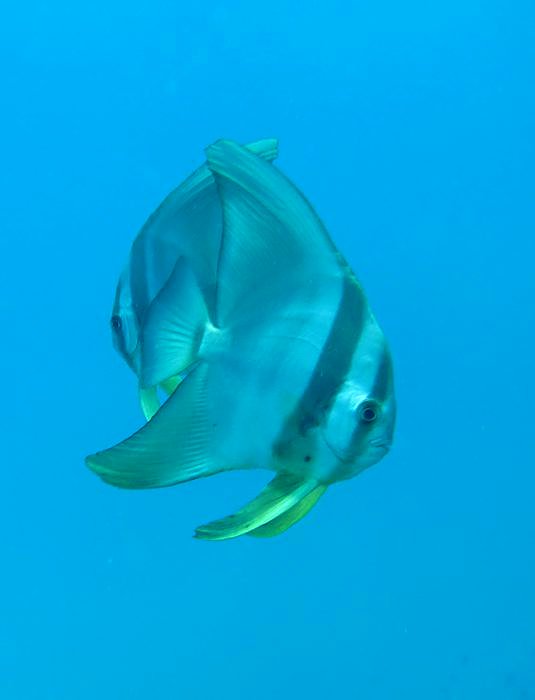
A place Michel knew years before it was ever a resort — back when the islands were still under construction and nobody had photographed the reef around them. Thirteen dives, in pictures, from a place most people today only know as it is now.
Before any of it — before the survey, before Bawah had a name beyond a set of islands on a chart — Michel came here on the Heraclitus, sailing with the Planetary Coral Reef Foundation. They anchored off Bawah to celebrate a birthday, Captain Eibes' — the island completely deserted, no construction, nobody living there. The crew built a fire out of driftwood on the beach and stayed the night, "enjoying a true paradise." The Heraclitus drew too much water to get into the lagoon itself, so a small zodiac carried them in for a first look at what was underneath.
It was on that trip, counting islands, that an idea took shape: the "Island Dream," a biosphere foundation project built around archipelagos exactly like this one. Nobody involved knew yet that Bawah itself would become a resort.
In the years that followed, Michel came back — not just to dive, but to work. Part of opening the lagoon entrance to real boat traffic meant physically clearing it: old coral and rock heads blocking the deeper channel, removed one at a time with lift bags and rope, hauled loose from below and pulled clear from Navigator above. Slow, deliberate work to open a passage for ships without simply blasting the reef away — "not unlike pulling a tooth."
"Little did we know that Bawah would become a resort — that I would survey it again on numerous occasions, and even help clear a passage for ships."
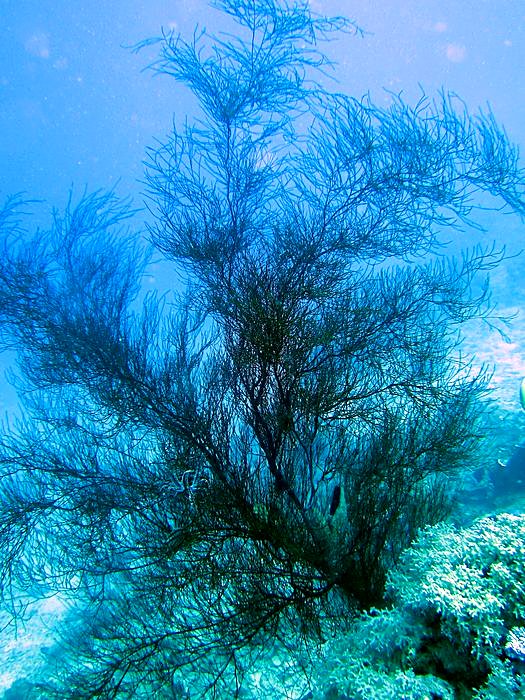
Long before Bawah opened its first villa, Michel spent days in the water here with a small team, working through a reef system almost no outsider had ever photographed. The formal dives ran from the end of April into early May 2011, with two follow-up visits — one that July, another the following April — to see how the reef was holding up. The islands were still a construction site. The resort that exists today didn't yet.
They worked off Navigator, a boat fitted out for the trip on a tight deadline out of Nikoi — a galley and sink, bunks, a toilet, a crane, water tanks, fuel, all built and loaded in a rush. The team on land who got her ready worked hard under a brutal deadline, and pulled off what Michel would have thought almost impossible. The crew carried their own compressor and dive gear, self-sufficient the whole trip.
What stayed with him wasn't just the reef. "Captain Armed a great, unstressed seaman, Darto a jewel to be around, Faisal for even getting to the dishes, and Mansud for the best breakfast eggs ever. Madeka our guardian on the island. Raj delighted us with his expertise on wildlife, and Sek one of the best chilled out, conscientious marine biologist, with good behavior under stress. Not to mention the staff on the island who can build a fire faster than anyone alive, and make you feel safe. I would go anywhere with this team, and I am not bragging."
"It does take years to have that level of competency and group spirit."
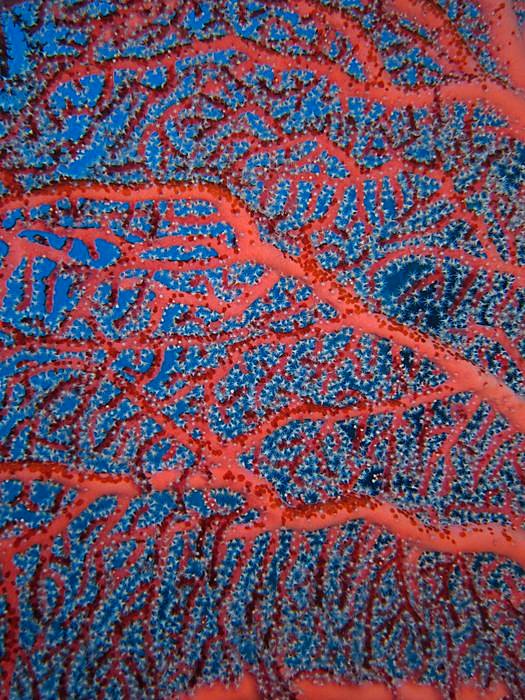
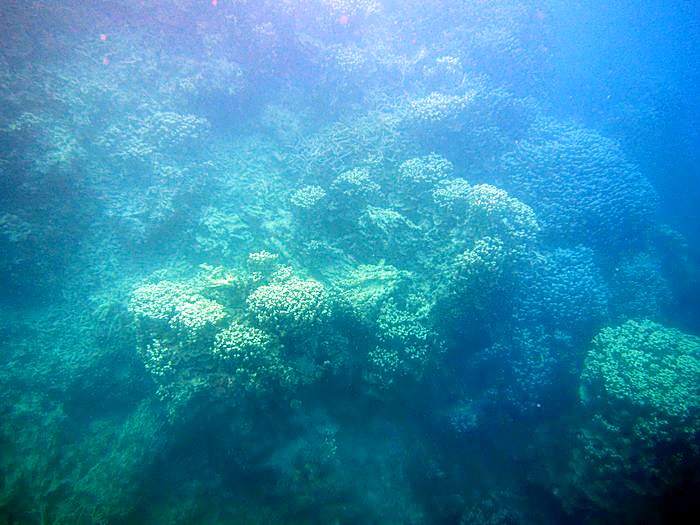
Five islands ring two lagoons here — Bawah, Lidi, Elang, Sanggah and Murbai — most likely the rim of an old, drowned volcanic crater. Michel logged eight distinct dive sites on that first survey, each with its own character, and the underwater life reads like a small archipelago's worth of habitats packed into a few square kilometres.
"In general, the hard coral reefs in all the different marine ecosystems are in good shape," he found. "There is of course evidence of previous bombing, anchor damage, cyanide fishing, and possibly bleaching events, and obvious overfishing, crown of thorn epidemics — but overall the place is still a vibrant ecosystem."
One habitat stood out above the rest. "The inner lagoon is indeed very special, one of a kind, with some of the most outstanding branching acroporas, reaching 4 metres, in a blue hue, special to Bawah. The hard substrate is covered with sea clams, more than anywhere I ever seen." That lagoon is the subject of its own gallery below — the giant clams and blue-tinted coral are exactly as he described.
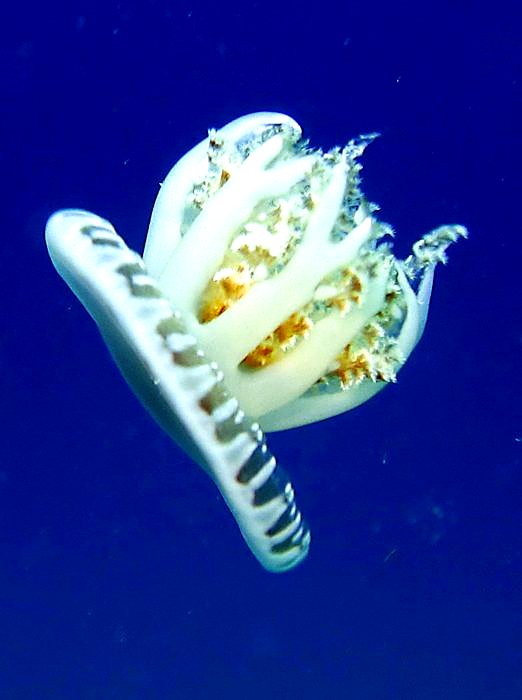
Four turtles turned up across the dives — two hawksbills, two greens — along with spawning coral trout and wrasse, a school of skipjack tuna, jacks and big-eye trevally off the south point, and a handful of barracuda in the mangroves. No sharks, though a black-tip was reported on the west outer reef. There was a definite lack of top predator — one of the quieter signs of a reef still recovering from fishing pressure.
"Possibly the best feature of Bawah is it's diversity of ecosystem present in such a small area. And being secluded, it can be monitored and controlled."
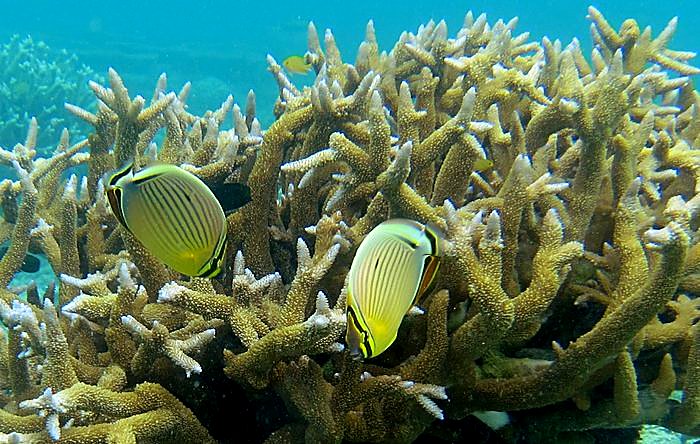
The lack of titan triggerfish and giant trumpet conch — the crown-of-thorns starfish's natural predators — was one thing worth watching. One patch on the west side had eight in a small area, with whole coral heads already stripped. The same thing shows up again in the 2012 follow-up photographs.
What the reef had already been through. The Bawah islands had clearly suffered from abuse. Bombing — many of the outer reefs showed rubble patches, mostly from dynamite fishing. Cyanide fishing. Anchor damage throughout the archipelago. Overfishing so thorough that big predators were nearly gone, leaving grazers like parrotfish and rabbitfish to fill the gap. A bleaching event, evident where a single species had been wiped out with nothing else around it touched. Crown-of-thorns damage in patches. One net, snagged on the reef in the shallow lagoon, that the team stopped and untied by hand.
What needed doing. Mooring points, so boats stop anchoring on live coral — could even be rented out to passing yachts. Relief from fishing pressure, even for a few years, to let the fish stock recover. And waste management, which Michel called out as the single most urgent issue for the future — a surplus of nutrient would give the upper hand to algae, taking over the delicate hard coral that were, right then, still jewels worth preserving.
On the construction itself, Michel came away reassured, on balance. Widening the entrance had been done with minimal damage to the reef — it would simply create a little more flow into the lagoon, bringing in more nutrients and possibly even helping the reef. The new jetty, too, didn't worry him much for the marine life around it — it would adapt, given shade and new material to grow on.
What mattered most to him, in the end, was turning a resort's presence into active protection. A presence on Bawah would allow the "policing" of harmful activities on the islands — and full protection of the area as a no-take zone could create a vibrant ecosystem that fed into the neighbouring islands too. The area seemed made for it — small, self-contained, varied enough in habitat to serve as a real marine study site.
"Diving operation directly supporting conservation effort, offering educational dives."
Bawah Reserve opened in 2017 — six private islands around the same two lagoons Michel dived, about 75 minutes by seaplane from Singapore. The resort sits at the heart of a 1,000-hectare marine conservation area, and the reef damage he documented years earlier — the dynamite-fishing rubble in particular — is exactly what its conservation program was built to address. Two on-site marine biologists now run coral tree nurseries, growing staghorn fragments and transplanting them onto artificial reefs. Visitors report healthy coral cover and regular turtle sightings, green and hawksbill both — the same two species Michel logged on the original dives.
The years between this survey and the resort's opening were, by his own account, a complicated stretch he'd rather not relitigate here. What matters is the reef itself, before and after — and on that count, it's a good story: a place that was already being taken care of long before it had a name on a booking site.
These days, word of the island reaches him a different way — through a friendship with one of Bawah's seaplane pilots, Wolfsky, a true old-school adventure pilot, who passes on news of how the place is doing now whenever their paths cross.
Every dive, kept as its own set of photographs. Click a cover to see them all.
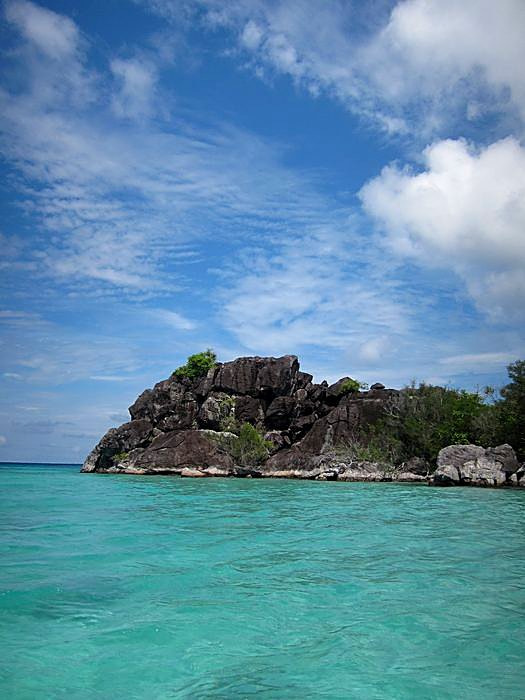 First Look, July 2011
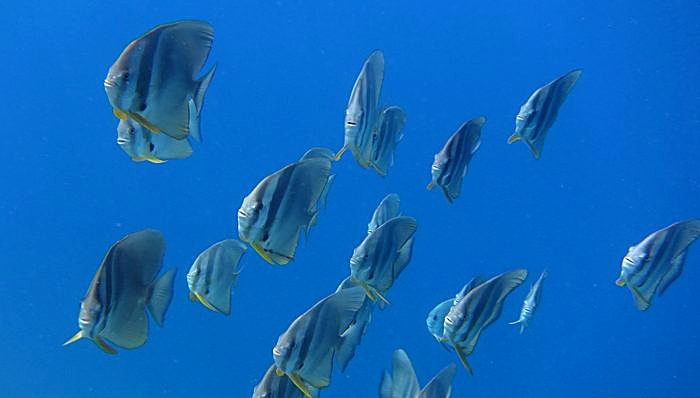 Return Visit, April 2012
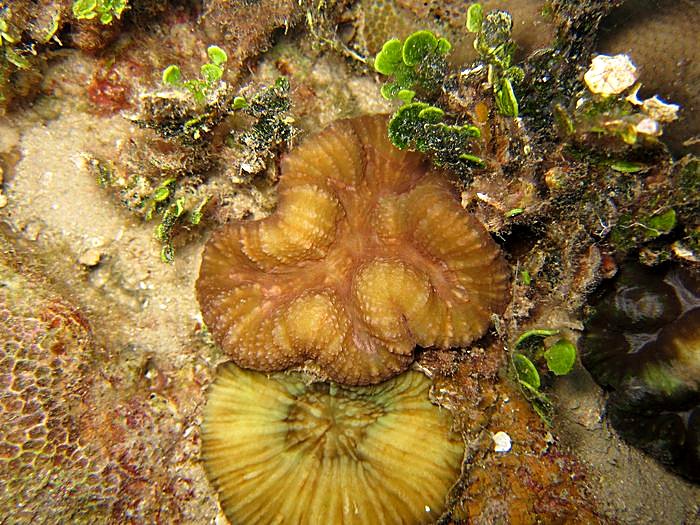 The Corner Reef
The Entrance
The Corner Reef
The Entrance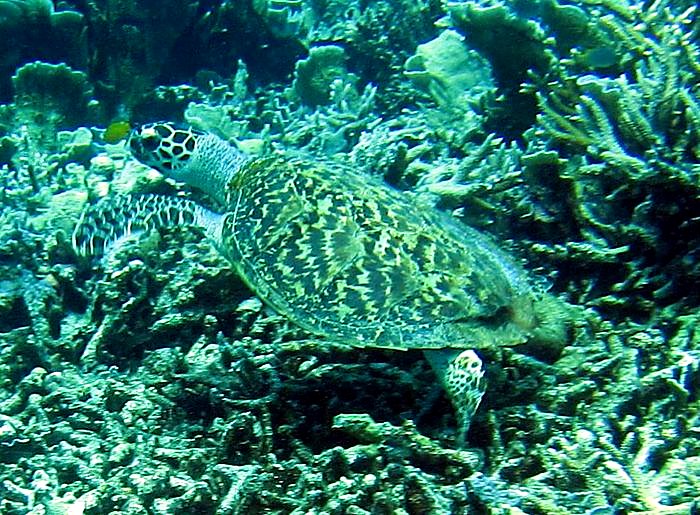 Reef Top, East Side
 Reef Top, West Side
 The Sand Flats
Inside the Barrier Reef
The Inner Lagoon
The Sand Flats
Inside the Barrier Reef
The Inner Lagoon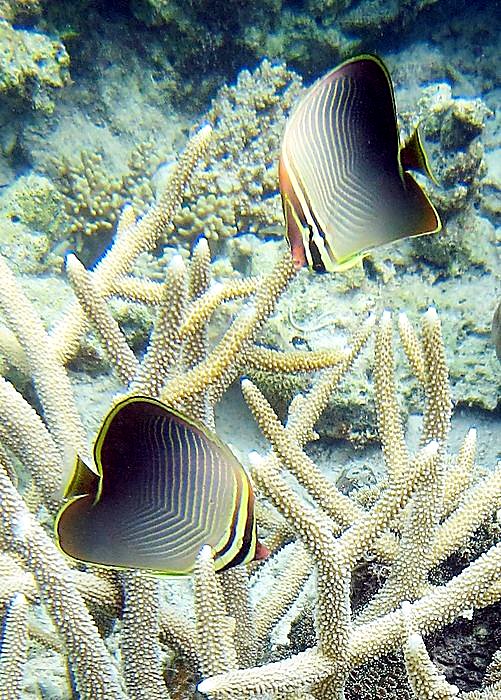 Lagoon by the Ship Bridge
The Northeast Wall
Lagoon by the Ship Bridge
The Northeast Wall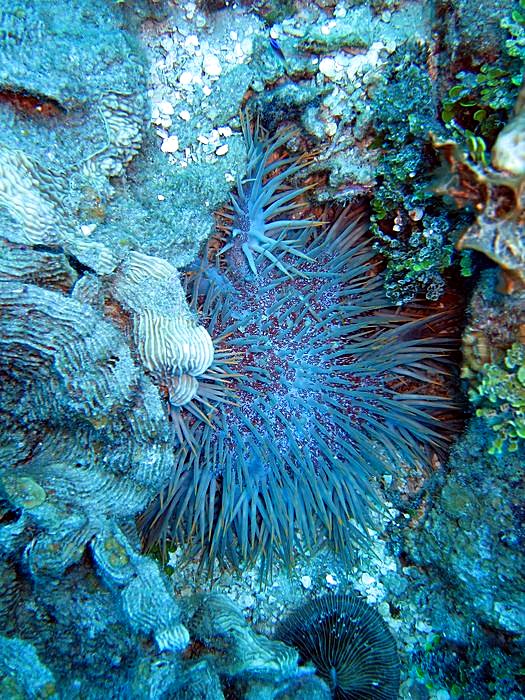 Outer Reef, West Side
 The Shallow Lagoon