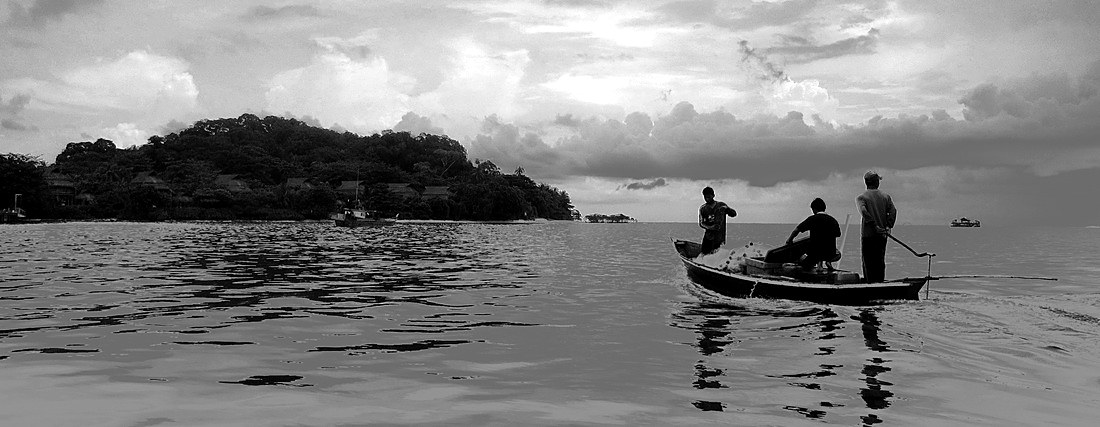
Conservation here has never been just about the reef. It's about the people who fish it, sell from it and feed their families from it — and the slow, patient work of finding a way the reef and the fishing can both survive.
Every reef in this stretch of the Riau Archipelago is a working reef. Long before any survey or no-take zone, it was — and still is — a source of food and income for the villages along this coast. Stilt houses and jetties stand right over the water; boats go out and come back with the tide; the catch gets sorted, dried and sold within sight of the same reef it came from.
That's the reality any conservation work here has to start from. You can't protect a reef by fighting the people who depend on it — you protect it by working alongside them, village by village, conversation by conversation, until the fishing and the reef can hold up together.
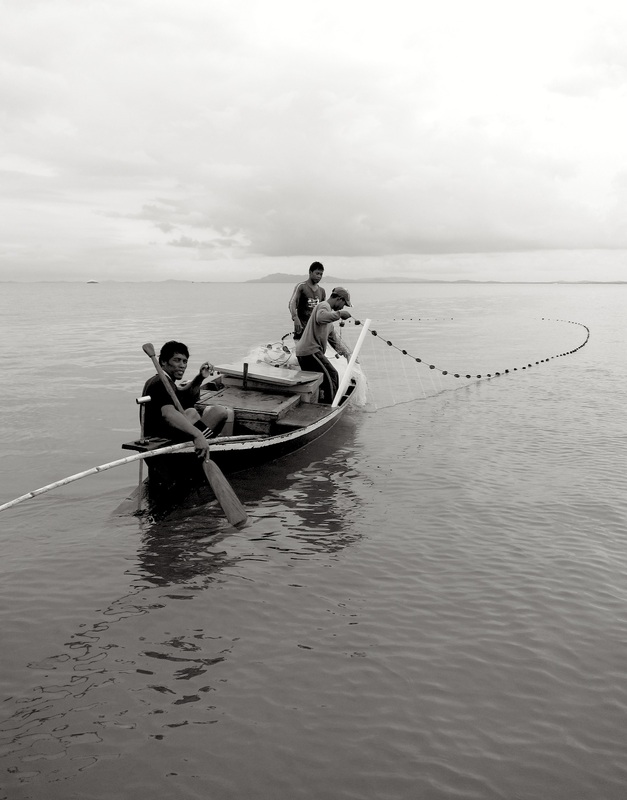
The fishermen. "Three men in a small prahu, they specialize in needlefish, encircling the school with a net. The weather needs to be calm. A good sustainable practice — the nets never touch the reef, and the fish are sold locally to the community."
Not every method is so gentle. The "pukat" fine-mesh net "takes everything in one go" — local fishermen have been persuaded, village by village, to keep it out of the reef areas, though whether the promise holds long-term is never certain. Wire-mesh bubu traps used to be dressed with live coral broken straight off the reef; years of conversation have shifted most fishermen to dead coral instead — "the fisherman are paying attention, and showing respect."
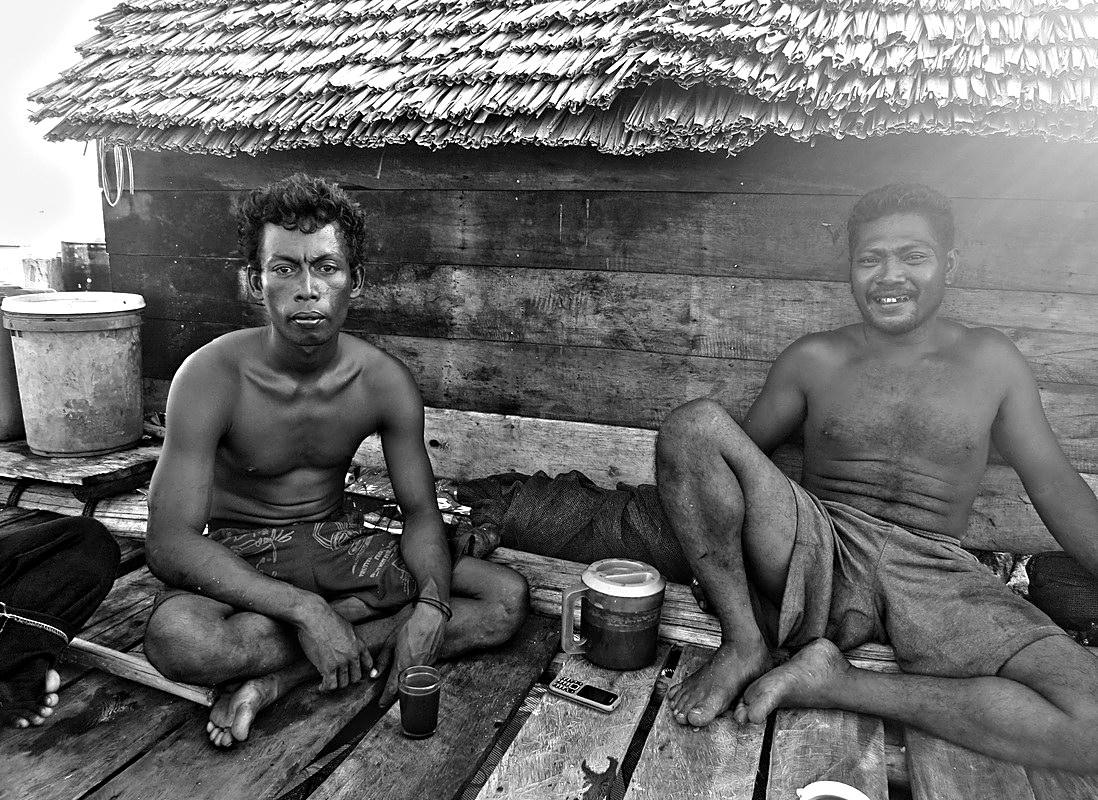
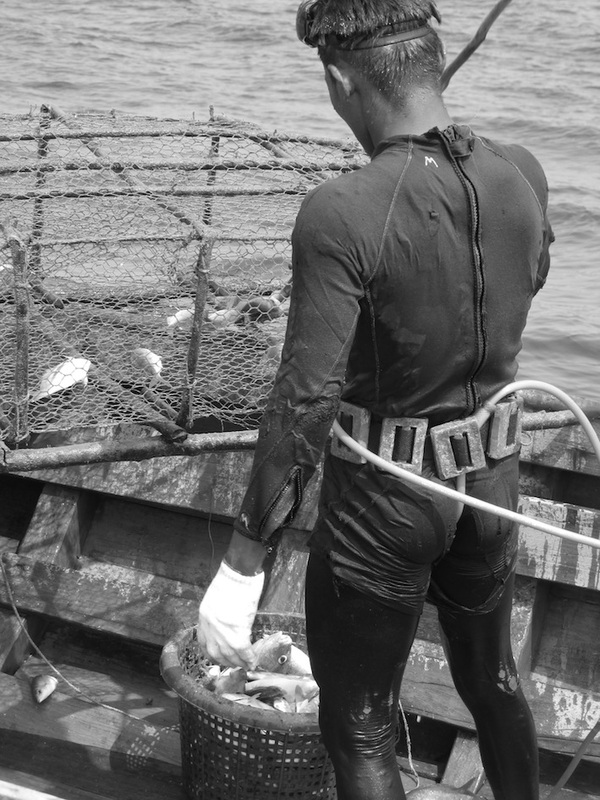
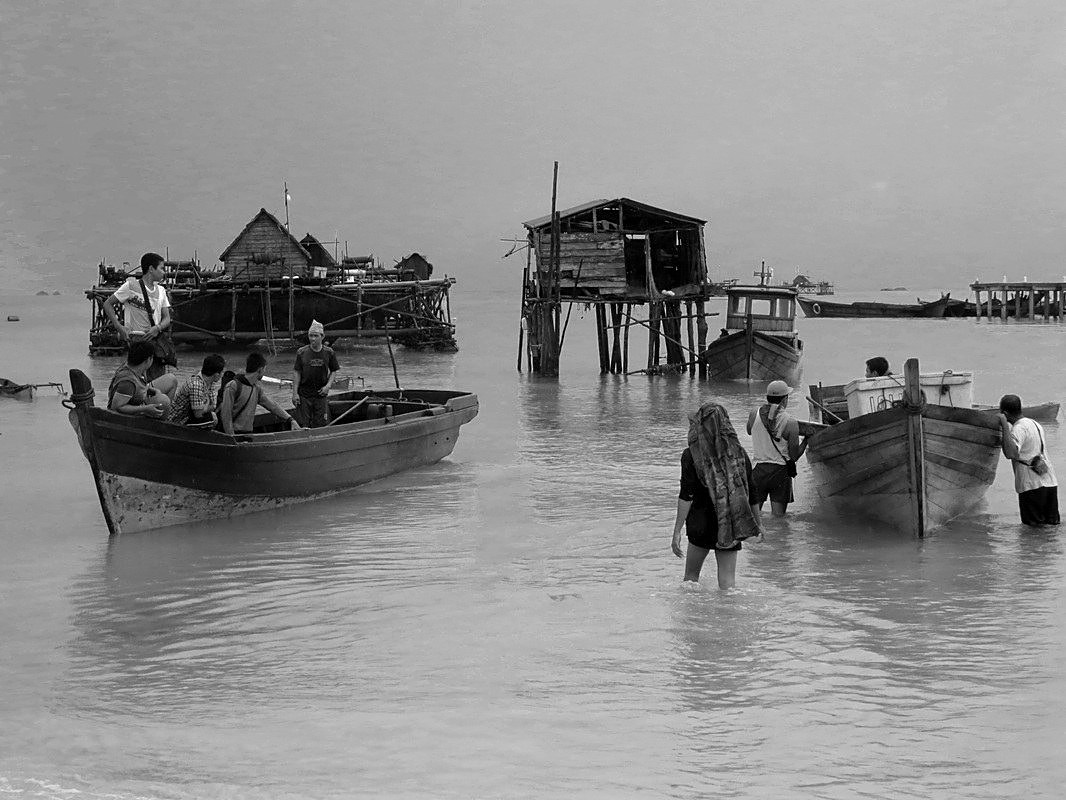
Kawal. A fishing port near the river mouth, home to two fleets. The community here comes from all over Indonesia — Bugis captains, Bajau fishermen, people from further east — settled together around the same harbour.
The Kelong. Floating fishing platforms that move between fishing grounds along the east coast. The fishing happens at night, mostly for ikan bilis (anchovy), brought back to shore each morning for processing.
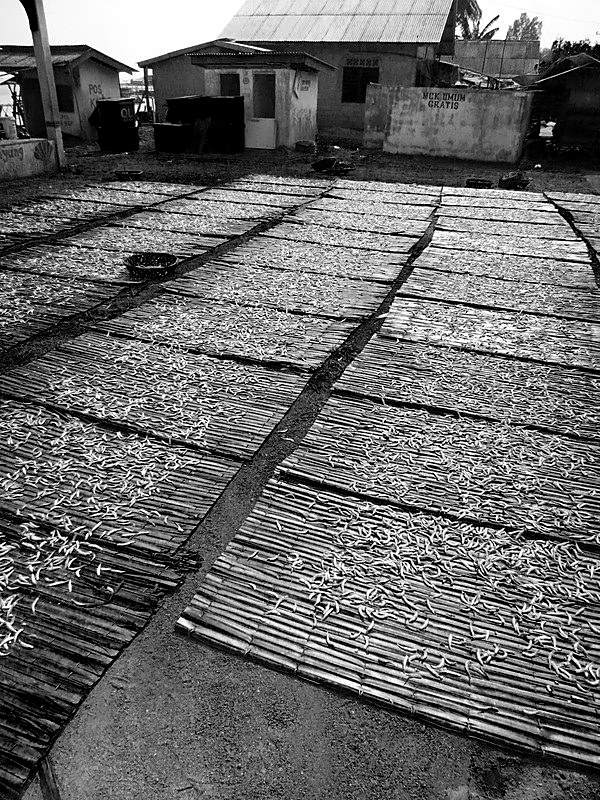
Ikan Bilis, in Malang Rapat. After a night on the Kelongs, the catch comes ashore to dry in the sun. Whole families work it together, children included — sorted by size, species and quality, then taken to sell in Tanjung Pinang.
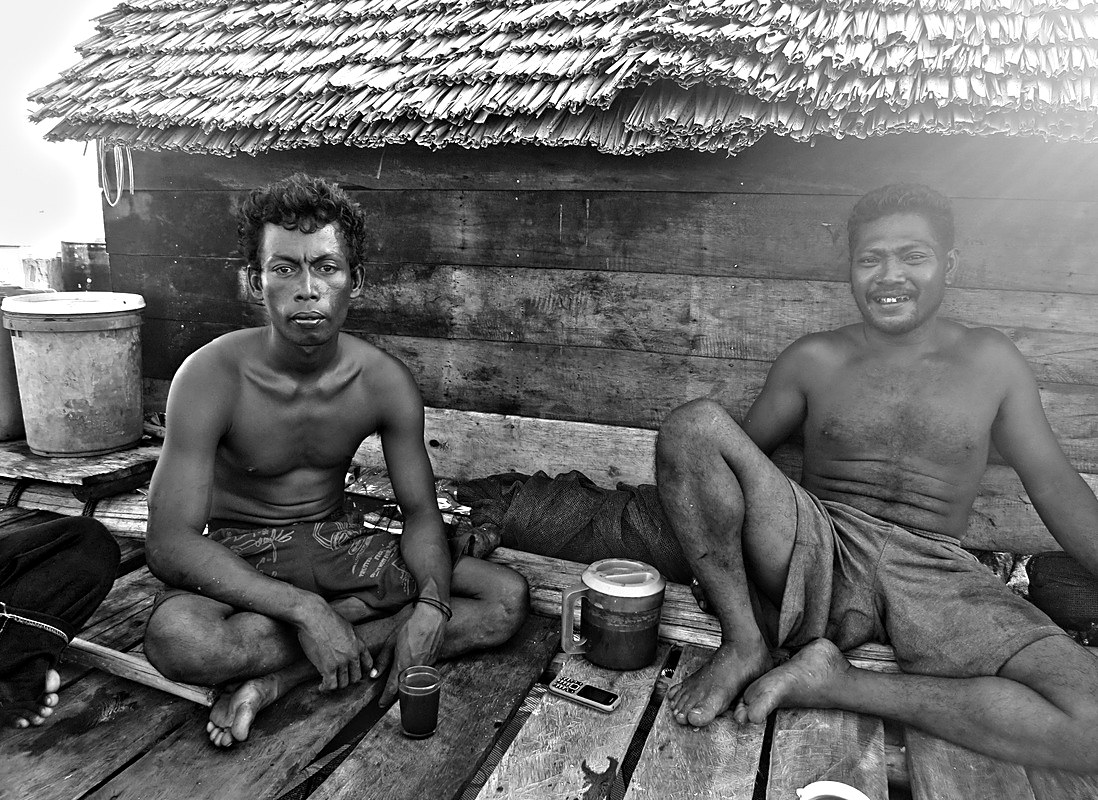
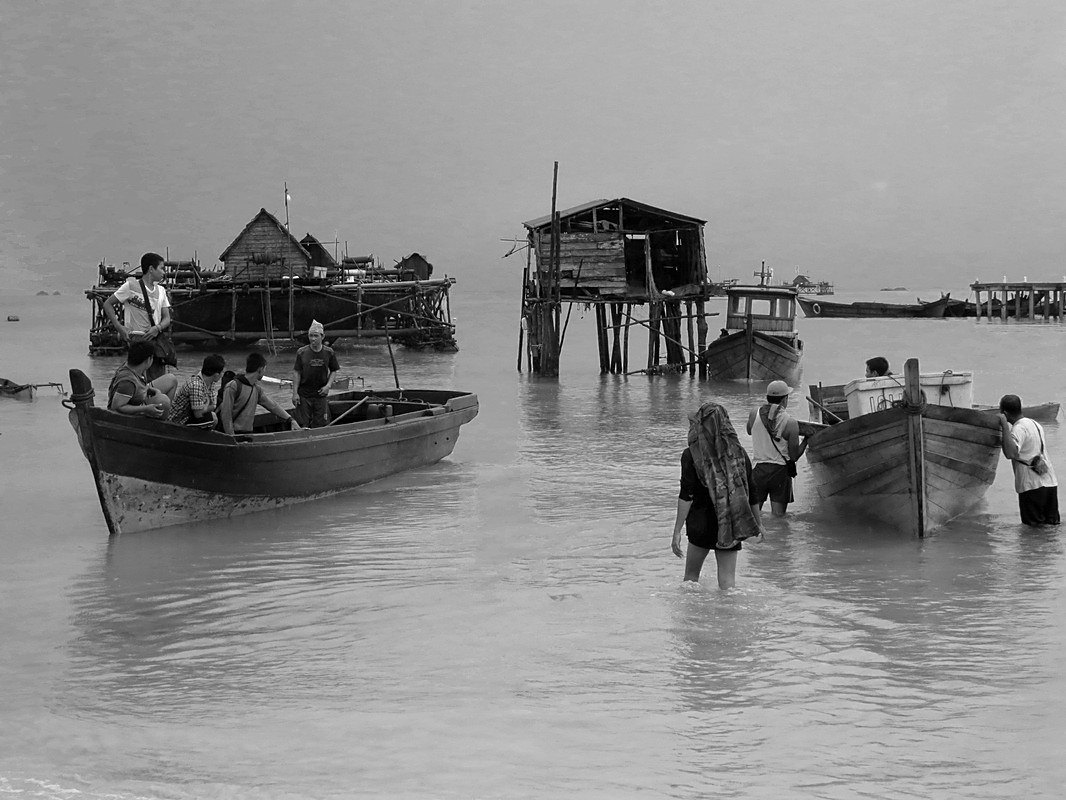
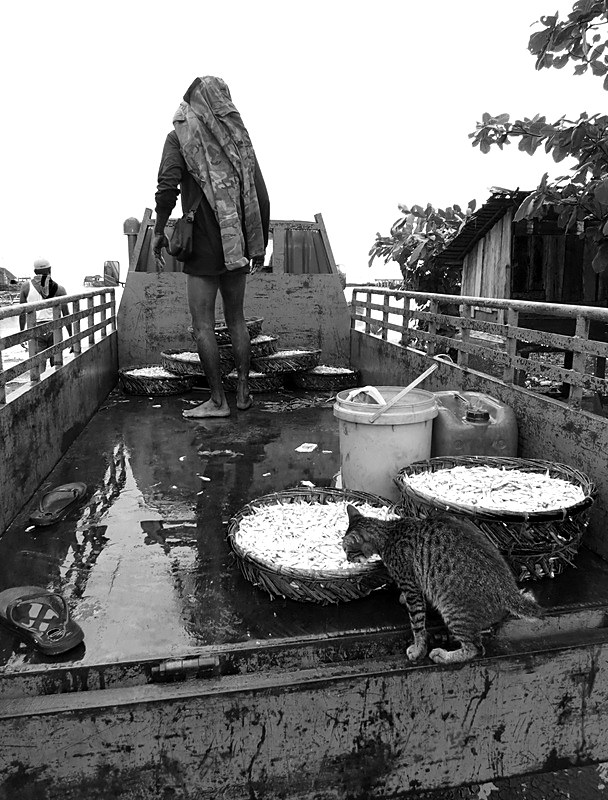
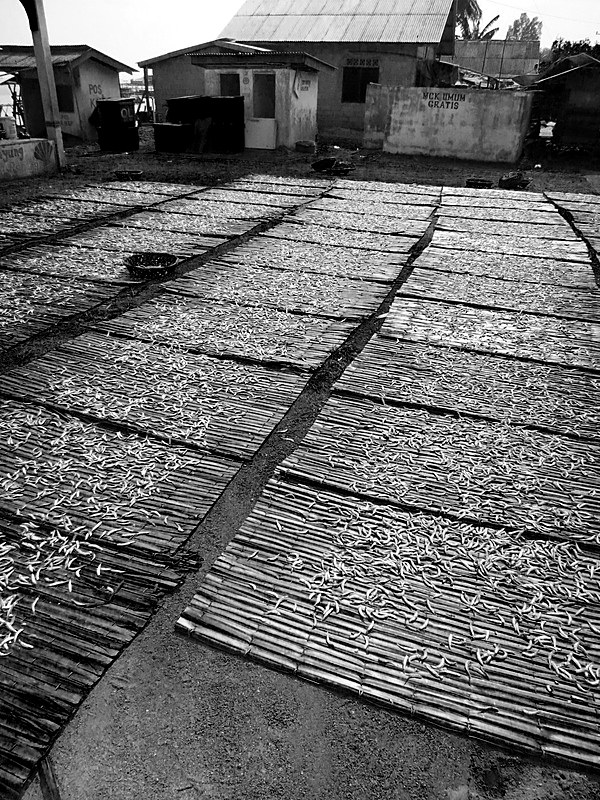
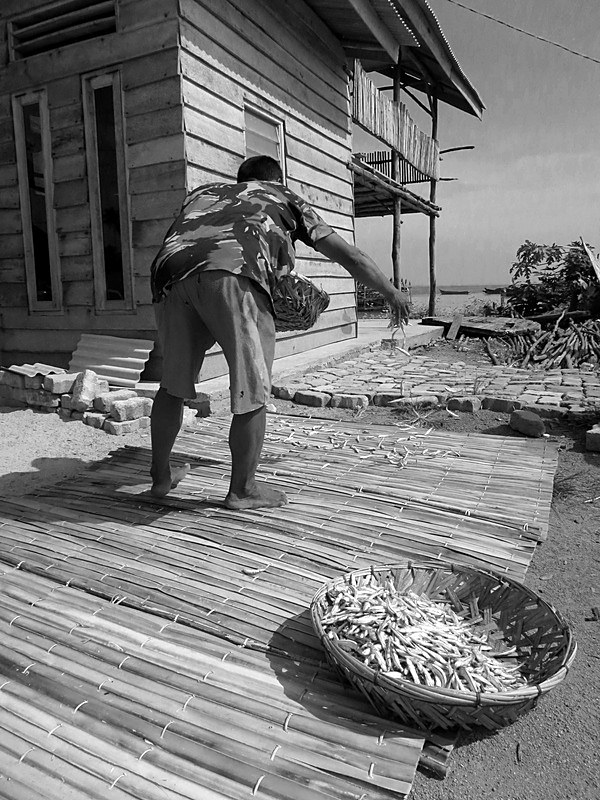
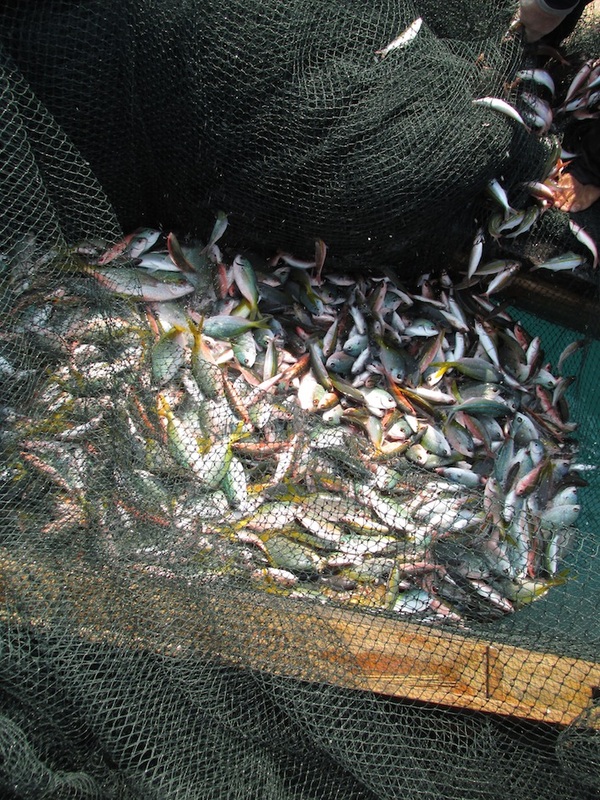
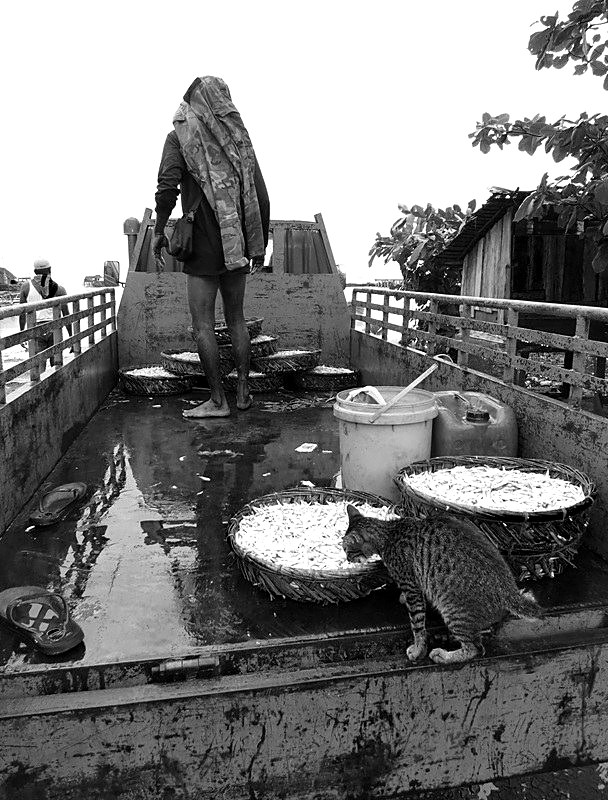
The catch doesn't stop at the boat. It gets sorted on deck, hauled in by the basket, and laid out to dry by the hundred — the everyday rhythm behind every dive log and survey number on this site.
Grazing fish are the reef's gardeners — parrotfish, surgeonfish, rabbitfish keep algae from choking the coral. "Without them, algae would get the upper hand and eventually choke the coral reefs." That's what makes overfishing, not just dynamite or cyanide, the deepest long-term threat — which is exactly why this has to be a conversation with the people fishing, not a rule handed down to them.
"Think globally, act locally!" — echoing Gotong Royong, the Indonesian principle of shared effort.
This page started with what was learned at Nikoi, but the fishing community isn't confined to one island — it's the same coast, the same water, the same families working Cempedak, Bawah and Teluk Bakau too. As the work widens to those places, this is where that shared thread will keep getting documented, one village and one conversation at a time.
See the full Nikoi conservation record → · Read the Field Journal →