Diving, photographing and defending the reefs of Bintan and Nikoi Island — the coral, the fish, the fishermen who share the water, and the slow work of protecting what's left. Click any photo to see it full size.
"It is a complex underwater biome, a vital part of the oceanic world, a testament to the power of Nature, a historical record of our past, a teaching in the fragility of ecological balance, a declaration of biodiversity — but above all a healthy coral reef is a living sculpture of great beauty."
The reefs around Nikoi Island sit on the Sunda shelf, a shallow shelf rarely deeper than 20 meters, swept by strong tidal currents. The water is often murky, and the diving here was never meant to be "world class" — but look closely and the biodiversity is extraordinary: fringing reefs, mangrove flats, sand flats, rubble patches, seagrass beds, soft coral gardens, granite boulders, swim-throughs and ledges, each with its own community of plants and animals.
"Nikoi reefs are surprisingly resilient, and considering the various pressures from fishing and pollution drifting from the South China Sea, the reefs are relatively healthy." Since the island opened as a resort, the most destructive fishing methods — dynamite fishing above all — have stopped locally, and species like grouper have started coming back into view.
"Nikoi, on the other hand, not unlike the analogy of Noah's ark, has still enough of each species to pursue an effort towards total protection of its waters."
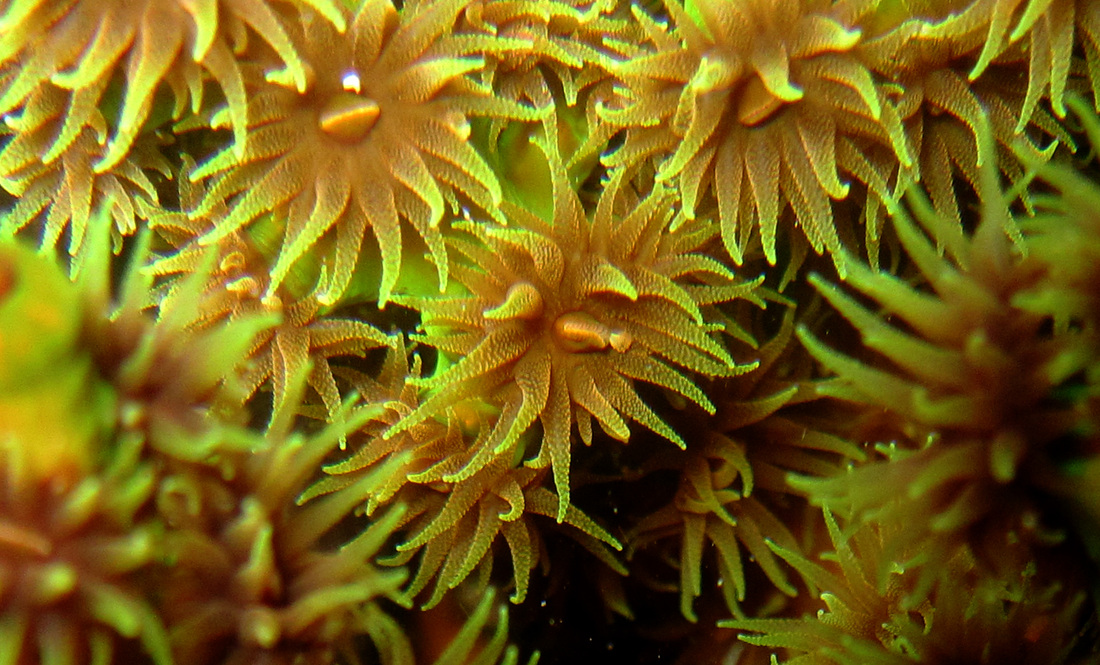
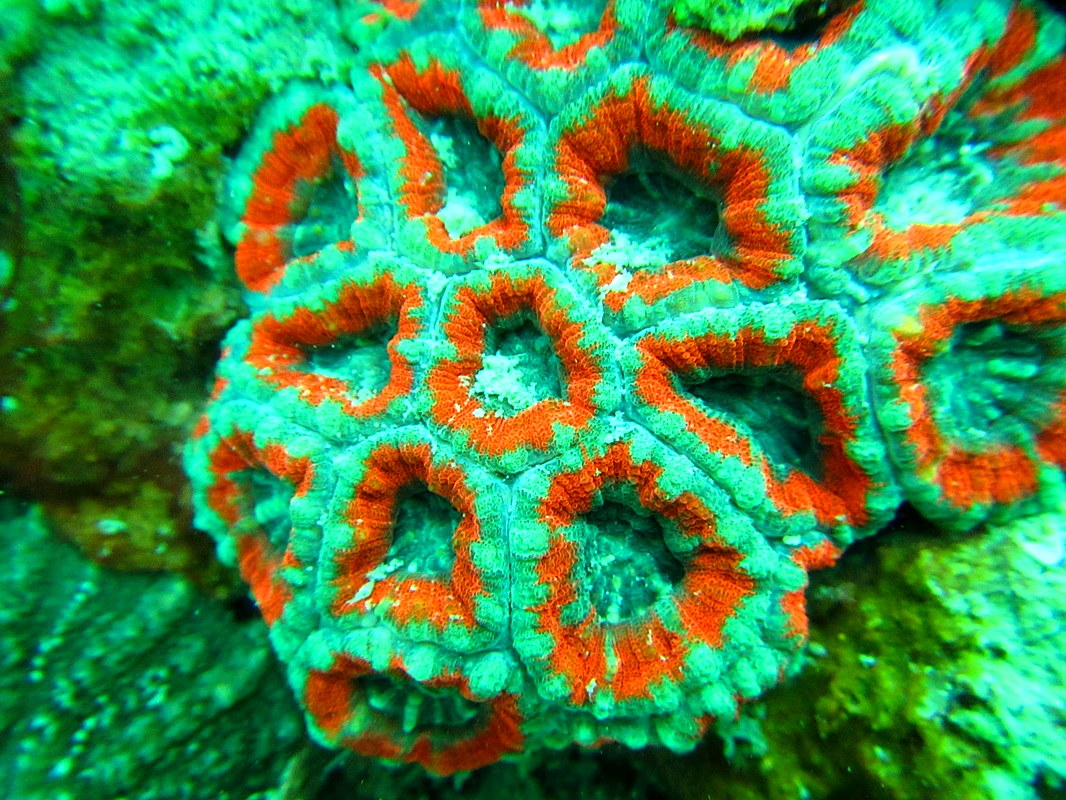
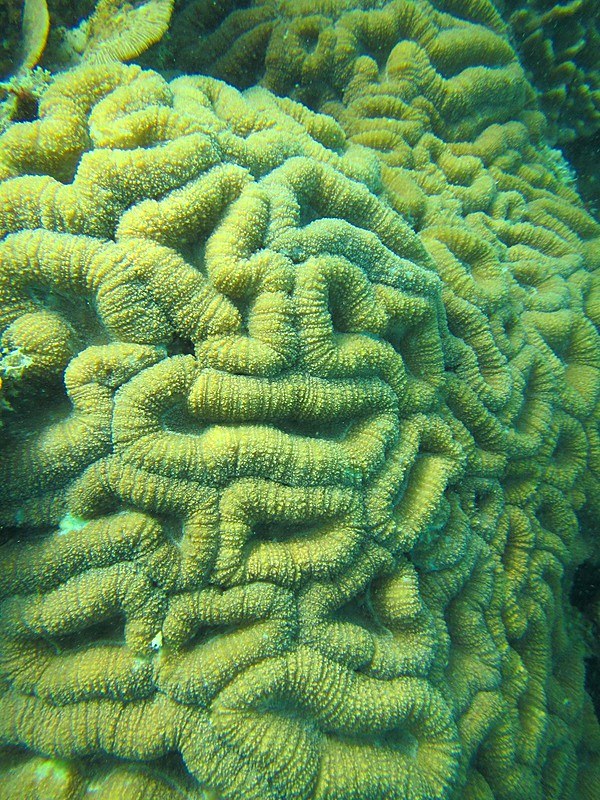
What a coral actually is. A hard coral head isn't one animal but a colony of many, sharing space, food and protection — each individual, the polyp, has a mouth, a stomach and a three-layered body wall. Almost all reef corals carry zooxanthellae, microscopic algae living inside their own cells, which photosynthesize and pass food back to the coral. It's a close enough partnership that a coral's health is really the health of two organisms at once. Most polyps only extend their tentacles at night to catch rising zooplankton — but around Nikoi, some species feed during the day too, because there's no deep water for the plankton to hide in and the current keeps nutrients moving constantly.
War on the Reef. Space is the most contested resource on a reef. When two coral colonies grow within about two centimeters of each other, they can sense each other chemically — one will extrude its gut and digest its neighbor alive, leaving a strip of bare white skeleton as it slowly overgrows the rival. You can see this bleached no-man's-land along colony edges around I Pod Rock and the fringing reef off the beach. Slow-growing species tend to be the most aggressive; fast growers are more often the losers, some fighting back with sweeper tentacles thrown out under cover of darkness.
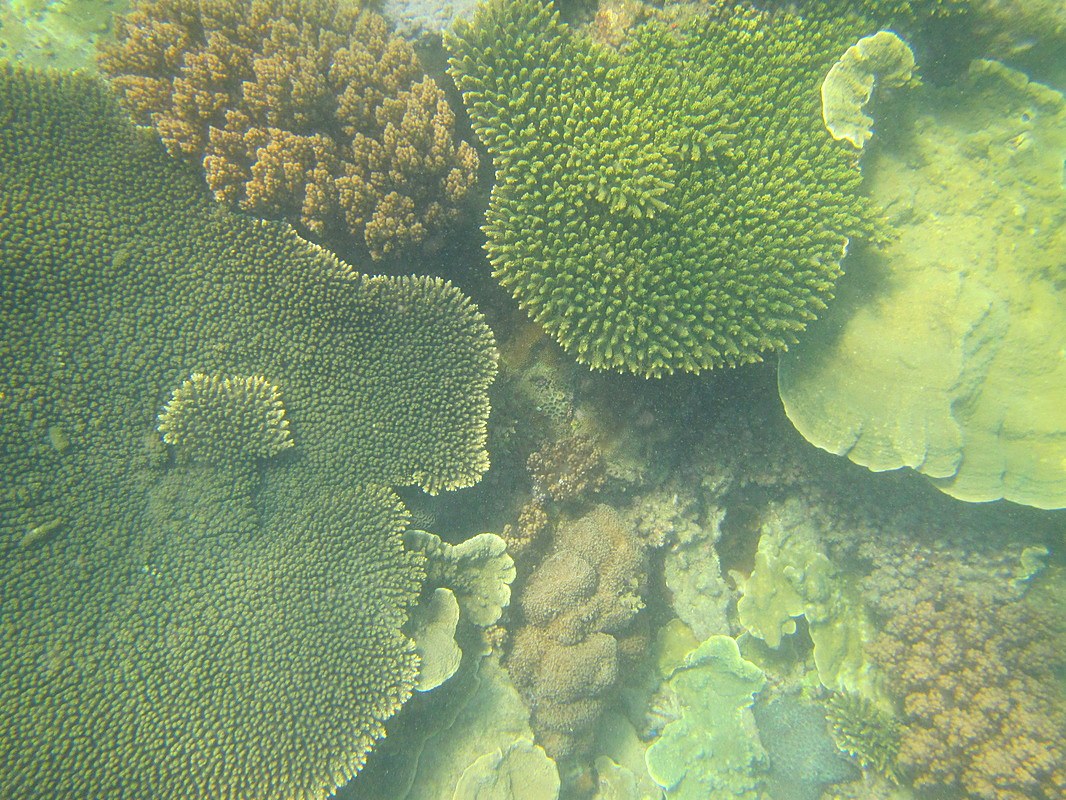
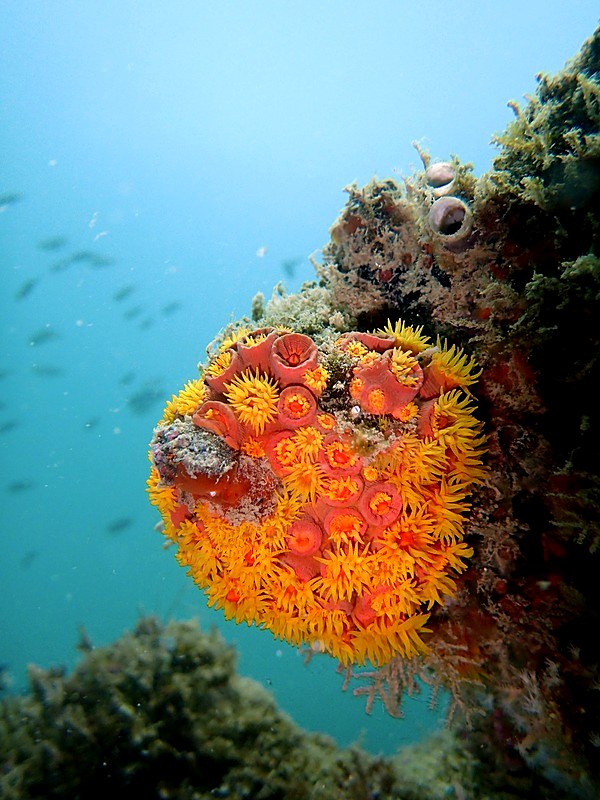
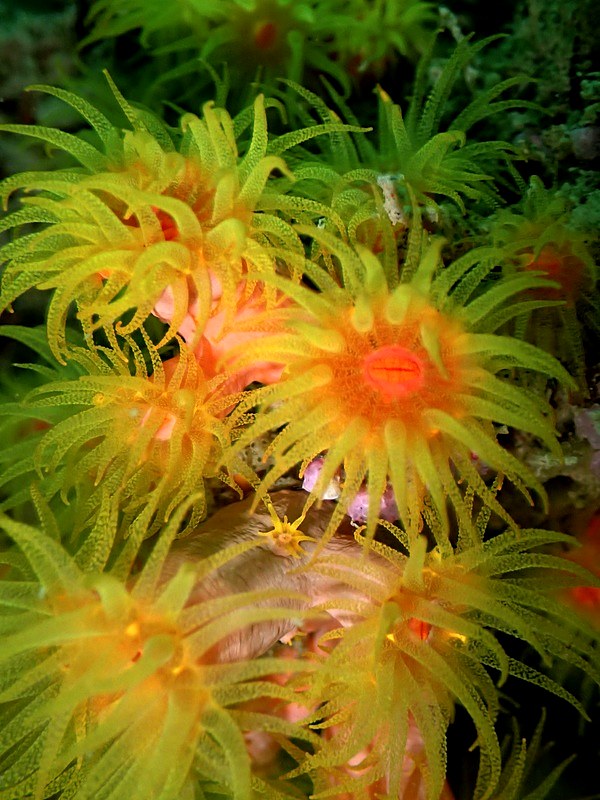
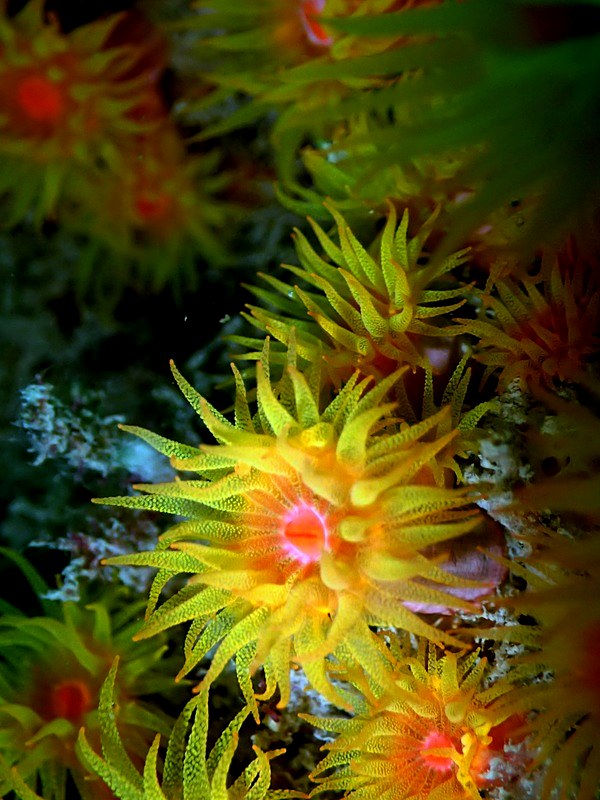
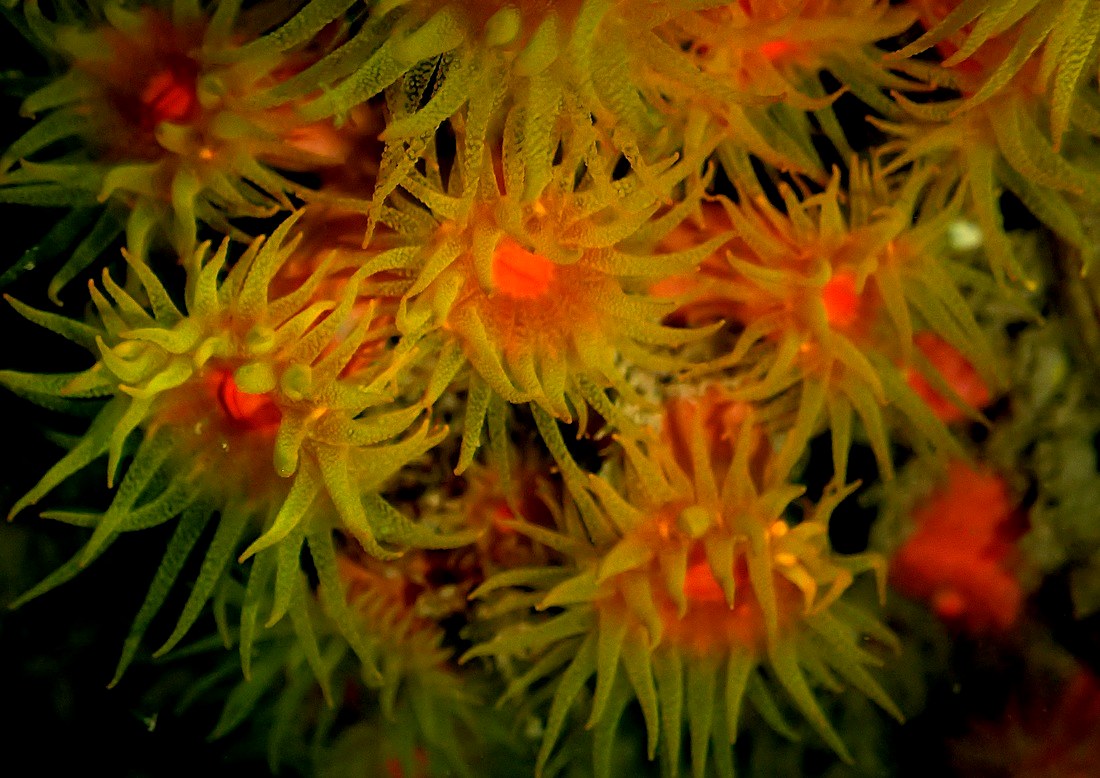
A few residents, up close. Fungia (mushroom coral) can right itself if flipped, using its tentacles to fill one side with water until it tips back over — exhausting work, sometimes helped along by a small worm living in a cavity underneath. Acropora dominates wherever light and water movement are good, and grows fast: branches can add up to 15 centimeters a year, and the reef in front of I Pod Rock shows real recovery from a past bleaching event, now near-total hard coral cover. Tubastrea, the sun coral seen feeding around Nikoi in daylight, has no zooxanthellae at all and keeps a much simpler skeleton than its light-dependent relatives. Giant clams — prized as a delicacy and nearly gone from most reefs — are still easy to find straight off Nikoi's beaches, their mantles patterned in blues, greens and yellows to protect their own zooxanthellae from too much sun.
The reef's cleanup crew. Sponges filter roughly a ton of water to gain an ounce of body weight, and host their own communities of shrimp, crabs and worms in return. Sea cucumbers are the reef's vacuum cleaners, passing up to 200 pounds of sand a year through their bodies to recover what's usable — in huge demand across Asia because they're so easy to harvest, which is why most reefs now have almost none left; Nikoi still has a few, protected simply by sitting in front of the jetty where no fisherman would risk taking them. Crown-of-thorns sea stars eject their own stomachs onto coral tissue to digest it externally — only two were found in a full circumnavigation of the island, nowhere near epidemic numbers.
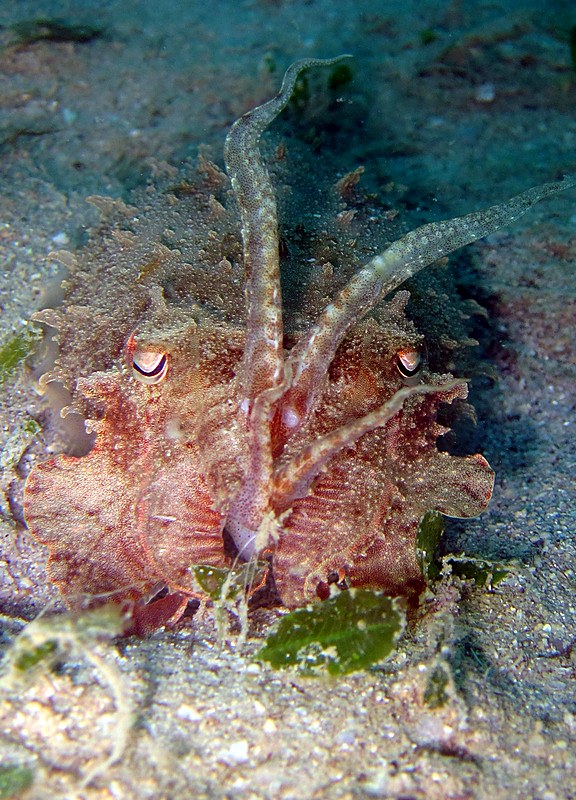
Cuttlefish. Masters of camouflage in both color and texture, with one of the largest brain-to-body ratios of any invertebrate — fierce enough predators that one, trapped with a catch of small fish in a bubu on the reef left of the jetty, was the only survivor left in the trap after a week. They pair up on the reef, most visibly in April and May, and once the wariness wears off they'll respond to a hand gesture, even mimic it back.
Fish behavior. Grazers — parrotfish, surgeonfish, rabbitfish — work the reef like a roving herd, keeping algae films cropped short; without them, algae wins. Many butterflyfish and angelfish pair for years at a time. Squirrelfish sleep by day and hunt shrimp and crabs by night, helped by outsized eyes. Reproductive cycles for many species track the lunar calendar, timed so eggs and sperm released just before full moon get swept away from the reef's own relentless plankton-eaters. All anemonefish are hermaphrodites, living in a strict hierarchy where the largest fish is female and the largest male will change sex to replace her if she dies.
Bigger and further out. Sailfish, barracuda, Spanish mackerel, tuna and giant trevally all turn up occasionally, though rarely enough over years of watching to say much more than that they pass through. Indo-Pacific humpback dolphins — sometimes called pink dolphins for their pale, blush-toned skin — visit too, shy and hard to spot except on the calmest days.
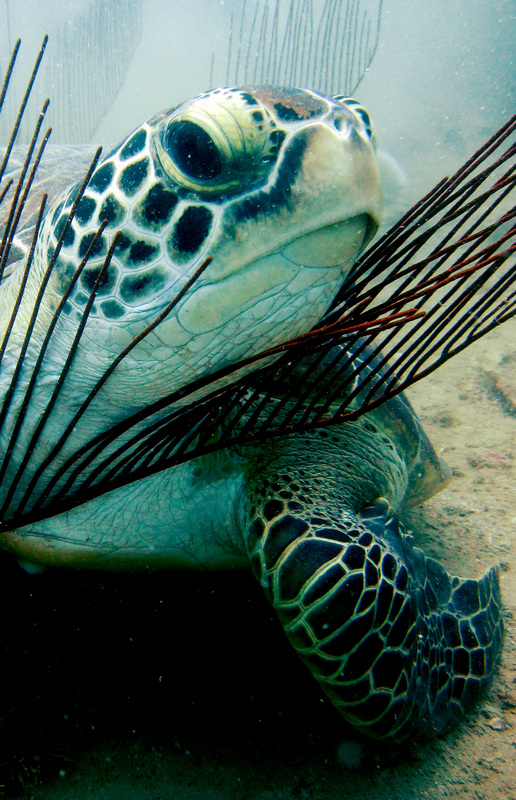
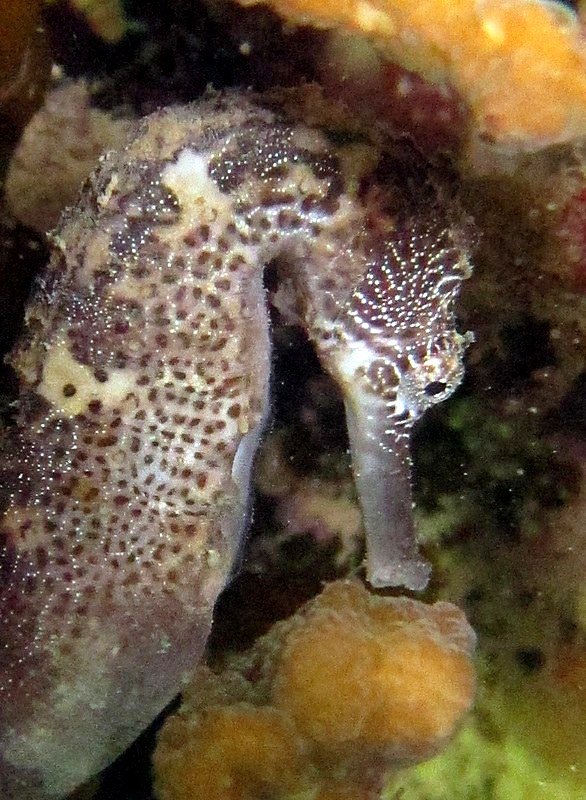
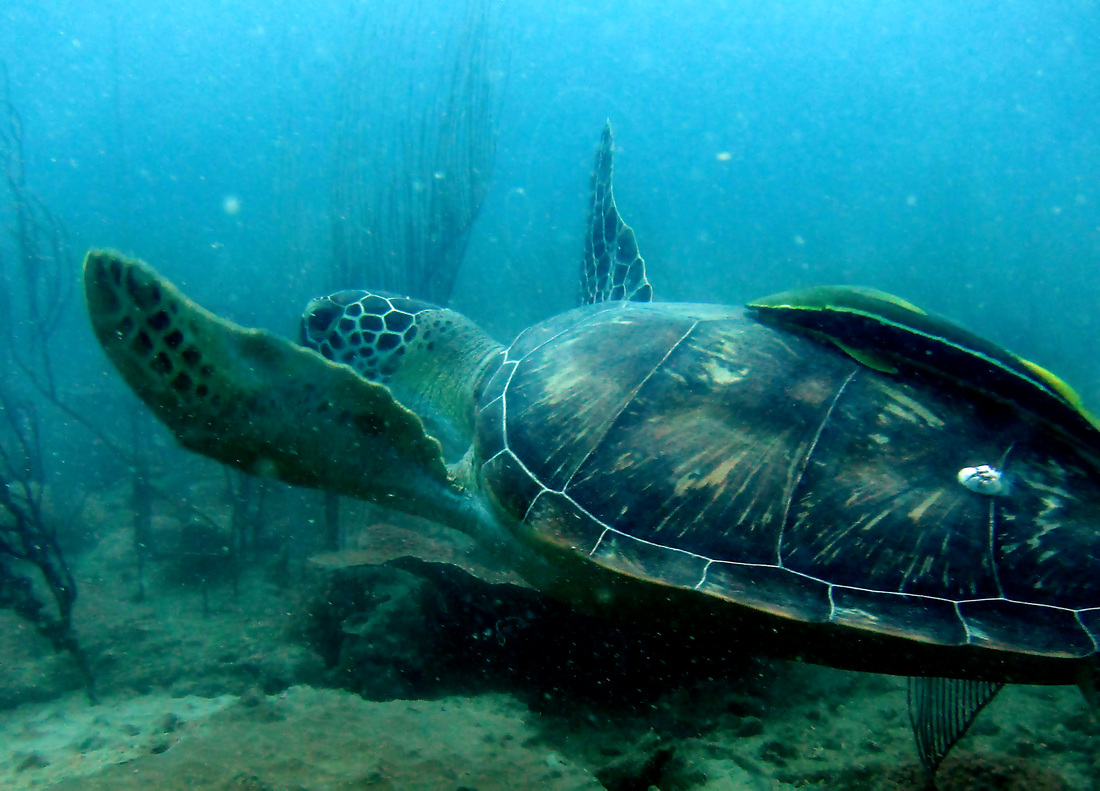
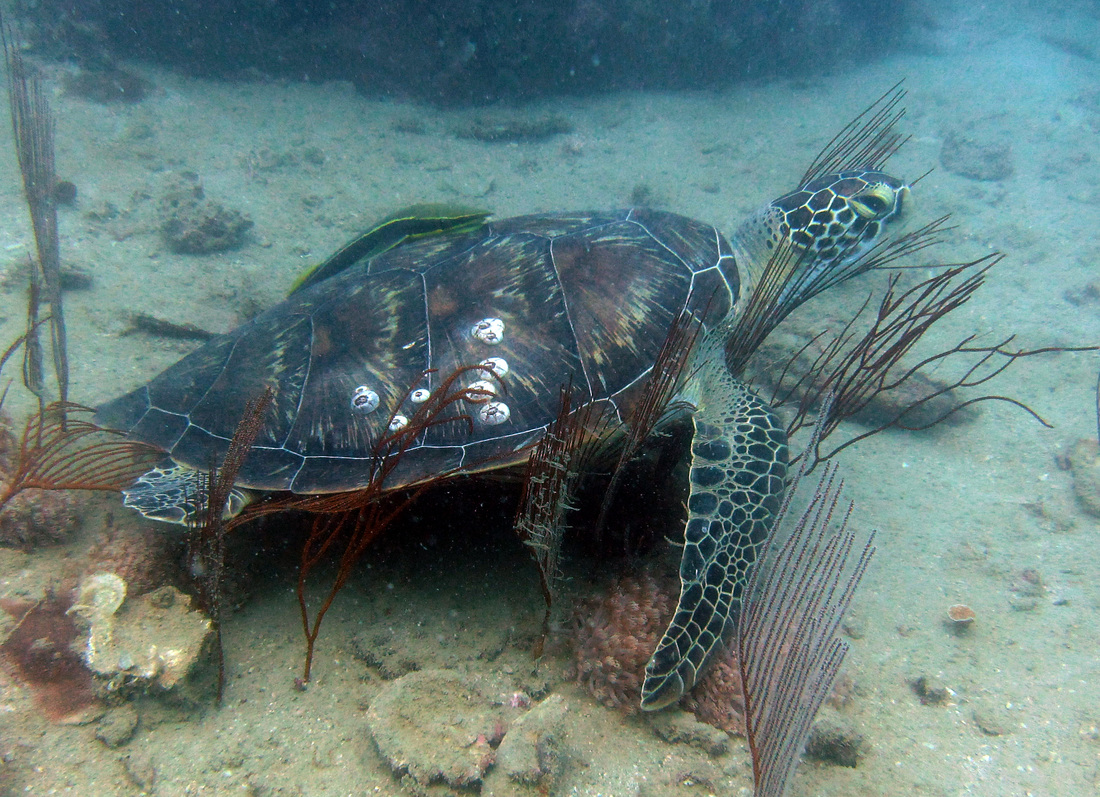
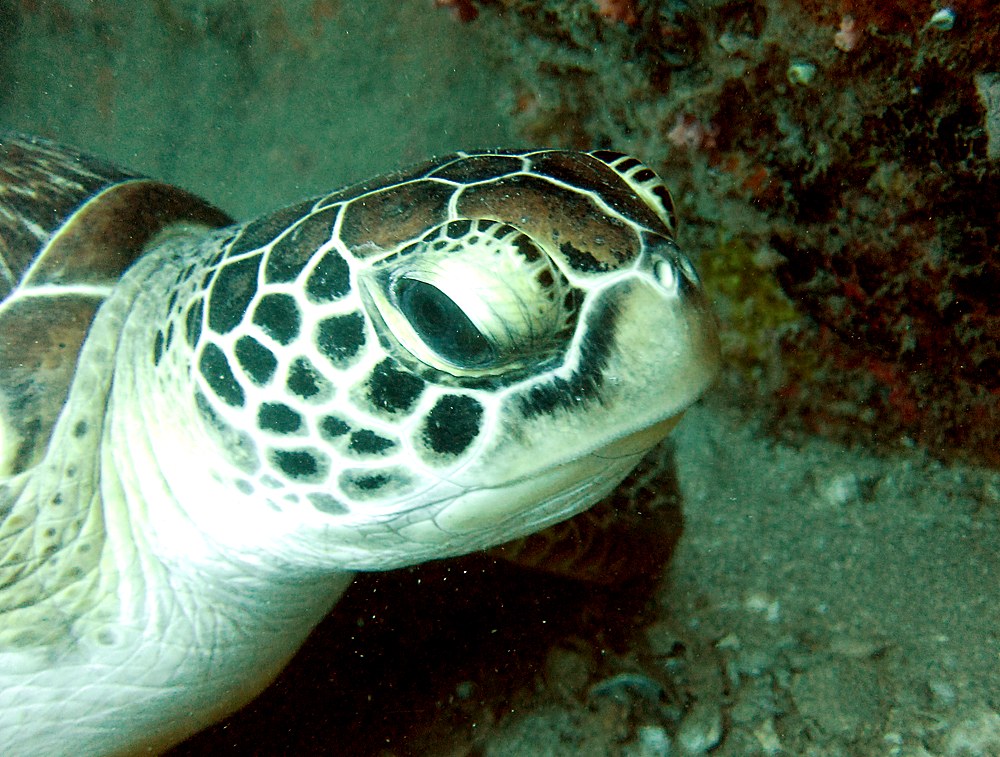
Seagrass and sand. The seagrass beds and mangrove flats function as nurseries, sheltering young reef species away from the reef's heavier predation. It's also where a seahorse is most likely to turn up. Green turtles graze the seagrass before the harder work of nesting — digging and laying eggs so strenuous it's said to bring on real tears, though it's really a way of keeping sand out of their eyes.
The wider picture. Today's Atlantic holds around 60 coral species and 500 fish species; the Indo-Pacific, where Nikoi sits at the outer edge of the so-called Coral Triangle, holds over 700 coral species and 1,500 fish species in Indonesia alone. No reef is ever in a constant state of growth — it's always simultaneously building and defending itself, and the balance can tip either way. Nikoi's reefs aren't pristine, but they're not doomed either: the pressures are real and named elsewhere on this page, but the habitat diversity and the constant churn of current and season give the reef more room to recover than most.
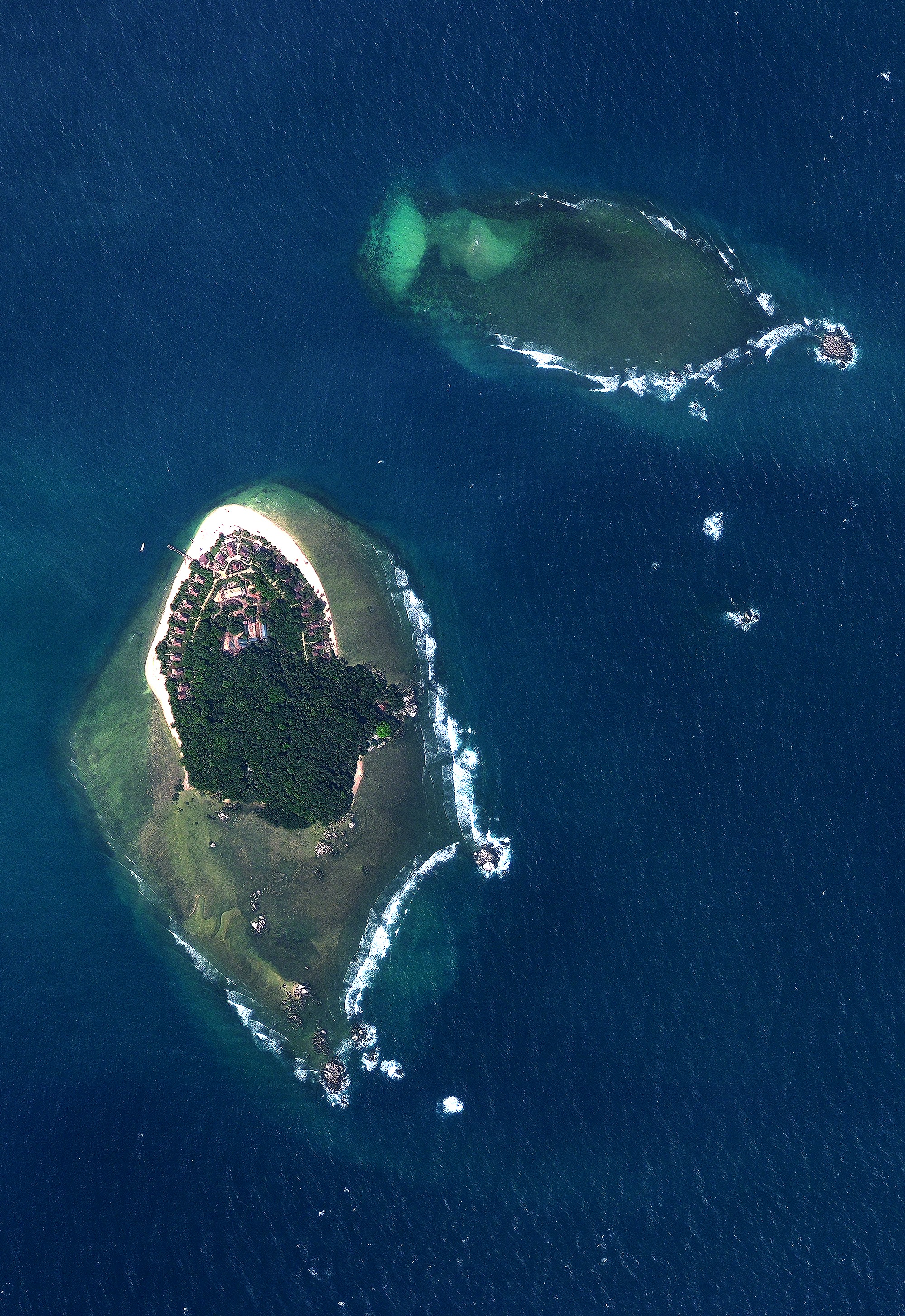
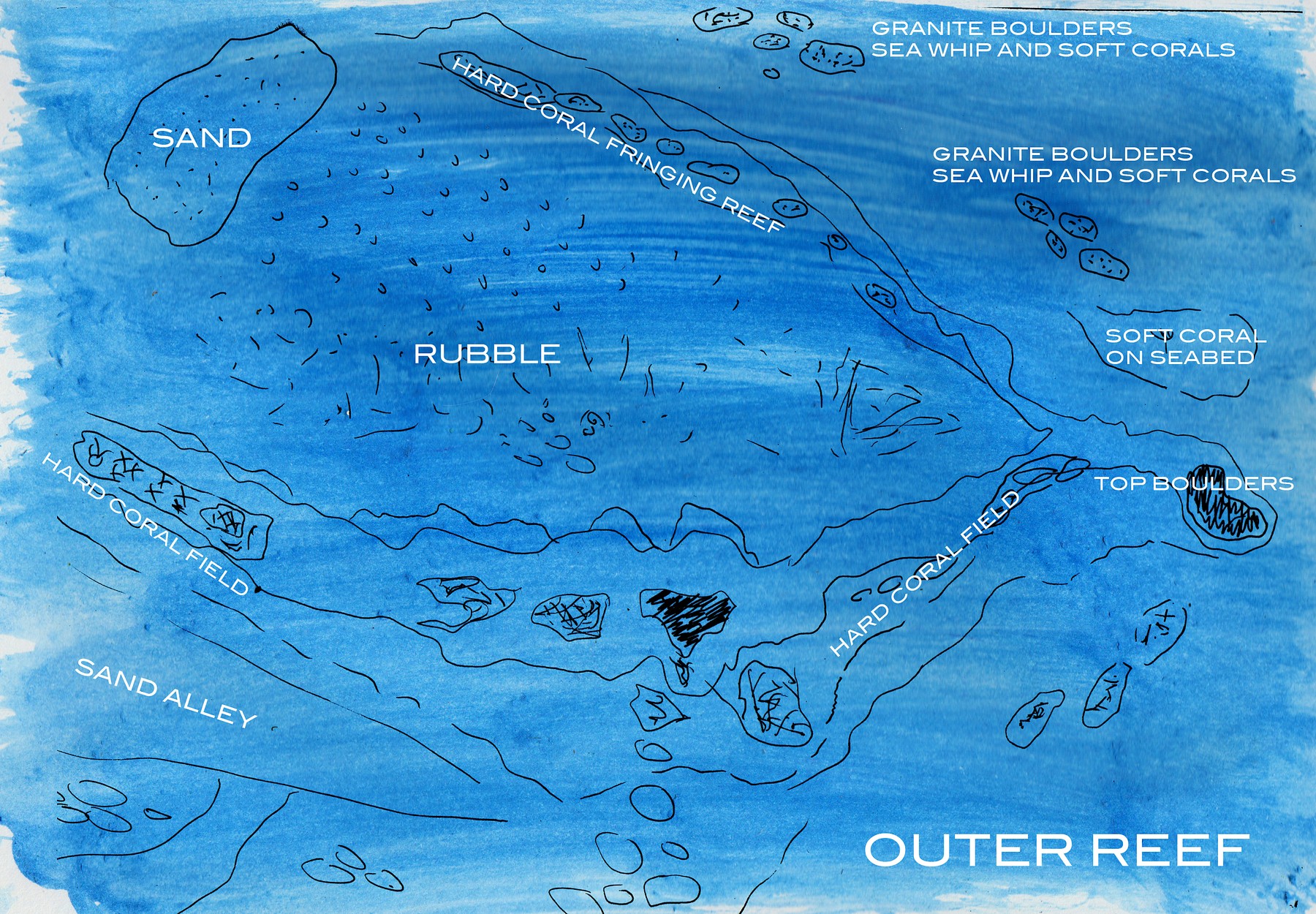
Seventeen named sites ring Nikoi Island, each with its own character shaped by current, depth and season — from the House Reef by the jetty to I Pod Rock's soft-coral gardens sixteen to eighteen meters down on the edge of the Sunda Shelf.
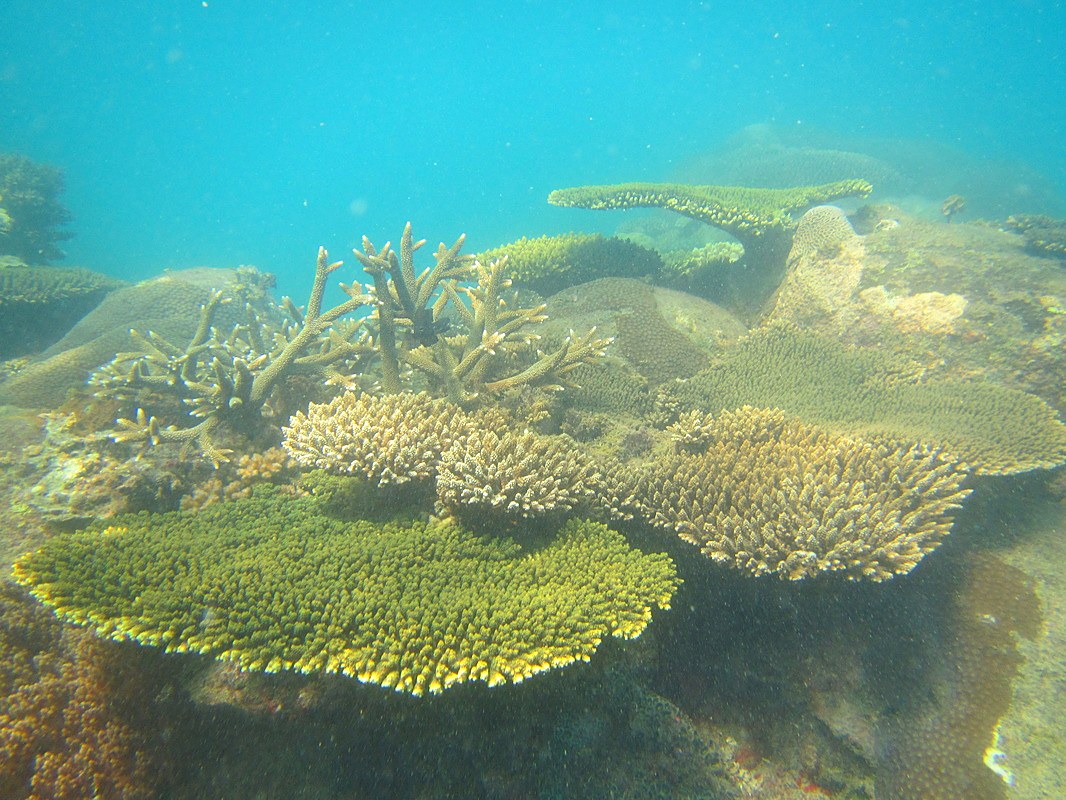
Strong current, table acropora bent by the flow, yellow tubasteras open in daylight, sweetlips and three fusilier species. Deep seawhip gardens below.
"There are more blue-spotted stingrays than anywhere else. We found 12 of them in only one dive."
Seawhip gardens and crevasses that may hold the last of the region's lobsters; nesting-season ledges for hawksbill turtles.
A shallow plateau of dense hard coral — accessible only in calm weather, when the swell doesn't churn the top.
Boulders a hundred meters out, trevally and anthias schooling in the current. "We do need some current to attract the fish."
Algae-stressed and overfished, but still teaching: living coral beside dead, sedimentation in progress, a place to watch a reef under pressure up close.
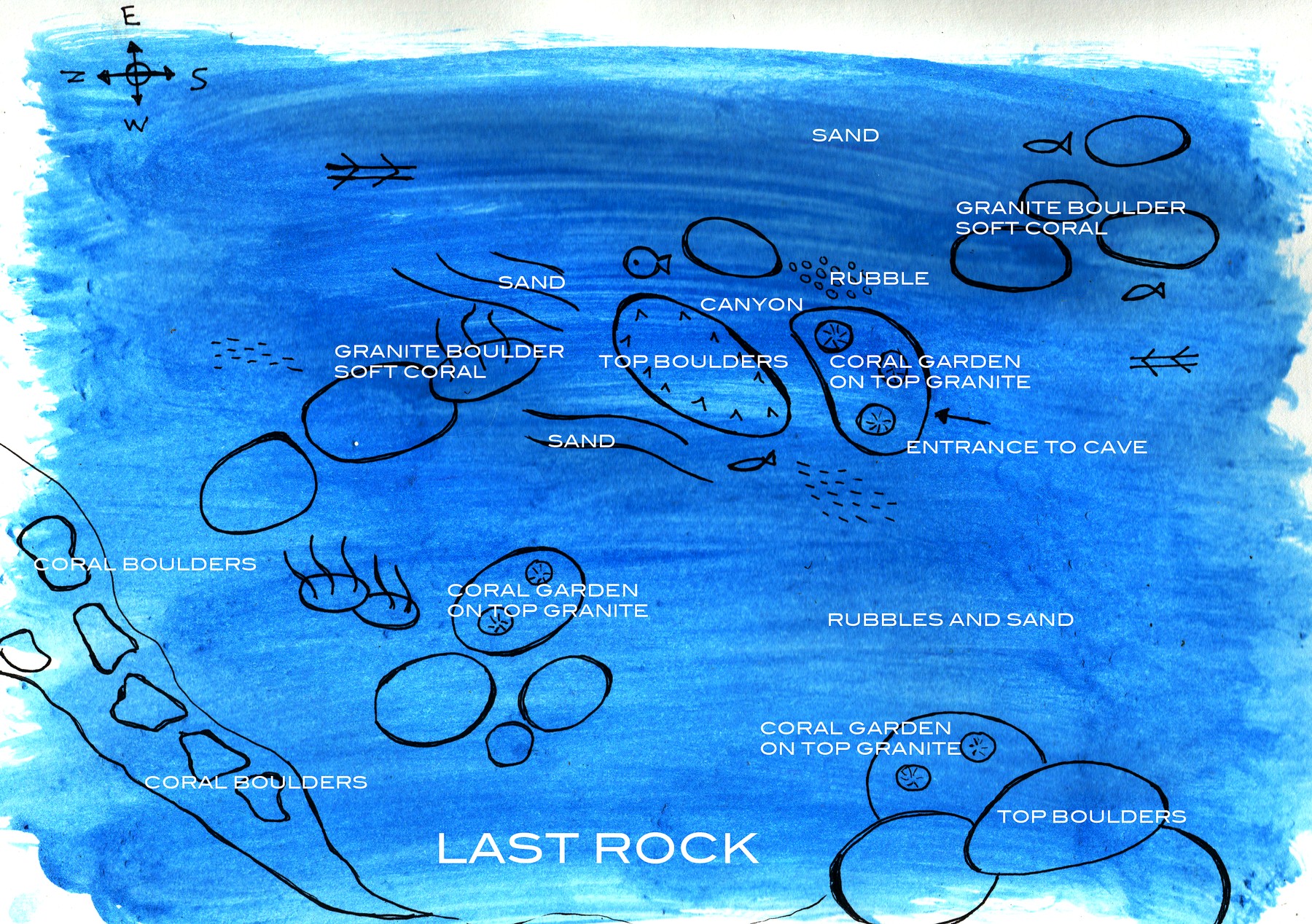
Prone to fast currents. Turtles rest under the ledges, and cracks between two big boulders fill with soft coral. In season, the last pelagics of the area come to feed on the fusiliers that hover over the rock.
Very good hard cover with many ledges. In season it becomes a spawning ground, with clouds of juveniles and often big angelfish and schools of fusiliers. Only diveable during the southwest monsoon — without the ripping current, an easy dive for Nikoi.
Diveable when the southwest monsoon blows. Thick with anemones and clownfish; just off the reef slope, good patches of seawhip and soft coral at around 16 meters. Near-surface boulders carry good hard coral cover, but northeast-monsoon swell can make the site undiveable.
At the end of the barrier reef, a line of boulders with straight faces drops to an 18-meter trench. Enough crevasses to shelter big angelfish, sweetlips and even giant stingrays in the sand — current off the reef can be fierce, so the dive needs planning.
House Reef Left, Mangrove Reef, Ripping Soft Garden, Whip Garden, Outer Edge, For the Crevasses and Hard Cover round out the seventeen — dived and logged, their full descriptions still waiting to be documented here.
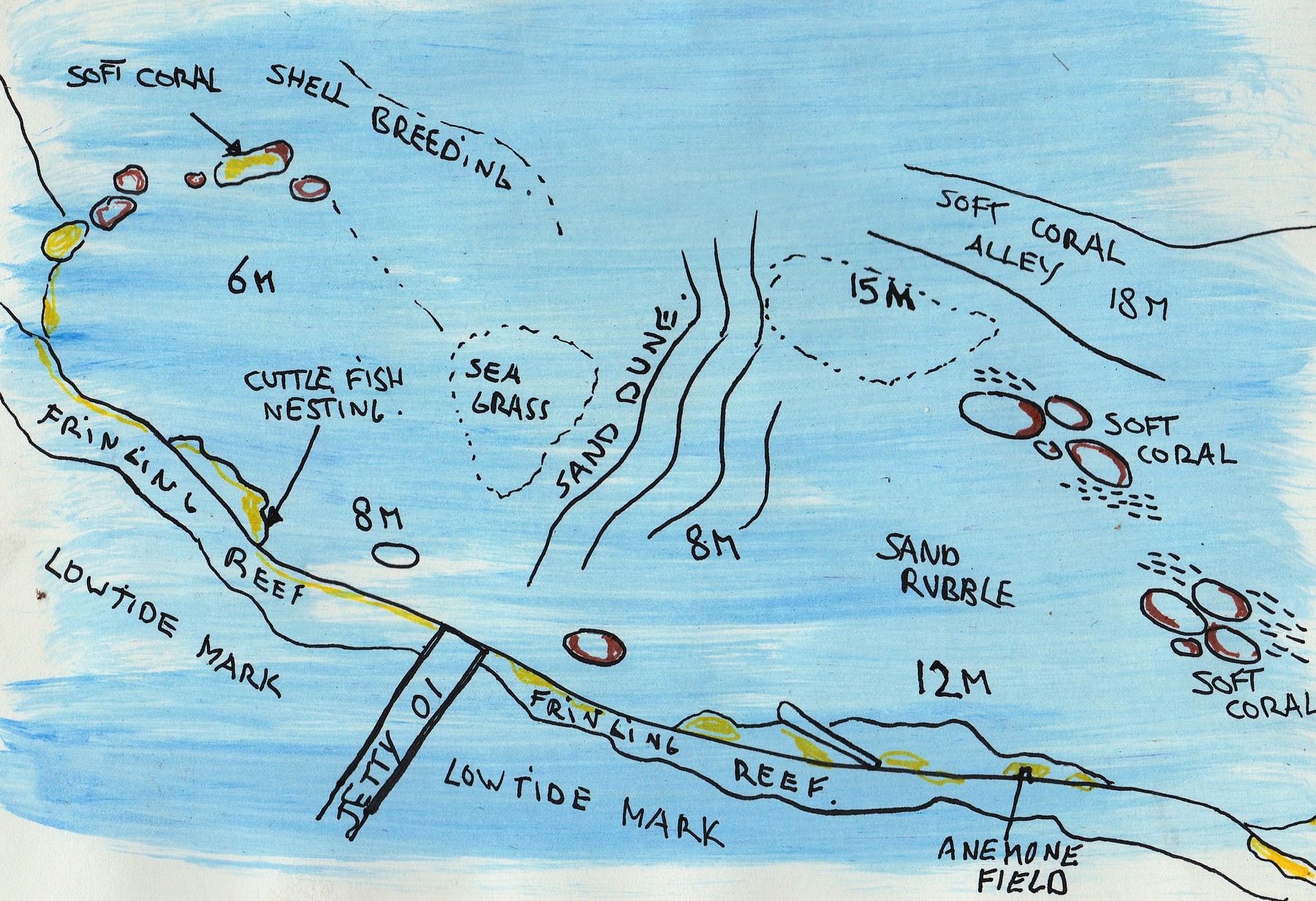
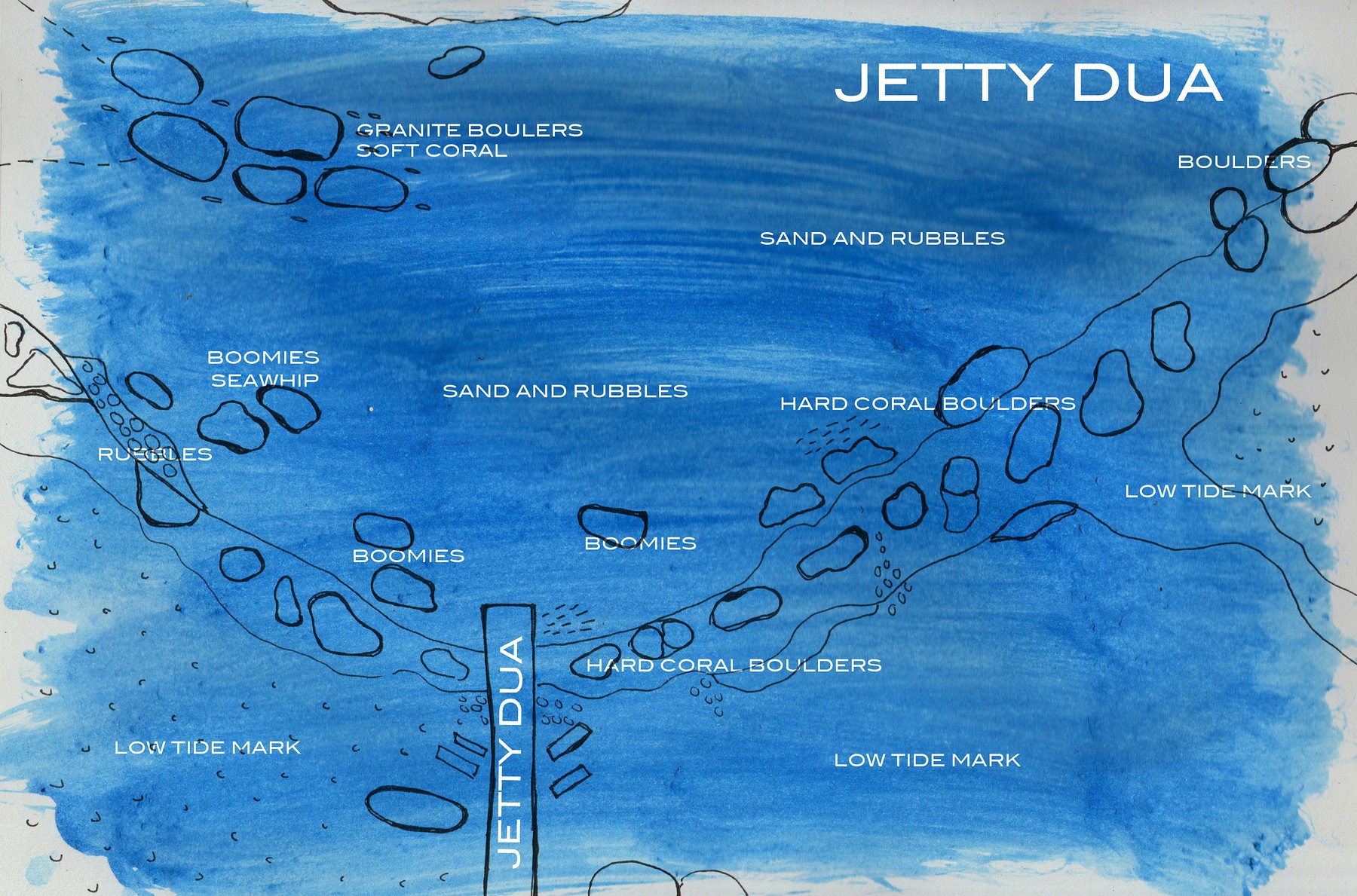
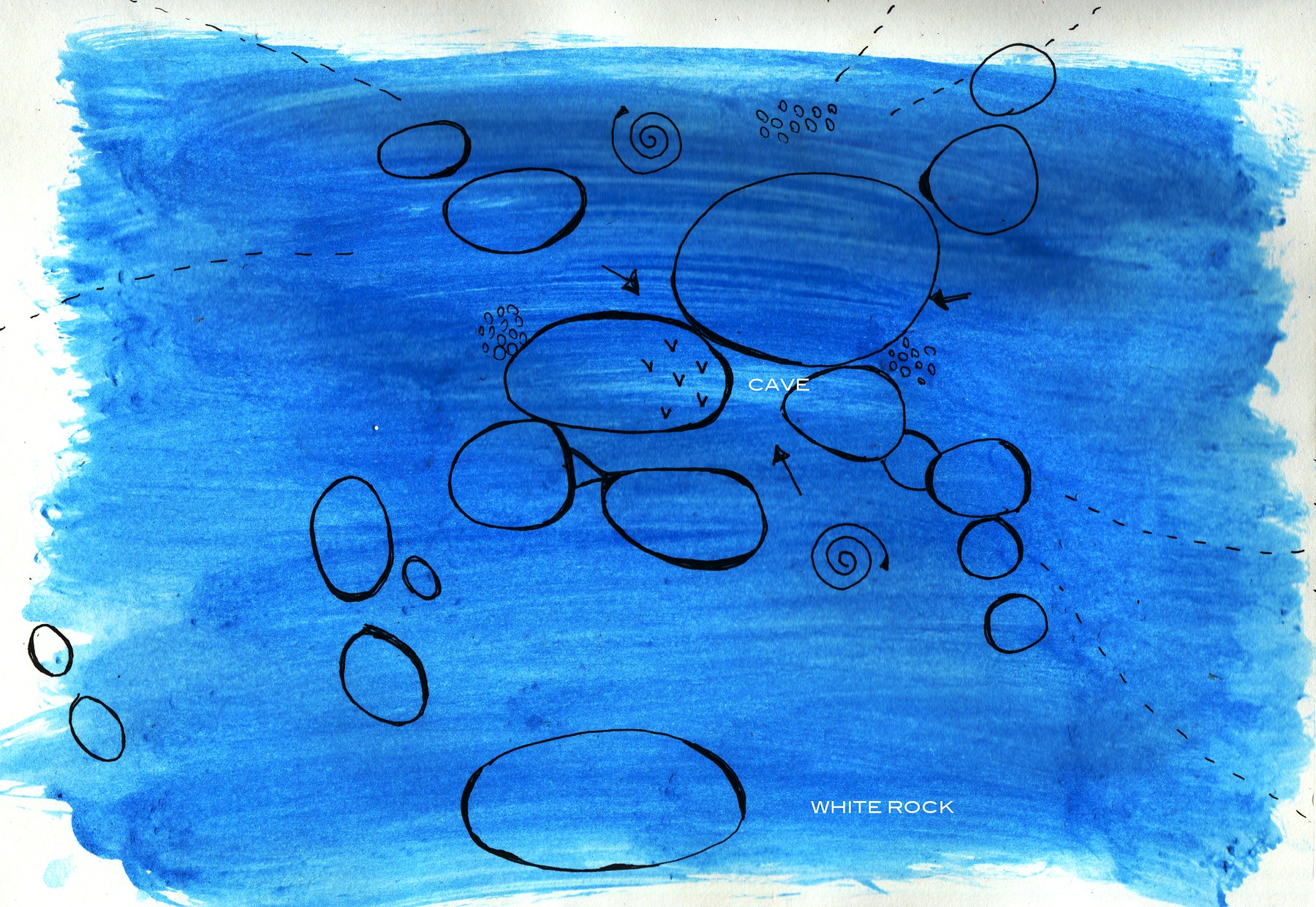
Hand-drawn from years of diving these waters — depth, current, seabed and coral cover marked out from memory, site by site.
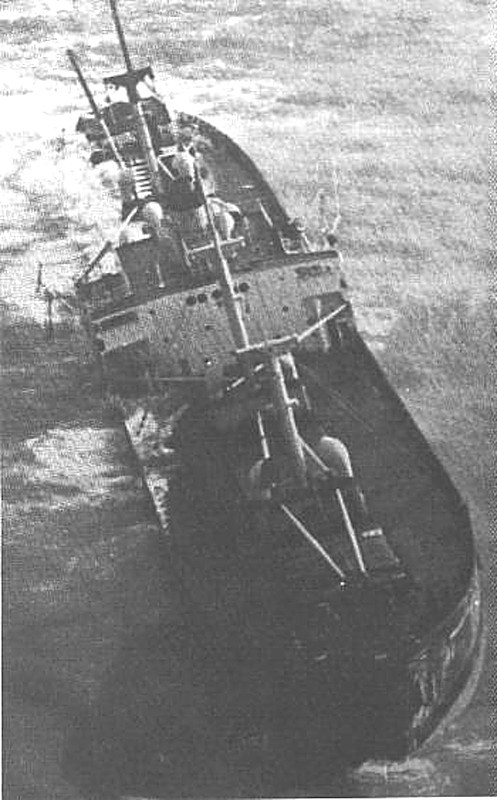
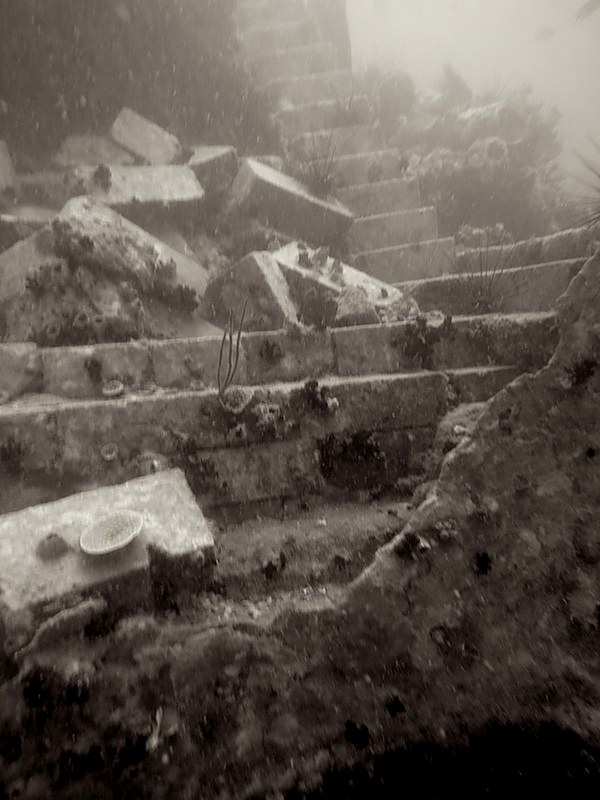
Not all of what's down there is reef. A mile off Nikoi lies the wreck of a steel fishing trawler, and not far from it the Valley Forge, a Liberty ship — both now their own small ecosystems, urchins and coral colonising the steel and stone.

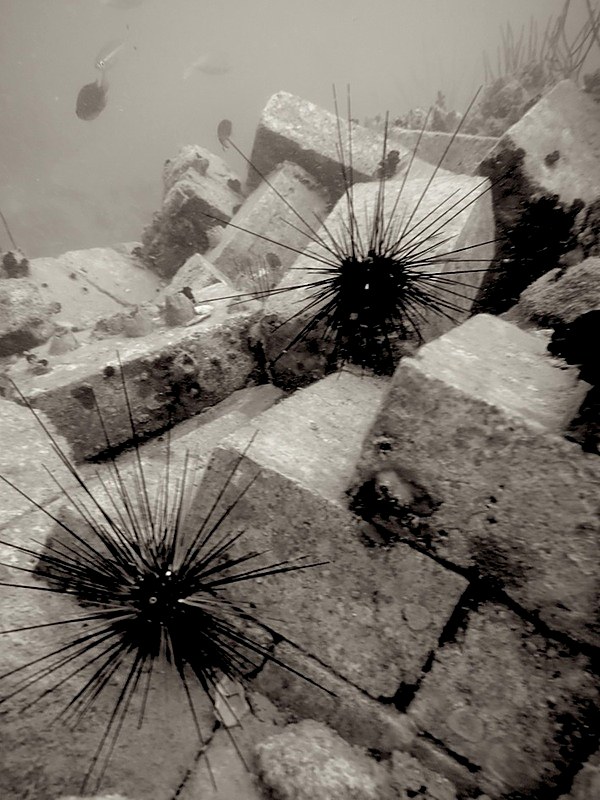
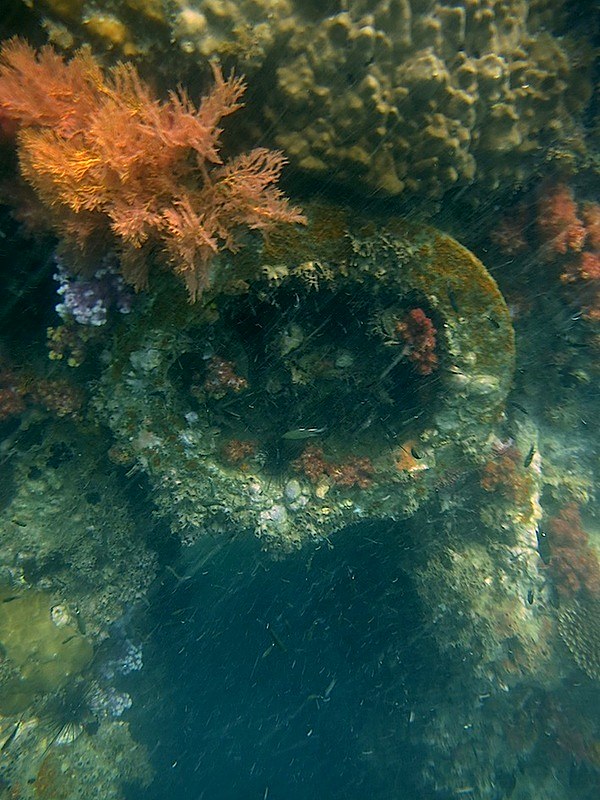
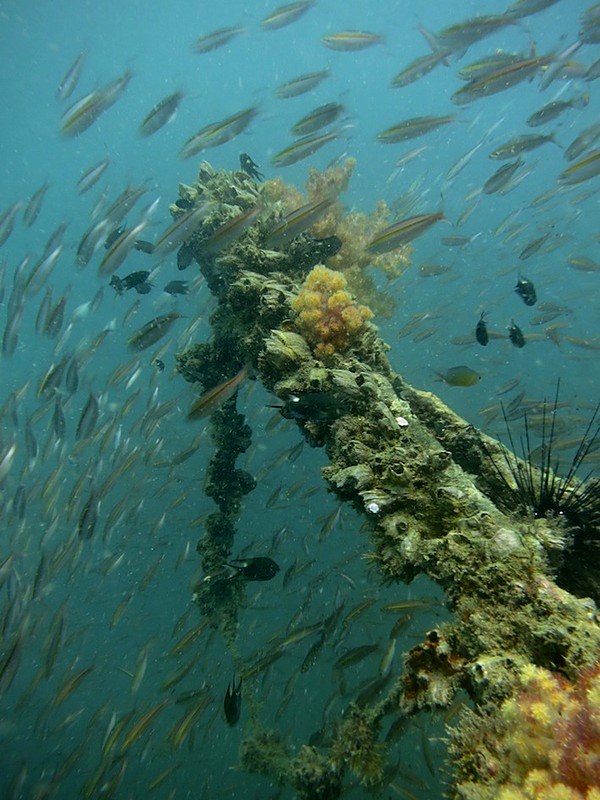
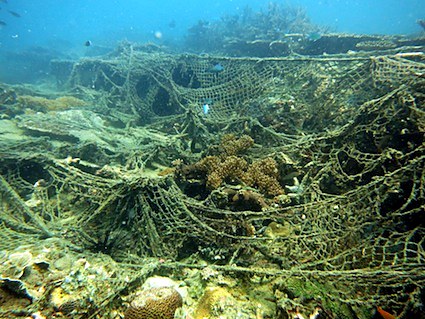
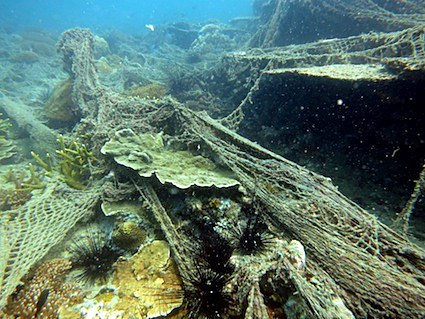
In 2011 a fishing net caught on the reef, wrapping almost the whole way around the island. By 2013 it had started to decay — a sour note on a place that otherwise felt untouched. But something unexpected happened alongside the decay: fast-growing Acropora coral began building over and incorporating the net rather than dying against it. Some colonies fought the intrusion and lost; these built with it, and survived.
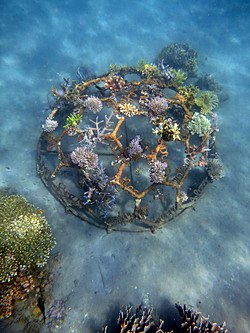
With fishing pressure rising, the idea was to reuse what the storms and the jetty already left behind: broken pylons and rebar, built up into structures that give fish shelter and give broken coral fragments — the kind fishermen's traps snap off — somewhere to be reattached and grow on. Pilings salvaged from Jetty Dua became the anchoring and foundation; rebar frames and a few "fish hotels" of bottles, glassware and cement were set around them to encourage new growth. It's a small pilot, sited in a sheltered mangrove-side spot where the current is gentler and fast-growing species like Acropora can take. If it works, it's a model that could scale to other parts of Bintan's east coast.
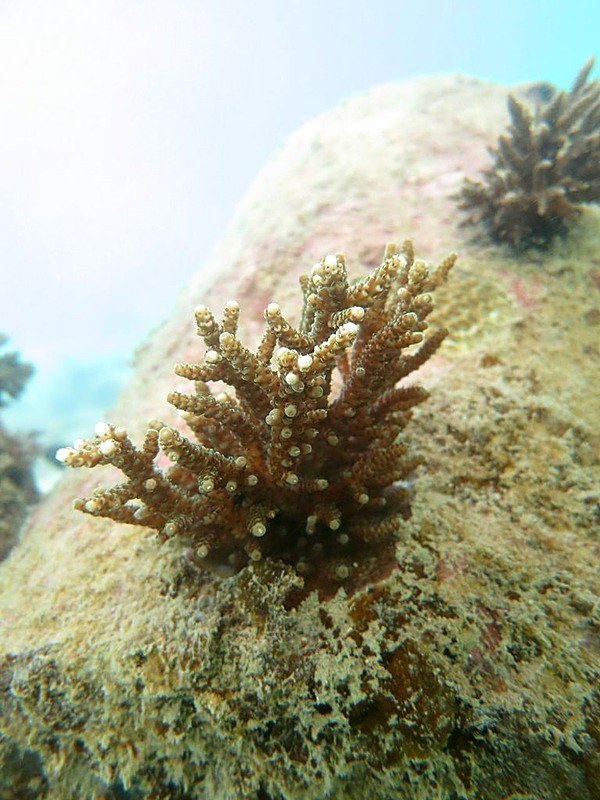
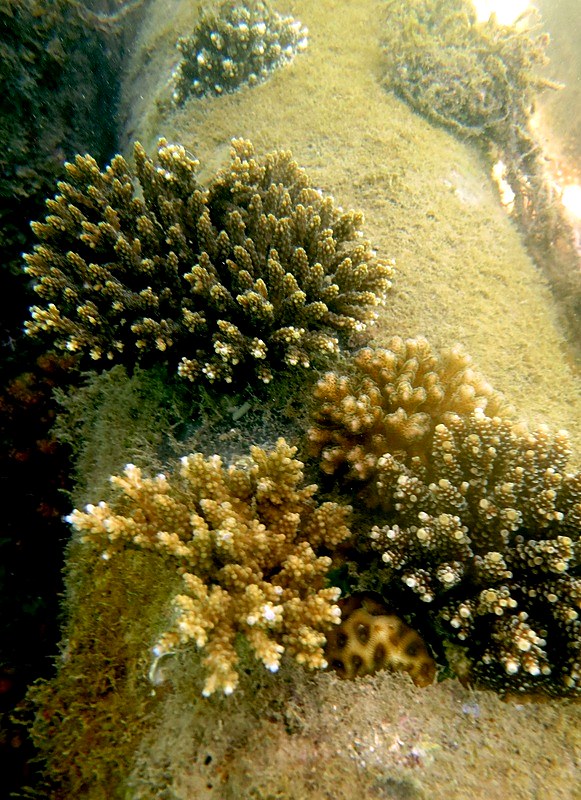
Nikoi's waters aren't one habitat but several, each with its own residents and its own reason to matter.
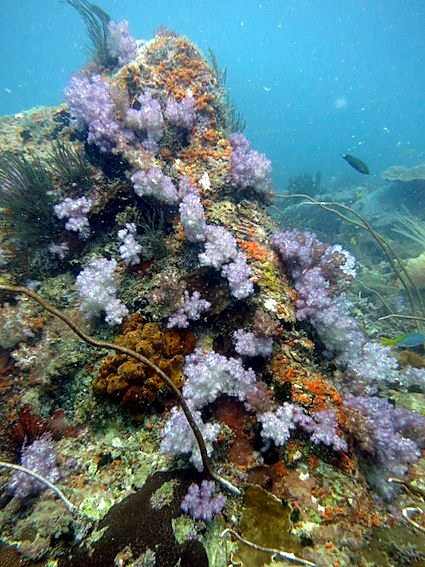
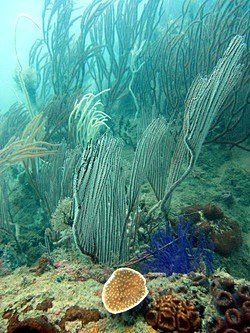
Ripping tidal currents feed spectacular soft coral gardens and fields of seawhips, both on granite boulder substrate and the rubble sandy bottom — too varied to identify by eye alone; it would take samples and a microscope.
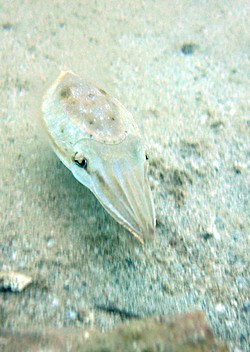
An underwater treasure hunt, not glamorous but rewarding: baby cuttlefish, sand anemones, giant pipefish, stonefish, soft corals, sea stars — species you won't find on the reef proper. The banks also feed green turtles through the nesting season.
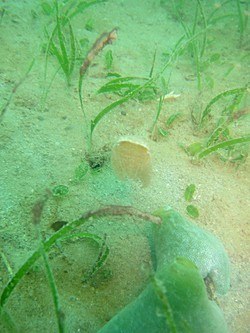
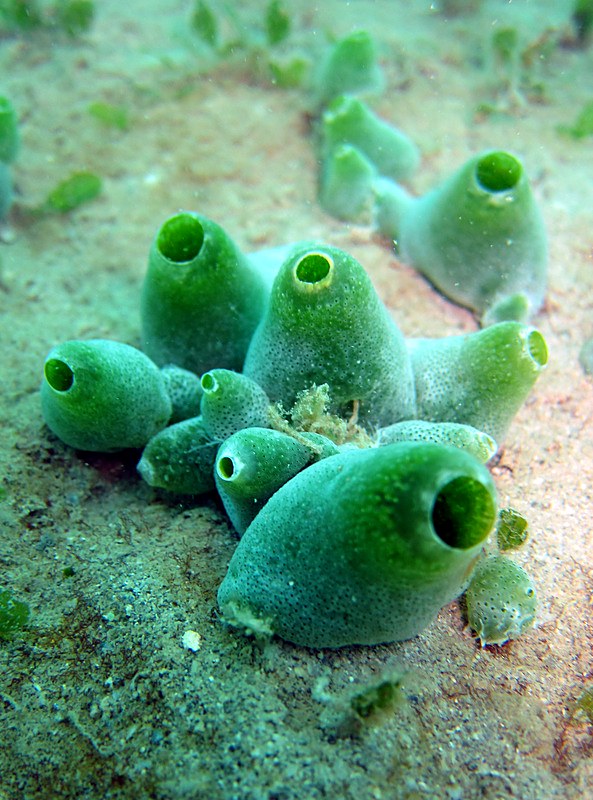
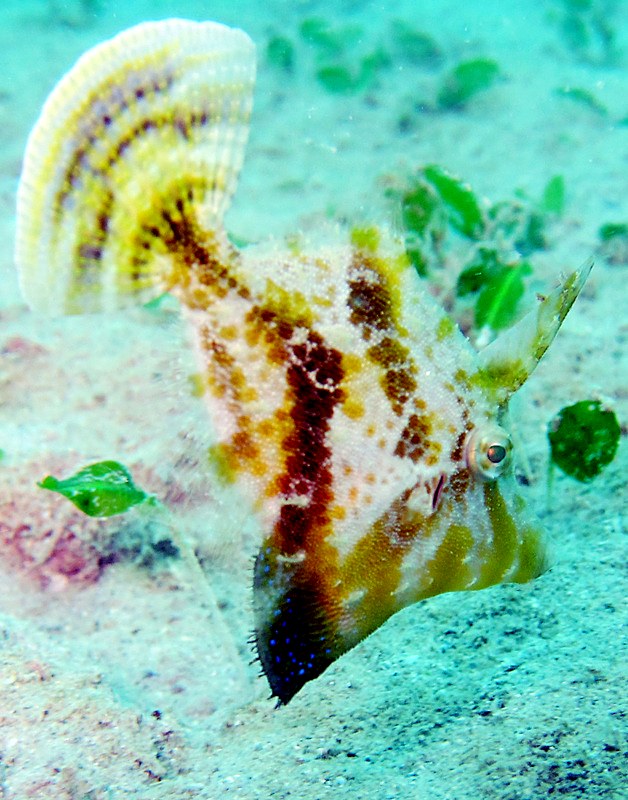
Fields of seagrass hold the sandy bottom against the tidal flow and shelter squid, which hatch their egg clusters here alongside filefish, cuttlefish, tunicates, bristle worms, gobies and small eels.
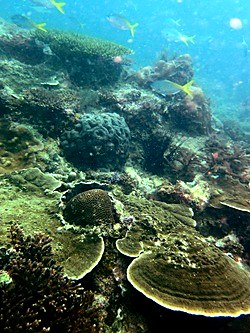
Beyond the low-tide mark, a fringing reef rings the island. The northeast coast is the most pristine, with healthy hard coral cover; the northwest bank carries its own hard coral thriving at 3–6 meters, though the mix of species shifts with the murkier water and lower light later in the year.
Two moments worth keeping a record of, not because either was handled well or badly, but because documenting them is what's actually been done.
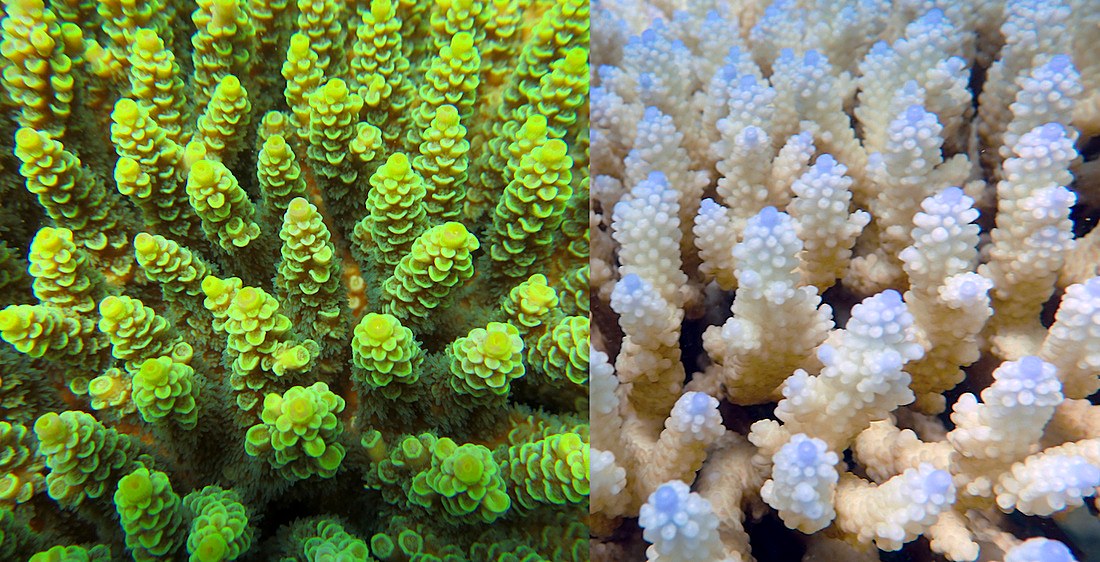
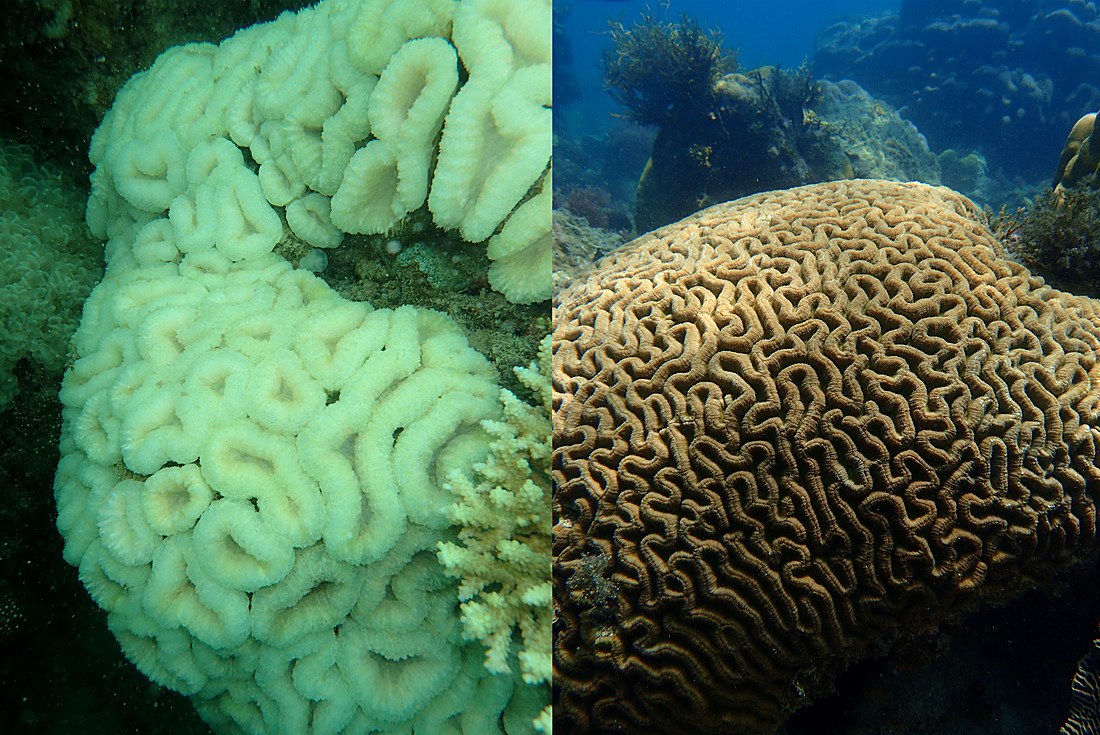
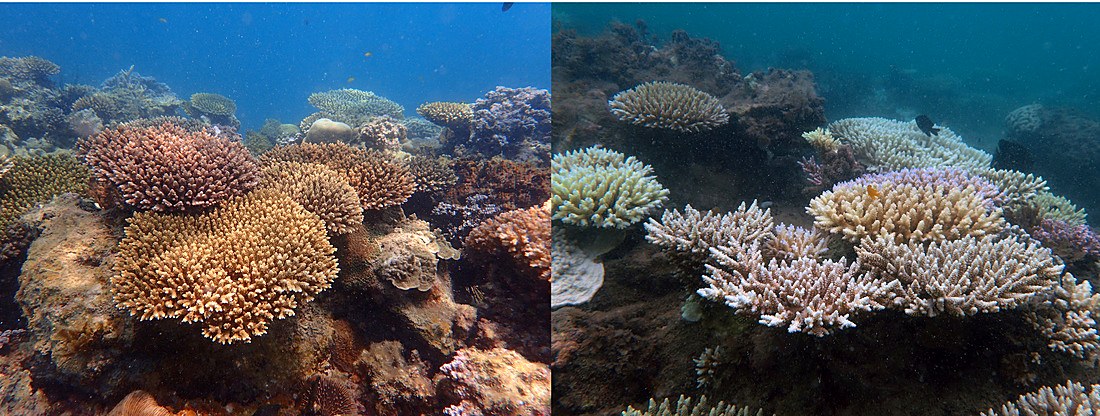
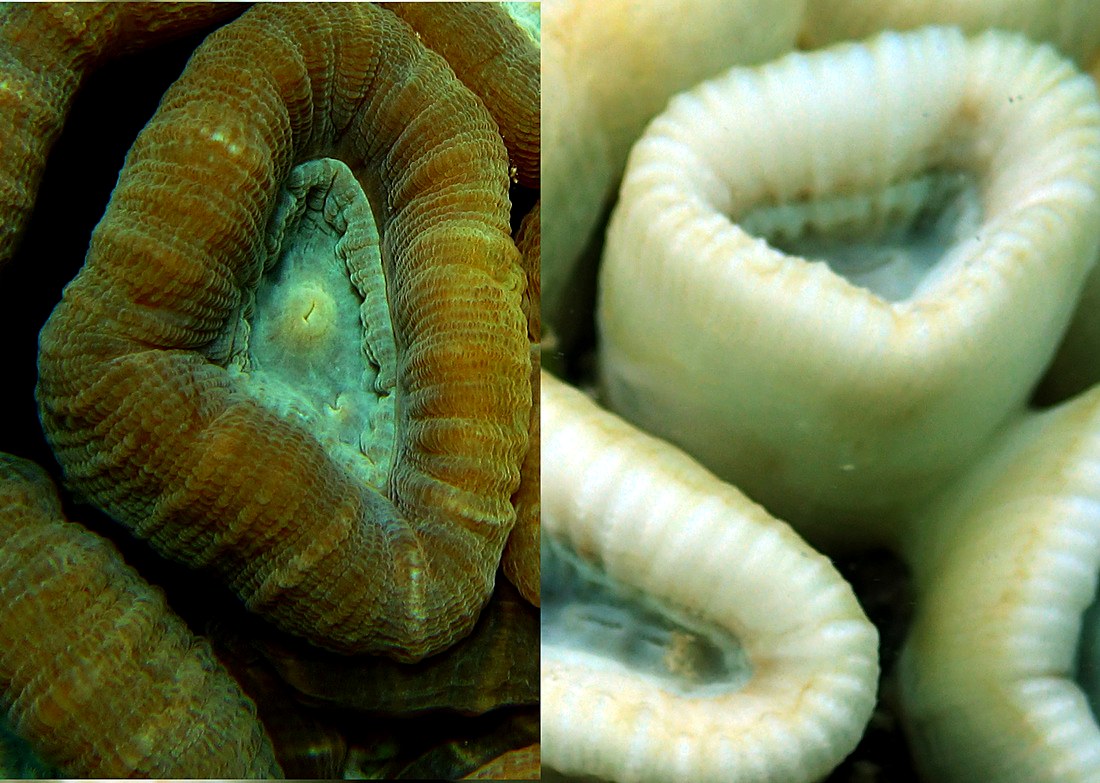
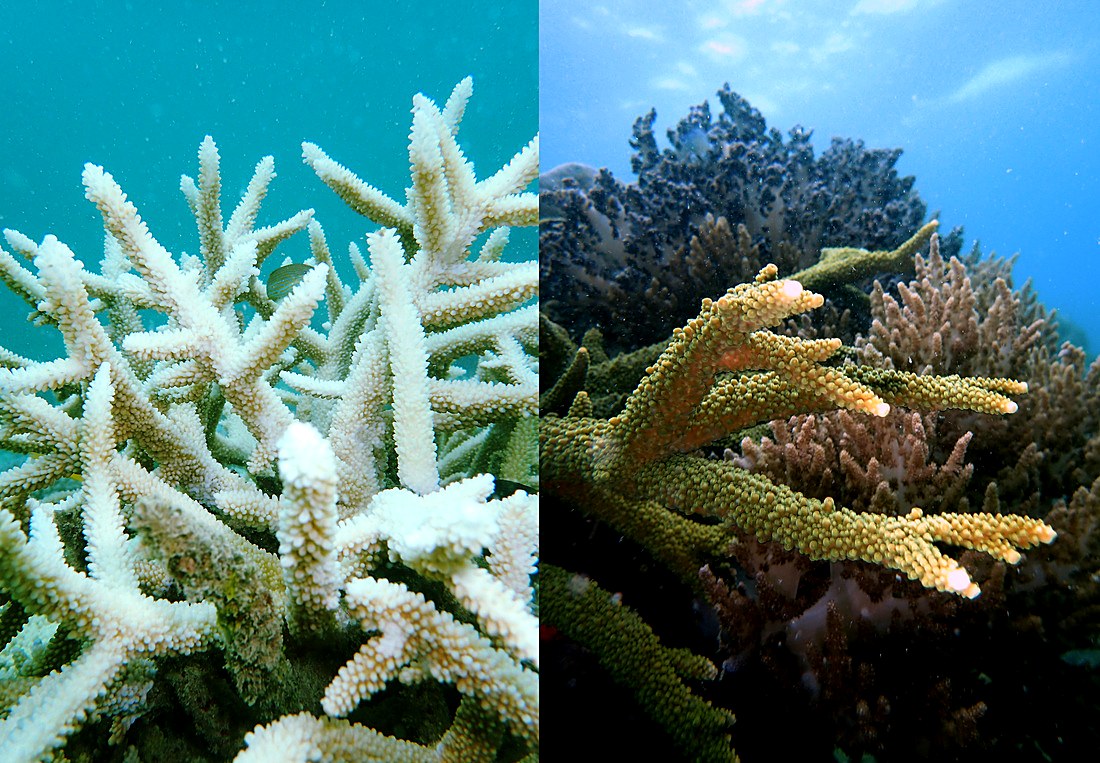
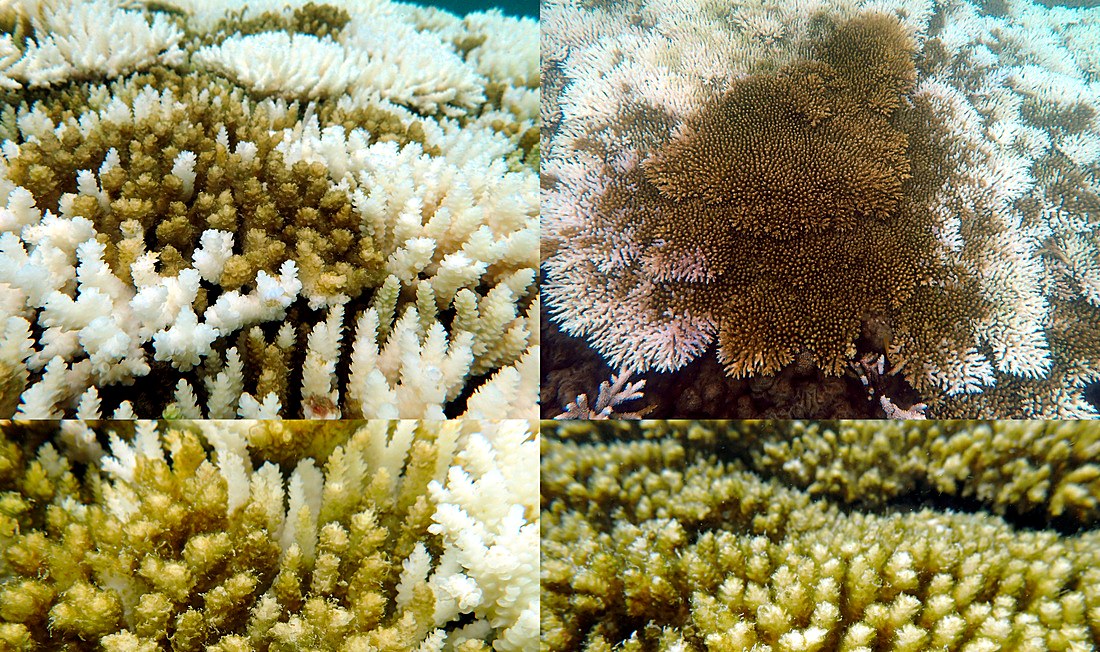
A bleaching event hit the reef in the spring of 2016. The pairs below are before-and-after comparisons of the same coral heads — healthy colour on one side, bleached or stressed on the other, photographed to track how far it went and which colonies pulled through.
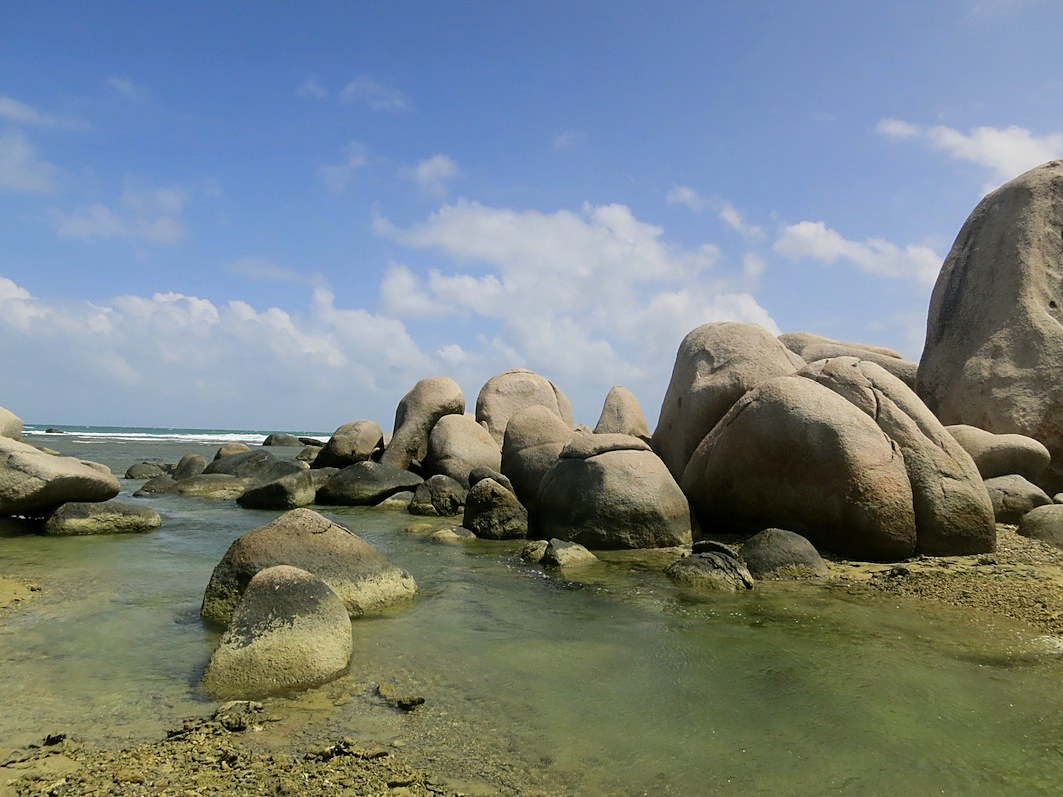
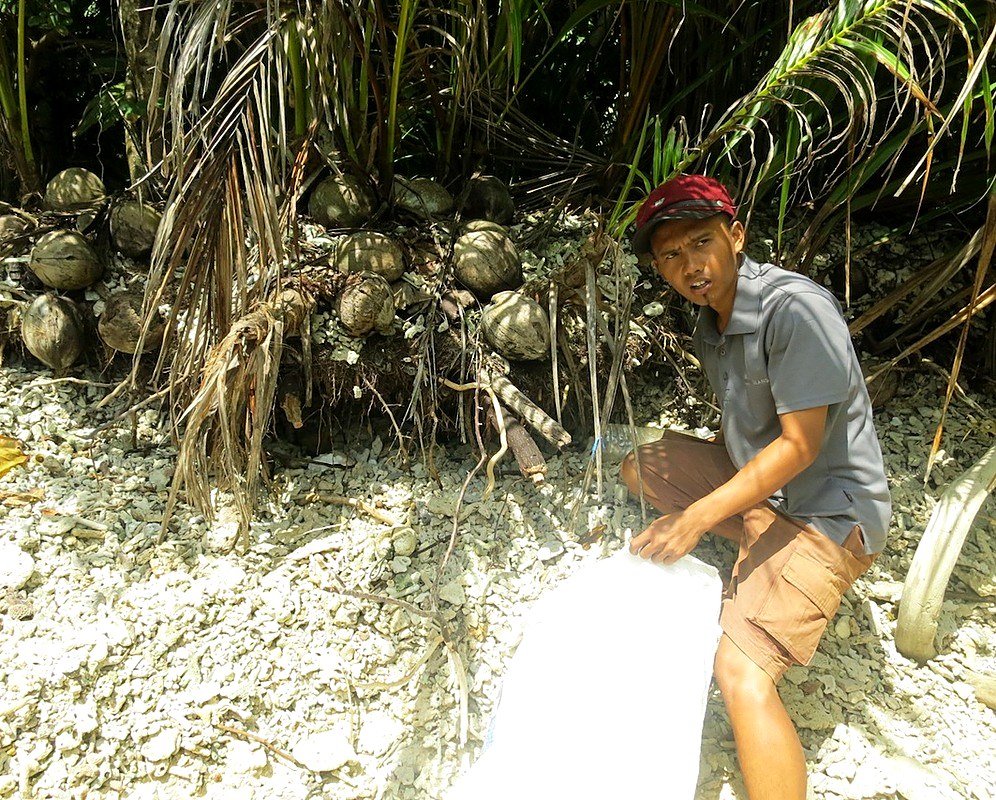
A photographic survey of the coastline after an oil spill, checking the rocks and mangrove roots for how much residue remained and how the shoreline was recovering.
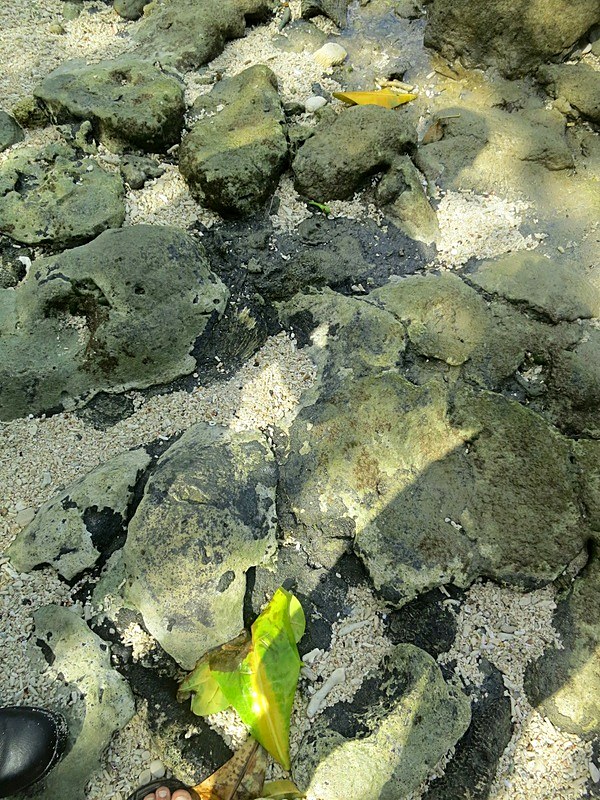
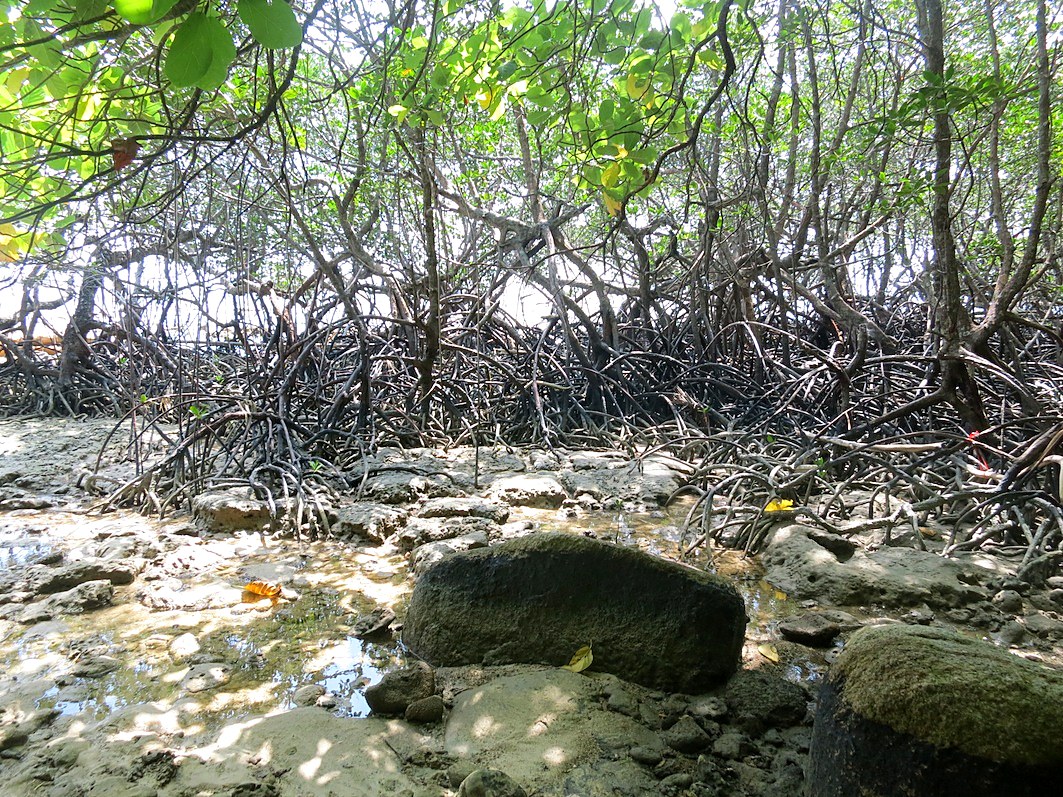
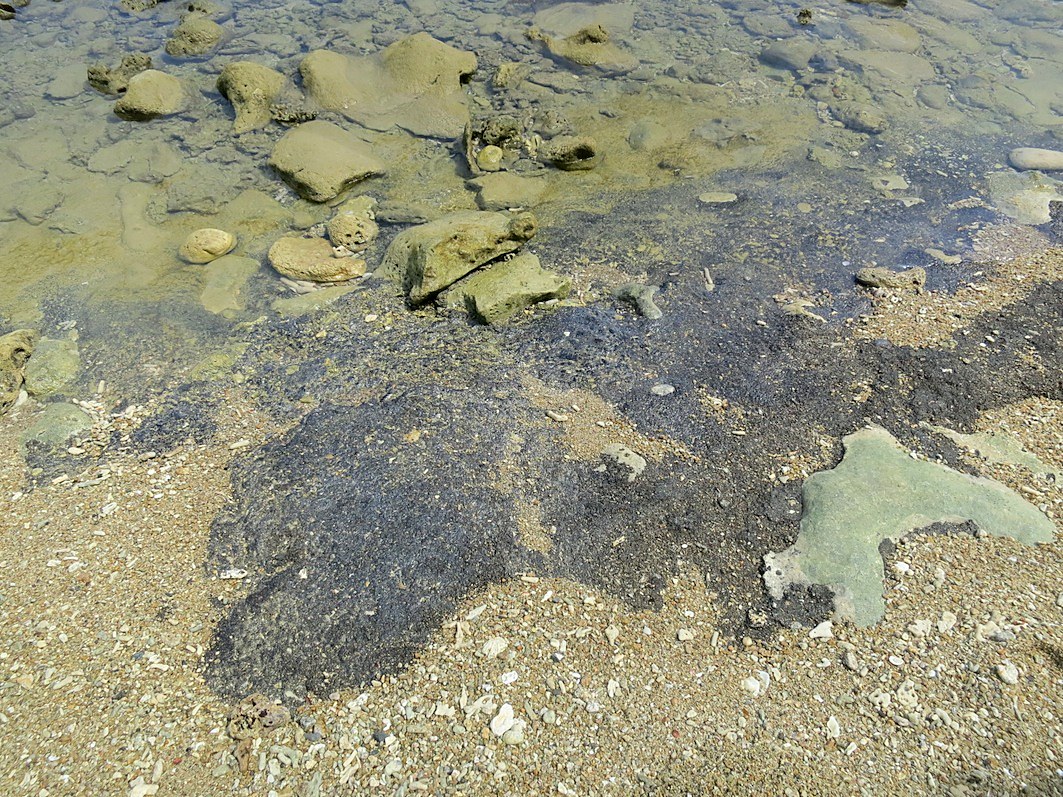
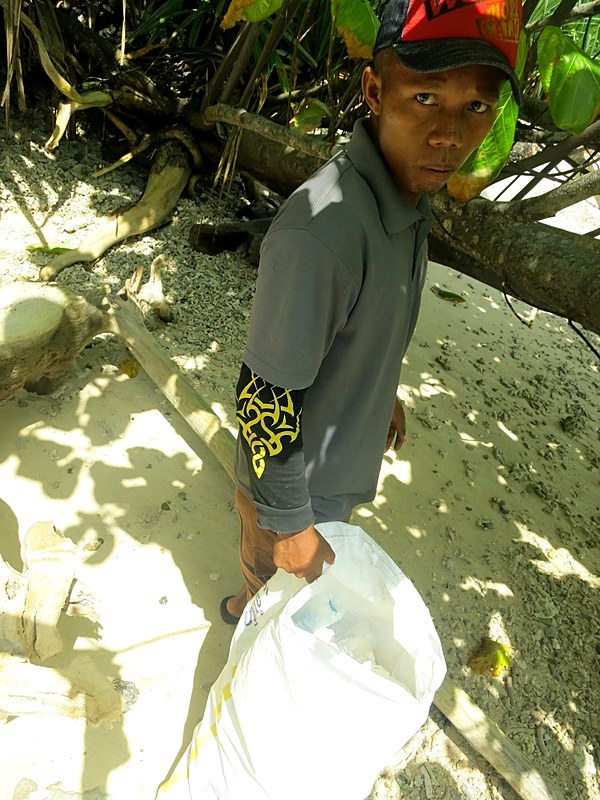
With a mass bleaching event expected worldwide, the coral species in front of the jetty are photographed and reviewed every couple of months — a simple, repeatable way to notice change before it becomes a crisis.
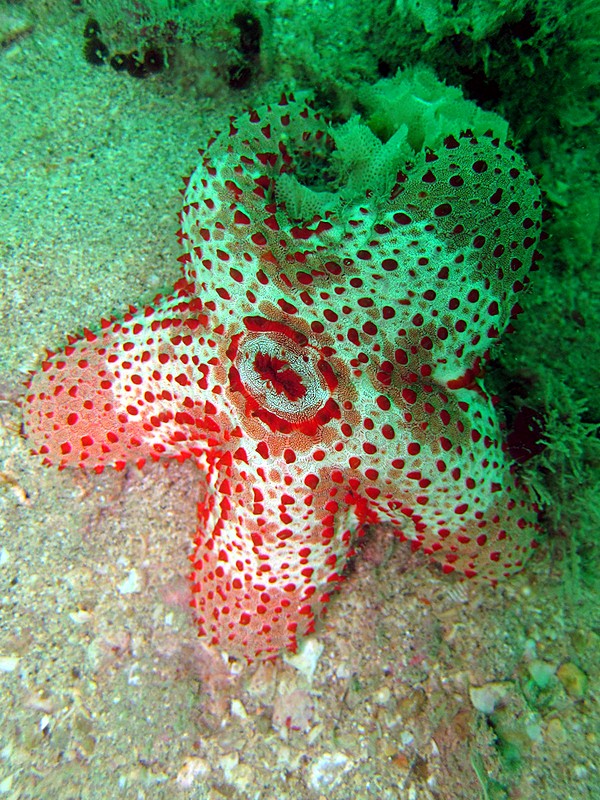
Not everything on the reef has a name yet. This seastar, photographed on the 5th of December 2011, has never been matched to a known species in any survey done here — still filed as an open question rather than an identification.
Once the current starts running, it's worth waiting for: sun coral polyps that normally only open at night come alive in daylight around Nikoi, feeding in the current — "a real spectacle, like a monastery full of monks, chanting their prayers." Photographed on the 9th of May, 2015.
Fishing Community → — the fishermen working these waters, and the ongoing work of finding a way the reef and the fishing can both hold up, is a story that spans this whole coast, not just Nikoi. It now has its own page.
Mooring blocks are installed to keep boats from anchoring directly on the house reef — a small, quiet fix, and one of the few conservation measures specific to this one island. A formal proposal for a no-take zone around Nikoi was also drafted — read it here (PDF) →.
The wider conservation picture → — the reef threats and the grassroots work happening across the region now has its own page.
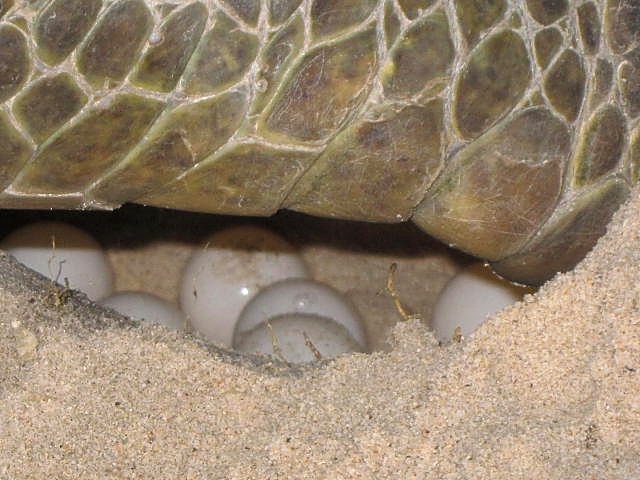
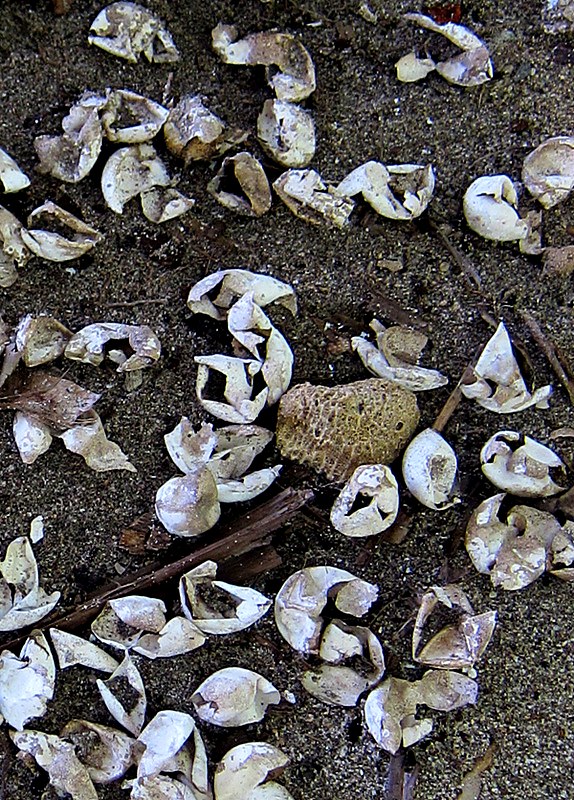
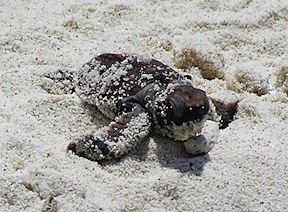
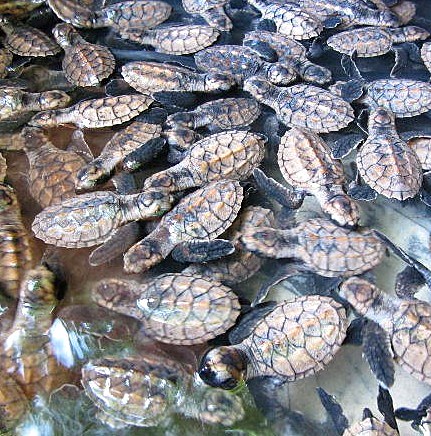
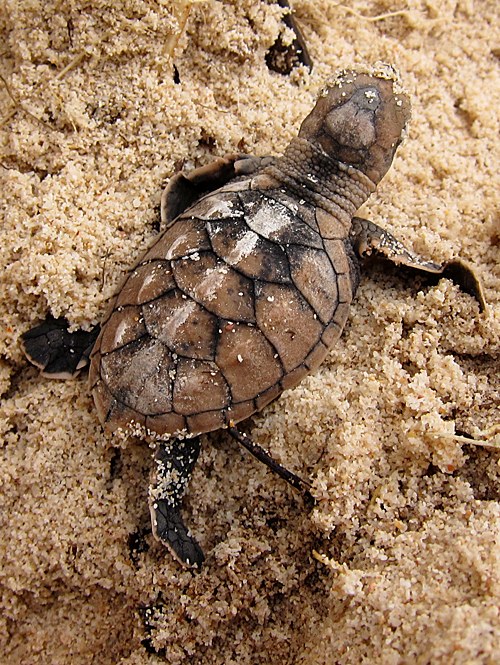
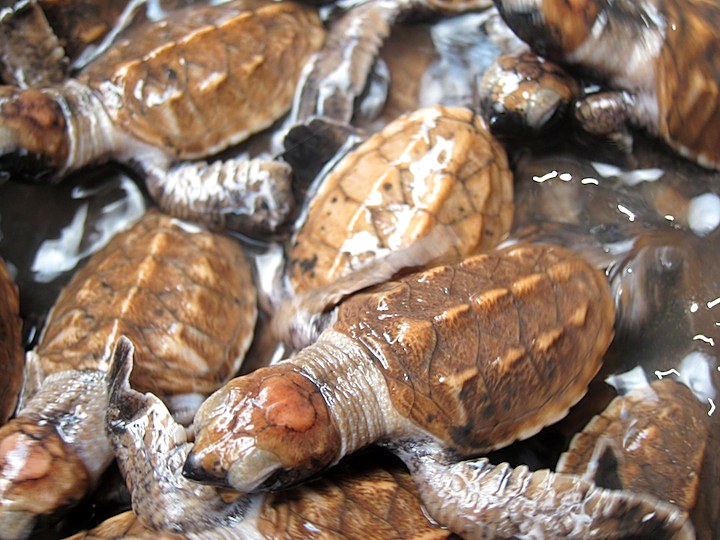
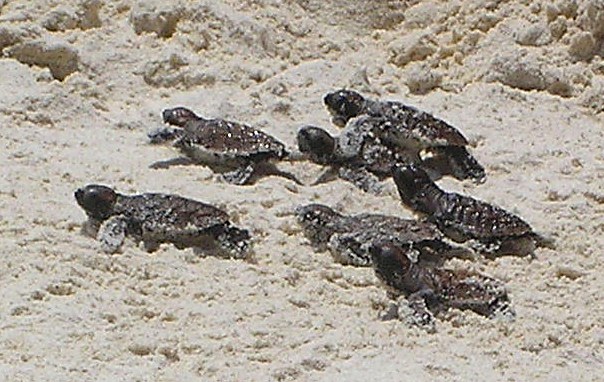
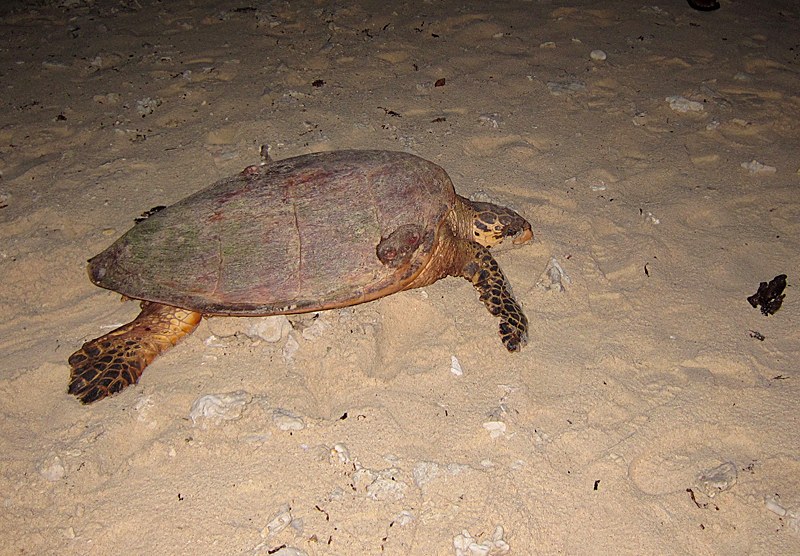
Two species nest on Nikoi's beaches — the Green turtle and the critically endangered Hawksbill. Around 60 to 140 eggs per nest, a 60-day incubation, nesting season running March through September. In 2011 alone: 67 nests, roughly 4,000 successful hatchlings.
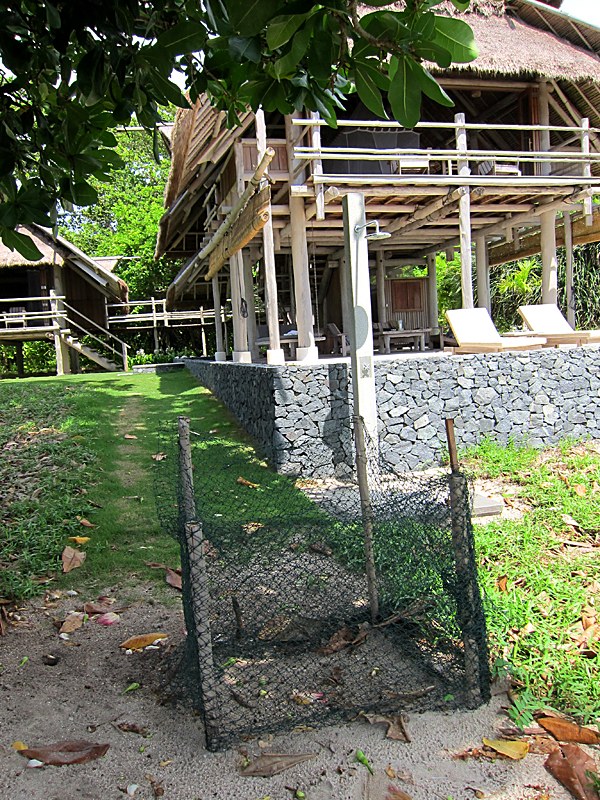
The program's philosophy, in its own words: "do less to achieve more. Leave nature alone, stay out of the way if we can, enjoy it while we can and help when it is necessary." Nests are fenced only against monitor lizards; no artificial incubation unless the eggs are genuinely at risk. Unlike much of the wider Riau Archipelago, nobody harvests the eggs here — "a real contribution to the protection and conservation of the ocean" — though turtle eggs are still openly sold as a delicacy in Tanjung Pinang.
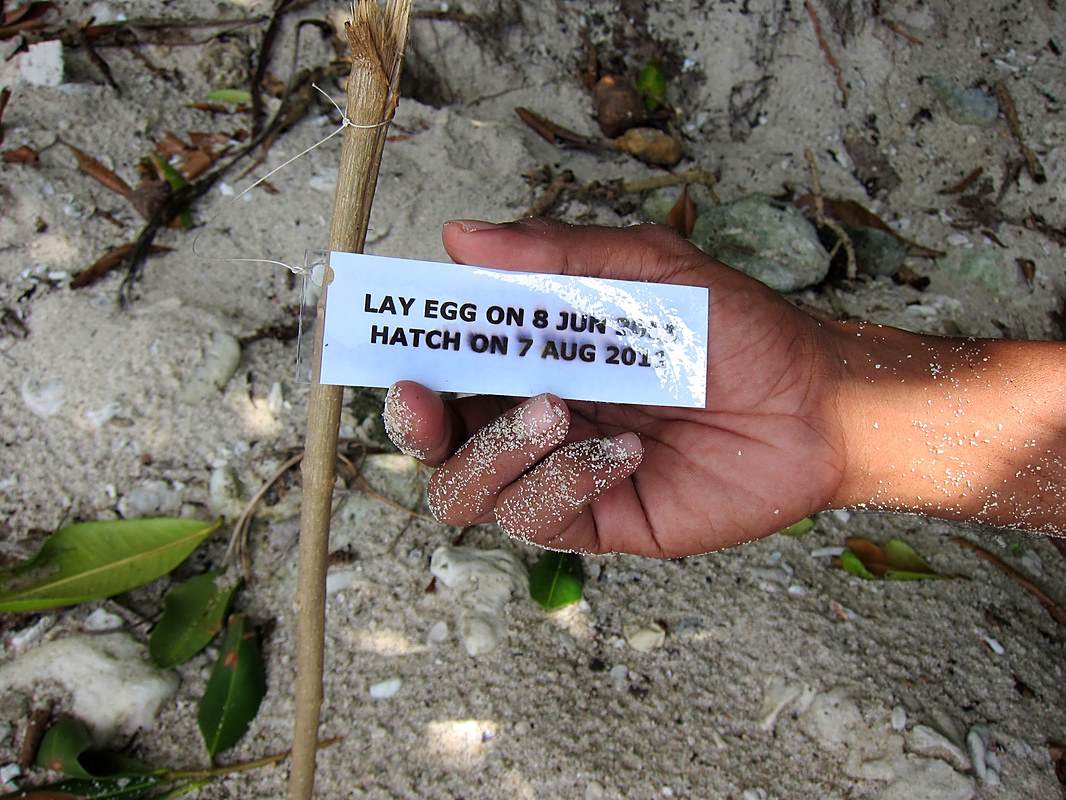
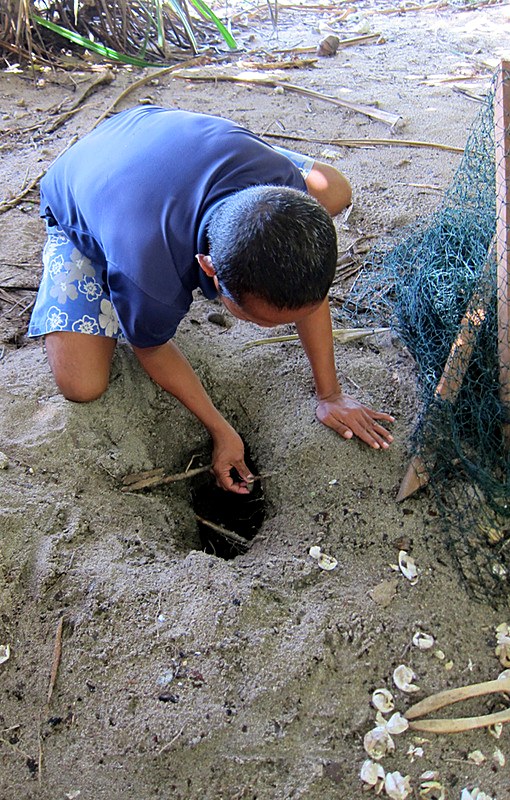
Nesting and hatching happen on no fixed schedule, so guests can ask to be woken during the night to watch — though nature does what nature does, in its own time. It's the staff on night patrol, watching the beach for monitor lizards, who find most of the nests; without them everyone would be asleep and the whole event would go unnoticed. Every nest is logged by hand — a laying date, an expected hatch date, tagged on a stick beside it — and the eggs counted only when someone was present for the laying itself; a nest found after the fact is left undisturbed rather than dug up to count.
Interested in the turtle program's future? See Get Involved →
29 January — The season's first nest, a hawksbill, discovered at first light by following her tracks up the beach. No one saw her lay; the nest was checked for eggs and protected against the island's monitor lizards. Hatch expected around 29 March.
5 February — The monitor lizard won this round. It dug into the first nest overnight; only two eggs survived. "This is nature, and since we have taken the turtle's side, we need now to work faster than the lizard."
6 February — Two more turtles came to check nesting sites but didn't lay — the sand had shifted more than usual this season, and they seemed to be testing spots for shade and temperature. A note on the wider picture: in Tanjung Pinang's traditional market, turtle eggs sell for around 4,000 rupiah each — more than the turtles themselves fetch, at five or six US dollars. "At least on the island we do not have to worry about poachers... we can do our small part here."
27 March — Two hawksbills nested successfully, one by Yogi's bar, one behind the pool — both found just ahead of the monitor lizards. Guests watched the eggs being covered without disturbing the turtles. Hatch scheduled around 27 May.
17 April — 15 hatchlings in the morning, a lower count caused by a monitor lizard disturbing the original laying; many eggs never hatched. Unusually, this nest hatched in daylight at low tide rather than the more typical night and high tide.
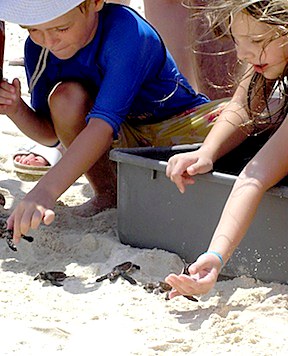
5 May — 30 hatchlings, three weeks ahead of schedule, in full daylight with a crowd of kids watching and no monitor lizard in sight. More than half the eggs in that nest didn't make it — recovered afterward, just in case. High temperatures and the year's brightest moon were the best guess for the early birth.
22 May — The biggest hatchling count of the season: 171 baby turtles reached the ocean by 9am. Turtles had been sighted on every dive that week, and a line system was set up so they could reach the water undisturbed. "A sign of hope in a world loaded with bad news about the ocean."
1 June — Two new hawksbill nests, one at the pool beach, one in front of room 15.
22 June — 77 hatchlings out to sea.
11 September — Season's end, and not a single green turtle nested this year — only hawksbills, 14 recorded nests, over 150 hatchlings across the season. No firm explanation; weather, fishing pressure and pollution were all on the list of guesses.
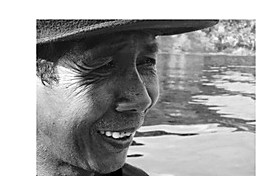
I was invited by Dr. Eddiwan, head of Kepri's Conservation Department, to visit the island of Mangkai in the Anambas archipelago. We only stayed one night, but I was fortunate to spend it with Pak Siong — an Orang Suku Laut elder who has breathed and lived with the spirit of turtles all his life. He lives close to Letung, the main town on Jemaja island, and has travelled this sea everywhere; a true living encyclopedia on the local ocean. Pak Siong can neither read nor write, but his mind is as sharp as the most accredited PhD. He should be made doctor emeritus for what he knows about sea turtles.
This conversation didn't happen on Nikoi — it happened out in the Anambas, where the pressure on turtles is a great deal more direct than it is here. But it's the clearest first-hand account I have of why the eggs trade persists, and what it actually costs someone to walk away from it.
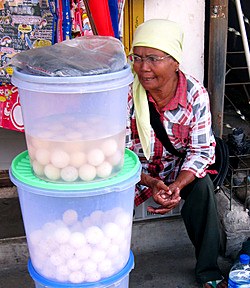
What is the main issue in trying to preserve the turtle population?
The money. One egg is sold in Tanjung Pinang for around 3,000 rupiah right now. When I was young I used to collect eggs on Durai island. We would work all night, carrying baskets on our backs, until the sun came up. Sometimes we'd get 50,000 eggs in one night. At that time the eggs sold for 15 rupiah, but it was still a lot of money. You know, I have two kids, and they need to go to school. But I don't collect eggs any more. I try to find another way.
What happened to Durai island? There was a project there — do you know the Biosphere Foundation?
Yes, I met Gaie and Laser, Jay and so on. I worked with Pak Lahani. It was working — we released the turtles. But then there was no money, so people started to collect the eggs again. Premier Oil, who was the sponsor, stopped. I used to grow sea turtles and then release them — even the Bupati came over to have his picture taken. Now you can sometimes harvest up to 20,000 eggs in one day. You can make fast money with this. After the cost of fuel and so on, people can make 30 million rupiah in one night.
Would it work if someone decided to buy the turtles alive instead of the eggs, to release them? Or to only harvest half of them?
Yes, it would work. But it is work, and you don't know if the money is going to come. The sure commercial value is in the eggs. And for the green turtle, people buy them in Bali too. The best way is to grow them until they're three to six months old, then they can survive. But you need to feed them, and build a structure to keep them in.
You can do this here on Mangkai — I see the pens.
Yes, we can. But first they need ceramic on the cement, otherwise the baby turtles scratch their eyes on the cement wall. And then we need to feed them too. This costs money as well.
Why not just let them go when they're small?
Because they have many predators — especially fish, small fish that nibble on their soft part, the belly, which is very soft when they're small. Then the birds come, and then the needlefish in the open sea.
Really? Small fish? He points at his finger, halfway, to show me the size. Yes, I looked at it. Small, small fish.
On Nikoi we don't have to do that, because the current is strong and takes the babies straight out to the open ocean. Will that not affect their future, where they can't fend for themselves, and lose their orientation?
Actually, no. I once brought a turtle to release at Lagoi, on the north coast of Bintan. I marked it, and years later she came back to the same beach where she was born. Not nesting — she wasn't mature enough to lay yet — but she came back.
We're close to Malaysia too. Do people come from there to buy eggs?
Many. Turtle eggs are a delicacy, but mostly because people believe they help your sex life now. When I was young it was just easy food — you could keep them boiled. Some people still eat green turtle meat, but for Muslims the meat is forbidden, though not the eggs. I don't harvest them any more. I have three animals I love in the ocean — the turtle, the dolphin and the dugong. I cannot eat them.
We traded a few stories of our own — of feeding dolphins, of dolphins sitting still in a circle on the bottom of the ocean, of the hours I've spent dangling on a rope off the bow of a ship with them.
Tell me an old story about turtles.
The Orang Suku Laut have a special recipe for attracting a woman. You have to collect the sperm of the turtle first — that's not easy. Then you put it in a bottle tied up with a seven-coloured string. Then you find a special green coconut, one that grows up rather than down. You cook it — but it must be cooked by a young girl, the first child, until it becomes oil. You have to make the child cry first. Then you mix it with the sperm.
And then? How do you apply it?
Oh, you need the mantra — a long one.
I heard of a potion involving the tears of the dugong.
True — people will pay a lot of money for that. A million for a few drops. But many are lying. It's not the real recipe.
I met Pak Siong once before, too, during a mangrove project back on Bintan, at Sungai Kecil.
How are the turtles doing on Mangkai?
We have four nests now, waiting for them to hatch. But you know, the Bupati of Anambas came to visit and asked for turtle eggs to eat — 120 of them. So what do you do?
The shark market on Bintan, and an unfiltered take on where the responsibility actually sits. Fair warning — some of what follows, in the photographs and the words, is unflinching.
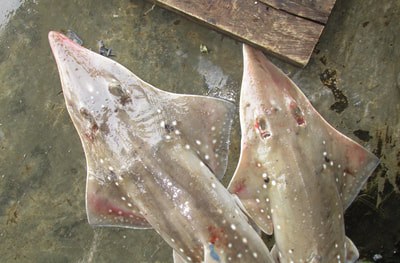
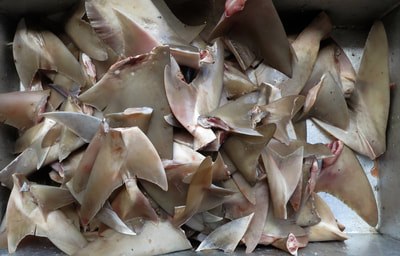
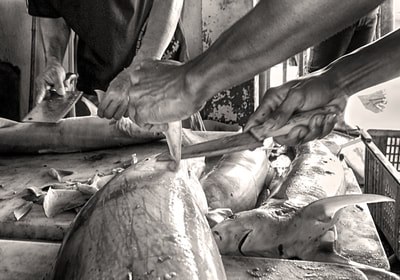
A Boat goes fishing, casts its nets, and as they raise the nets, sharks are caught, most already dead.
They bring their catch to the middle man, the Chinese Toke, here on Bintan, and get a cut on the catch — not much at all.
The sharks are quickly cleaned and the fins cut to start the drying process.
Small, big, anything goes, and eventually finds a buyer. This is the Asian system where everything that can turn some cash is used and definitely not thrown away. For some shark species the meat goes straight to Singapore, processed into fish balls for soups.
The system in other places is just to cut the fins and throw the rest out to sea. The issue of by-catch is enormous — reports of over 60% of the catch thrown back, even in the big commercial fisheries, including the ones that wear the more fervent green ethics.
So to the credit of the local fishermen and the Toke here, there is no waste. But money is money, and no money, no honey. So the last wilderness is combed through to bring back the last catches. No place to hide for the fish.
Contrary to the belief that the sea can be policed, it cannot — not without military-style surveillance, at huge expense, and most of the time to protect and benefit the future profit of giant corporations. The one who always suffers at the end of the day is the small fisherman.
It is the consumer that buys, and keeps buying no matter the price tag — as long as people believe it makes them more powerful, more potent. For all the ones who pledge not to, most will keep doing it in private. The practices simply move underground.
So any hope? Very little, I would say. And for a conservationist, I am right now shooting myself in the foot — this guy cannot achieve anything with that mindset. What we really need to do is take the bull by the horns, and like in most cases, that bull is so strong it either kills you, cripples you, or you just let go and watch it destroy the place while you lose. And no one likes losers. So the art of looking successful is to drop the grand dream of the impossible and keep working on very small issues you know you can turn into a positive story. And then people will clap.
It is time to speak honestly, speak the truth, stop selling the idea that you are saving the world, accept the facts, and make the move you can. Many are also making a living out of the desperate need to help — some NGOs have budgets that would feed the entire village they claim to help, but most of it gets recycled into the cybersphere and cocktail dinners to keep some money flowing. The people at the end always, always receive only the trickles, the droplets from a stream. There is no proportionality anymore. And until that gets resolved, no end of the tunnel is in sight.
1. Stop eating shark fins.
2. Stop eating shark fins.
3. Stop eating shark fins.
Until the demand stops, there is no way — absolutely no way — to stop the genocide taking place in the world's oceans right now. The fisherman is not the one to blame. The consumer is.
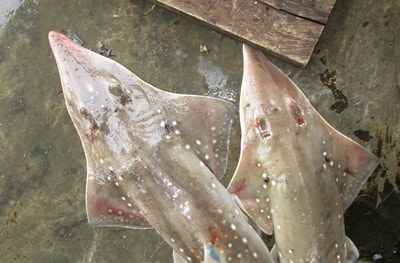 War on the Biosphere
The day-to-day of what turns up on the reef lives on its own page now, alongside Cempedak's — see Field Journal for the running log and the full photo archive below for every image behind this section.
Away from the named dive sites, these are the close-in, everyday encounters — the small reef residents you notice once you slow down and look.
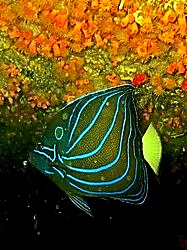
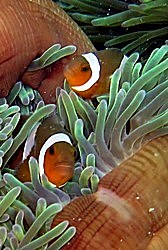
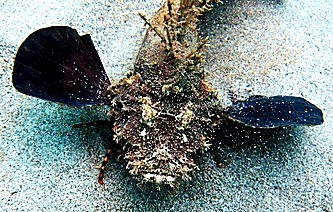
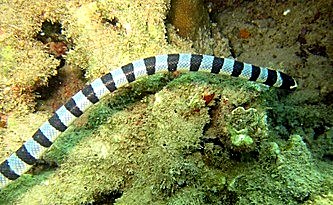
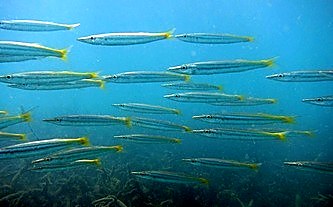
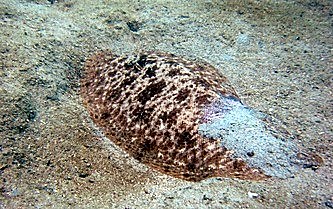
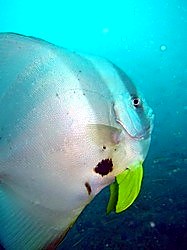
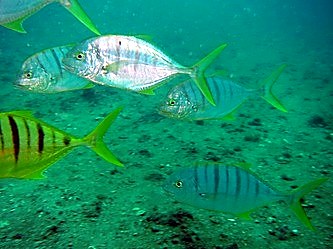
All 34 photographs from Photo Bintan live in the full gallery on Michel's personal site.
Every photograph behind this section, in full — click a cover to open its gallery and scroll through all of it.
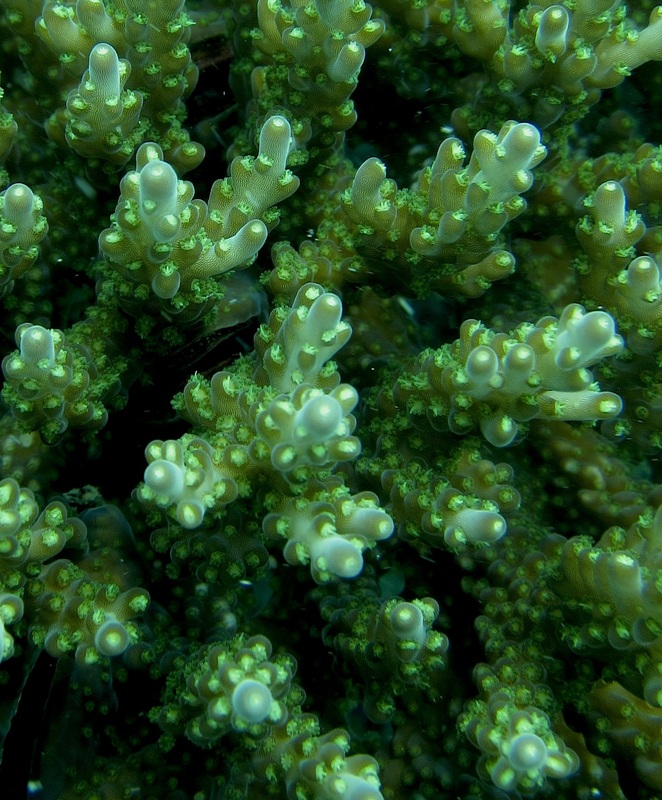 Coral Species
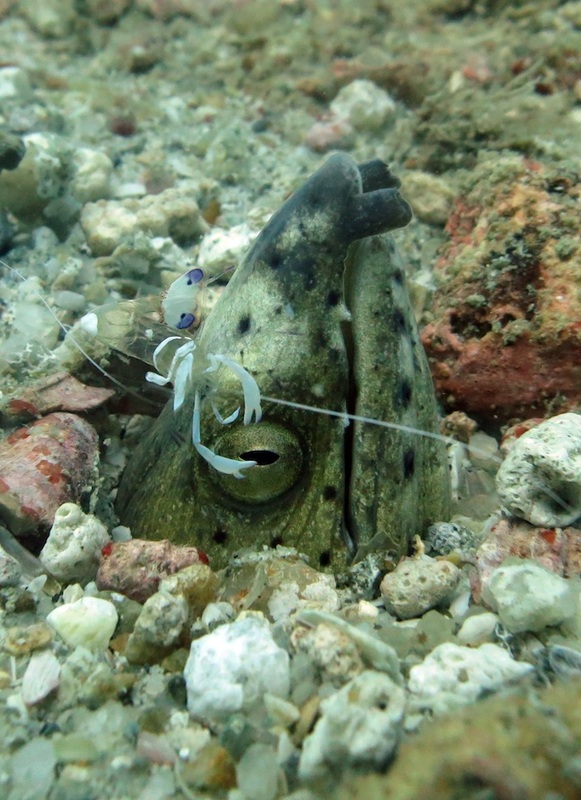 Underwater Times
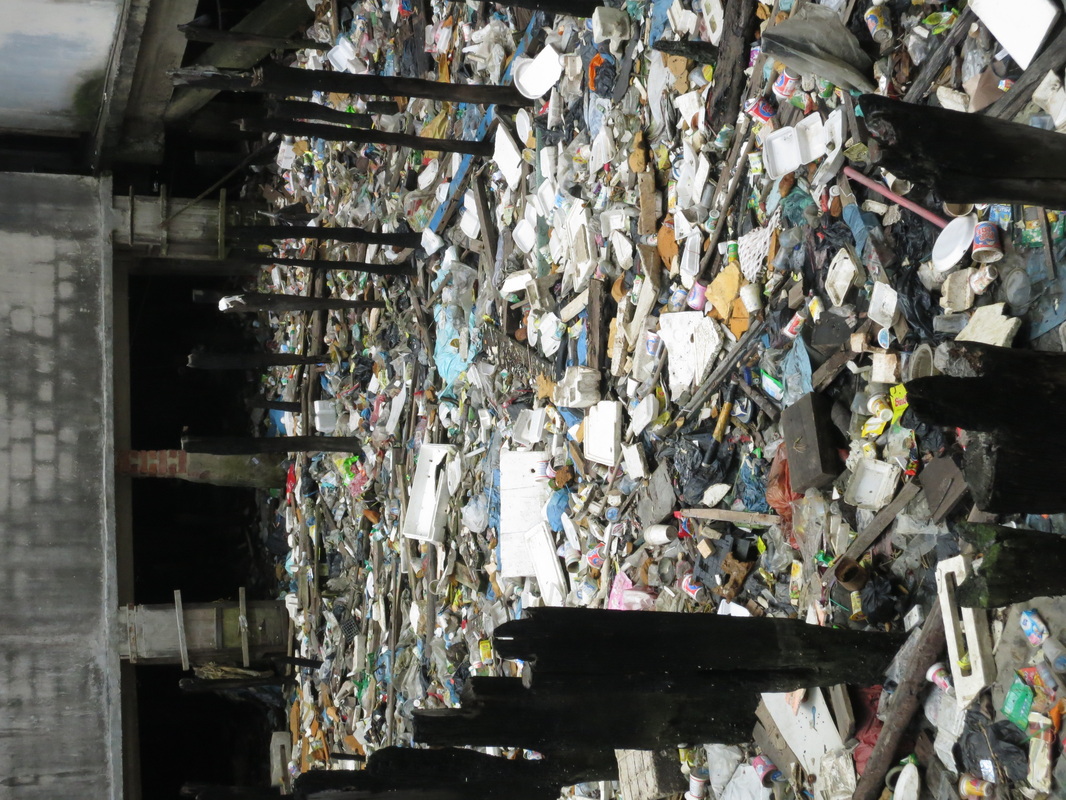 Conservation Work
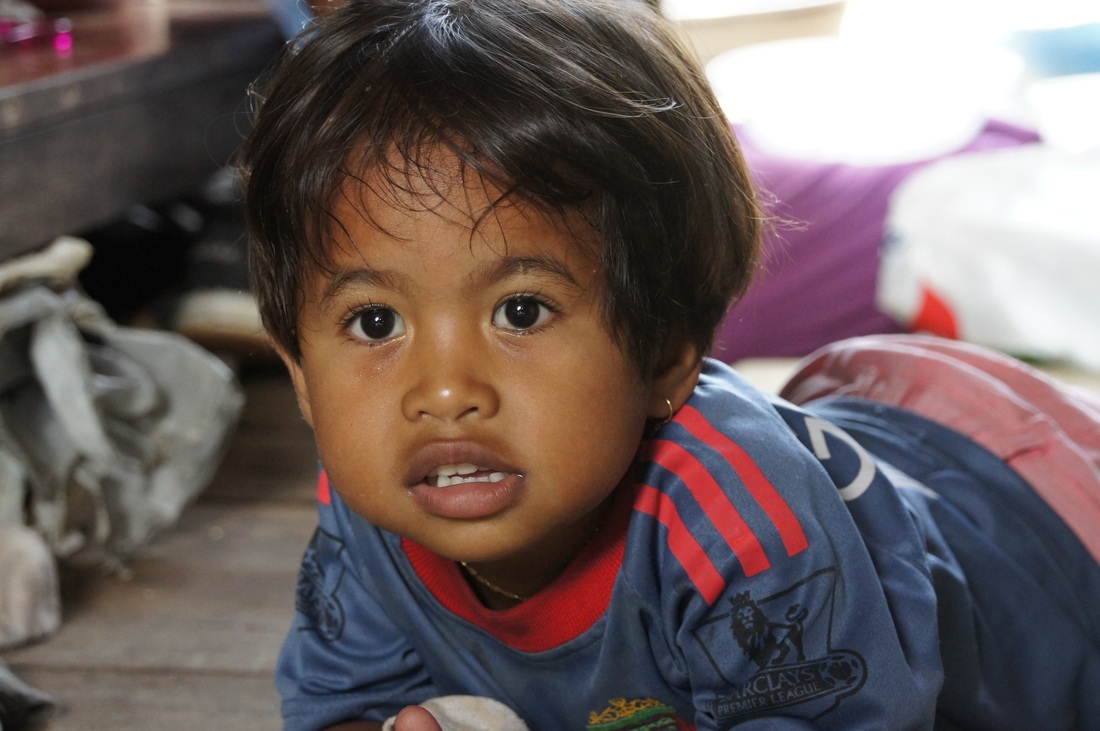 Orang Laut — Sea People
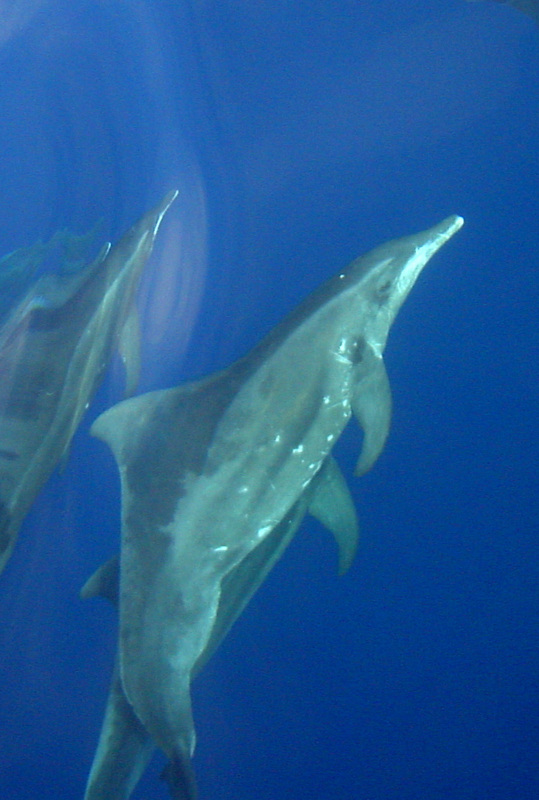 Whales & Dolphins
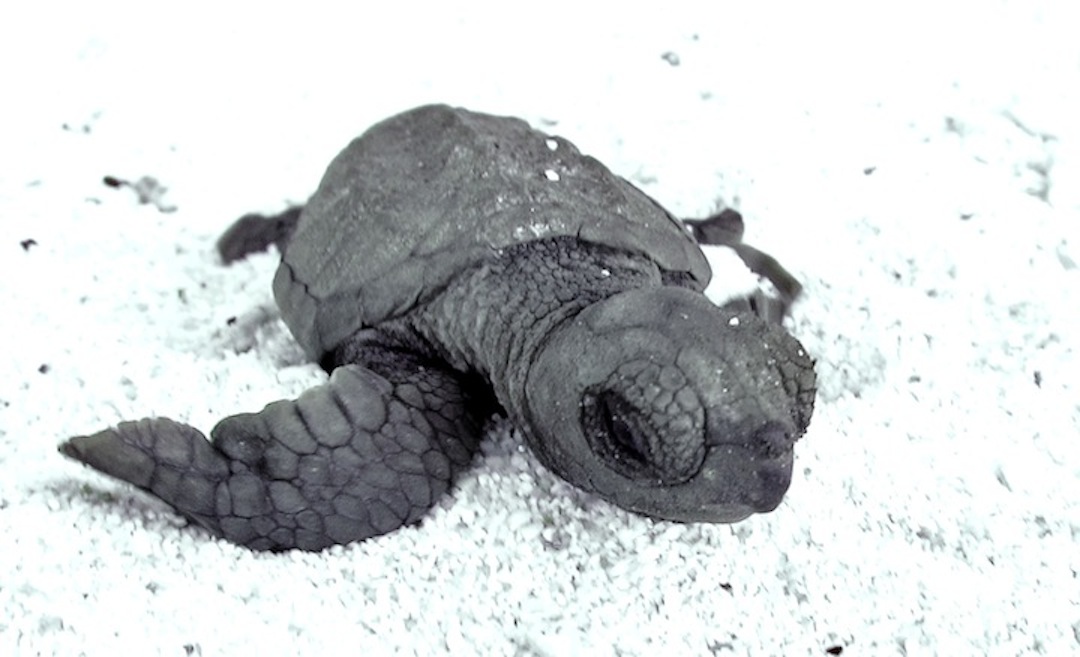 Nikoi Photo Gallery
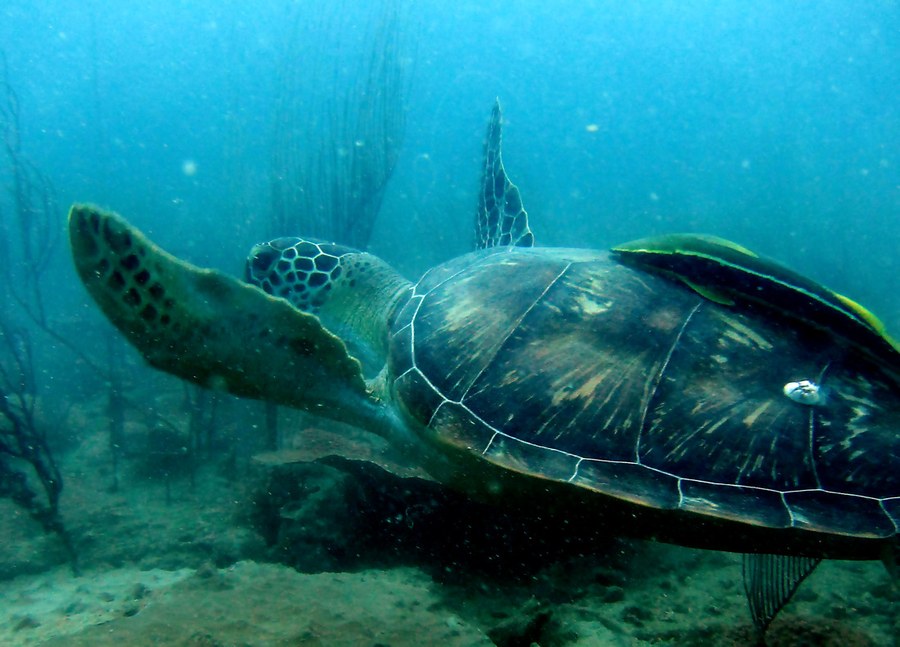 Conservation Surveys
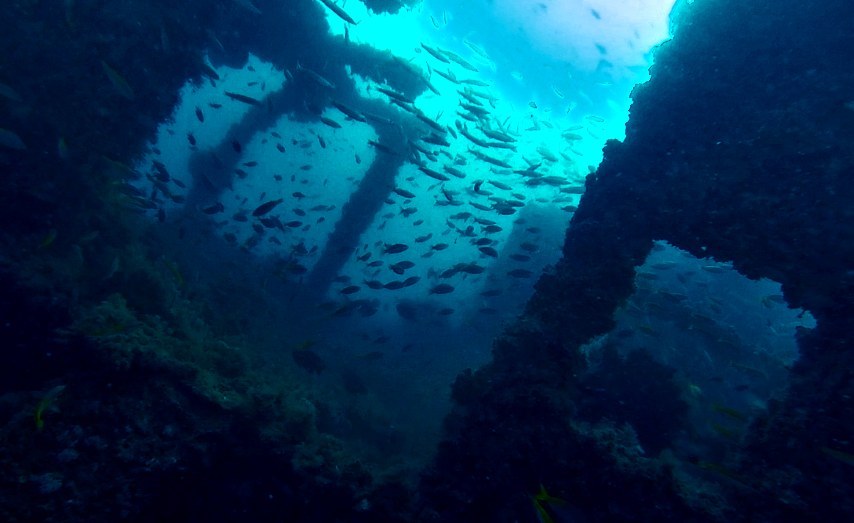 Dive Sites & Wrecks
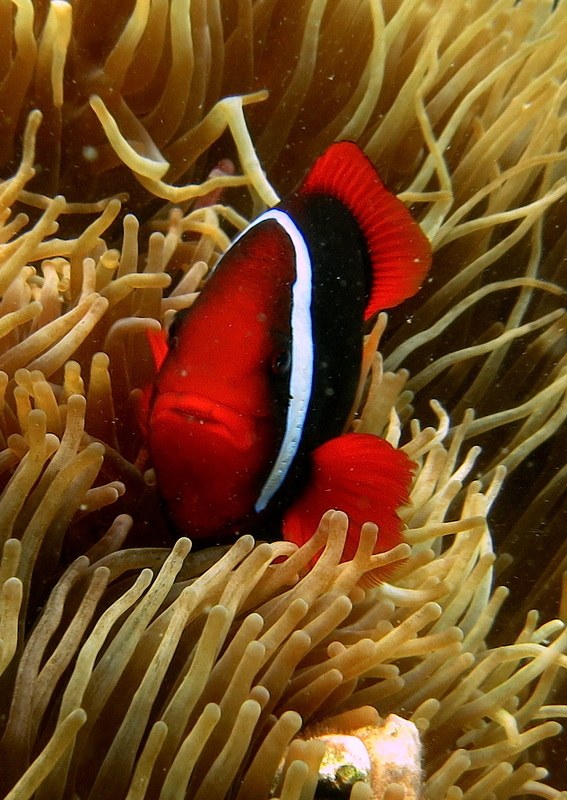 Creatures & Critters
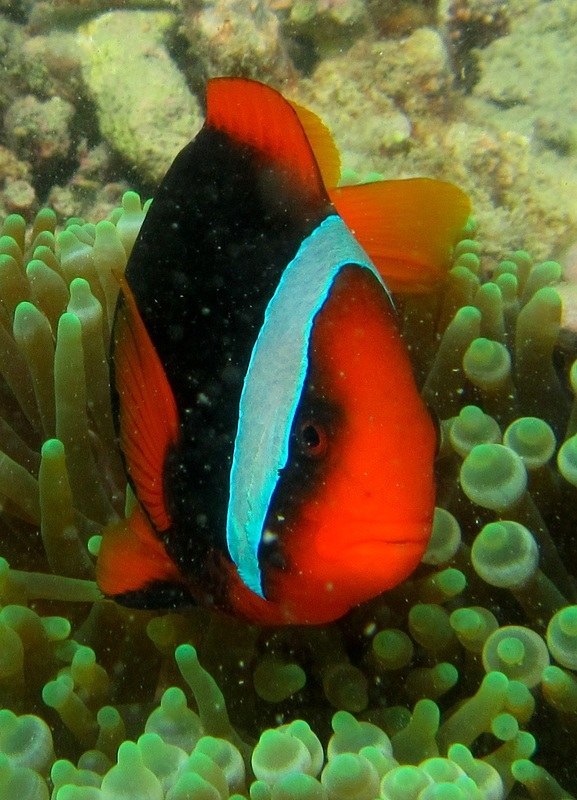 Field Journal
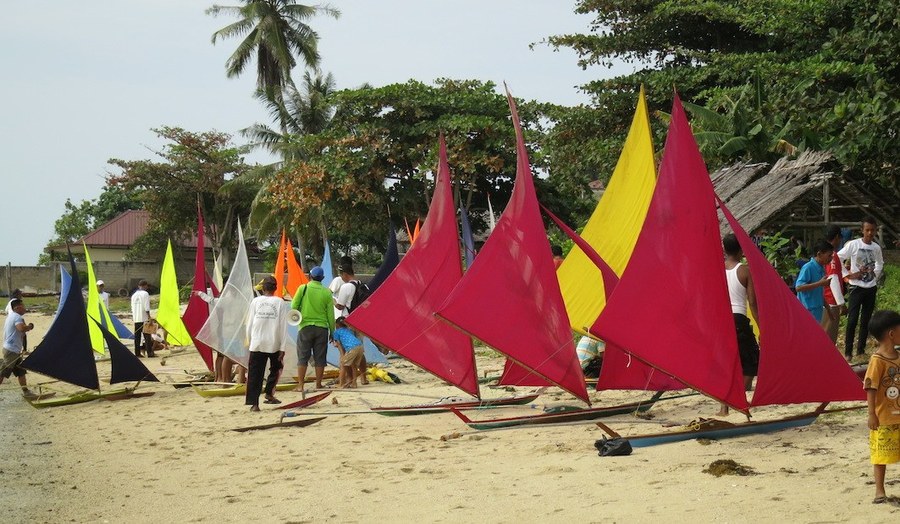 People & Community
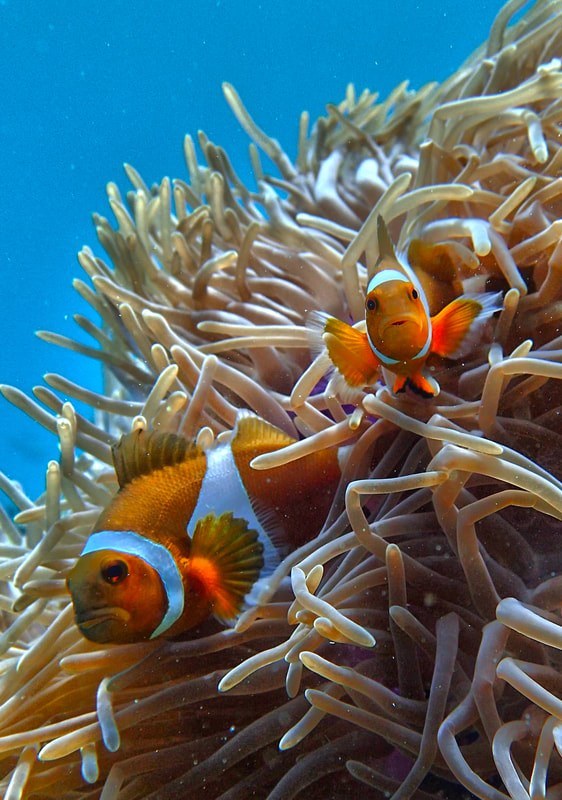 Below the Water Line
Footage from below the surface at Nikoi — reef, wrecks, and the creatures in between.
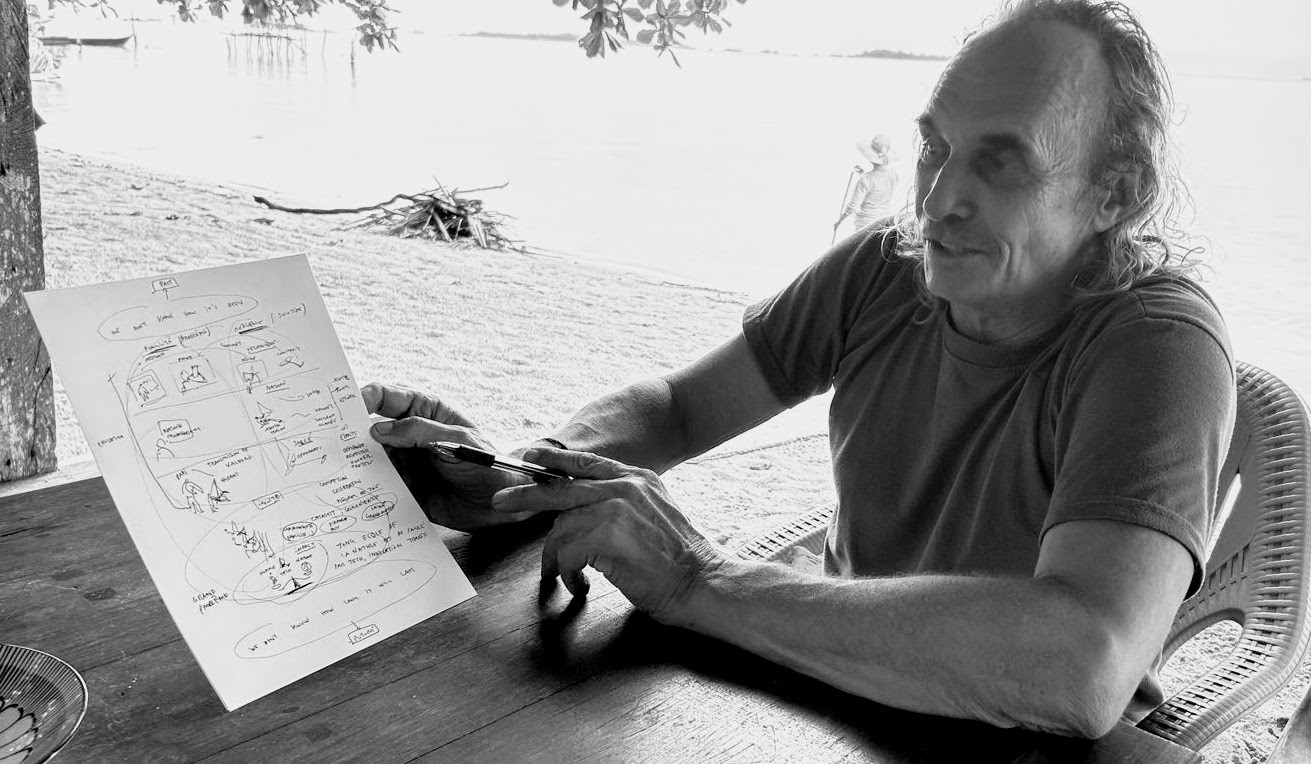
A short way down the coast from Nikoi, in Teluk Bakau, Michel founded the Jong School with Zakir in 2012 — reviving jong racing, the hand-carved miniature sailboats once common across this stretch of the Riau Archipelago. A different project from the reef work, but the same instinct behind it: give people a reason to love what's already here.
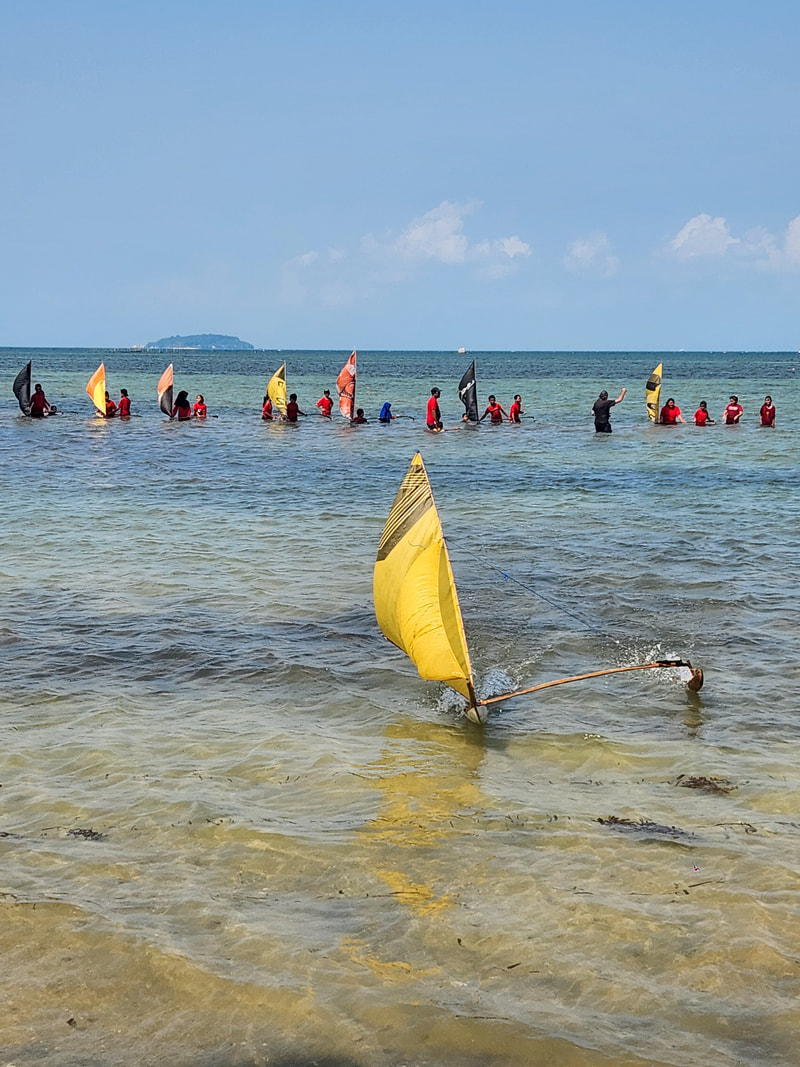
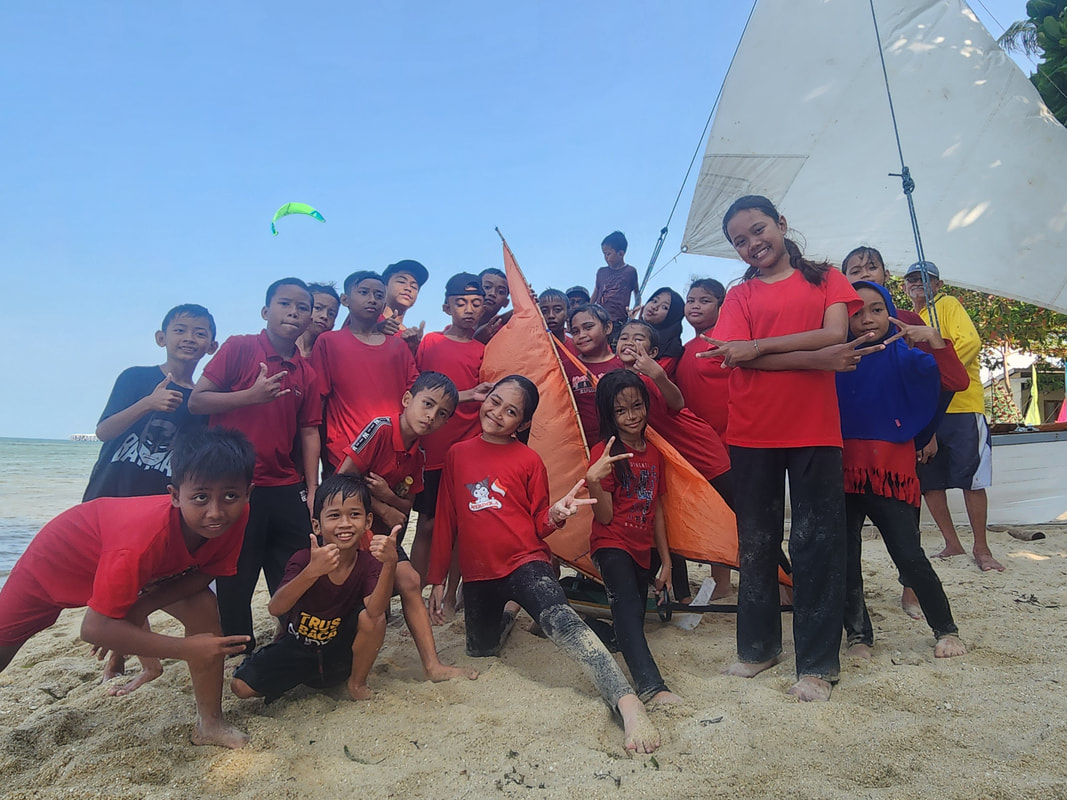
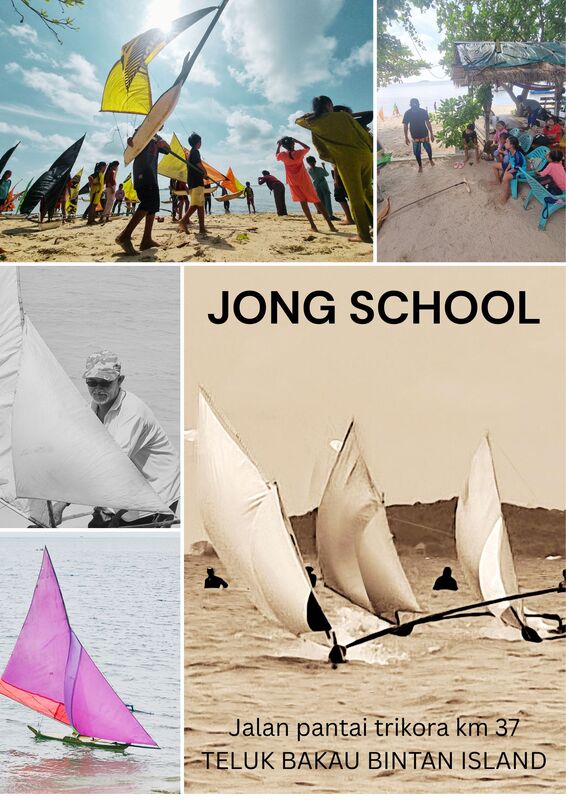
Race galleries back to 2013, youth programs, the craft of building a jong — the full Jong School site lives on its own.