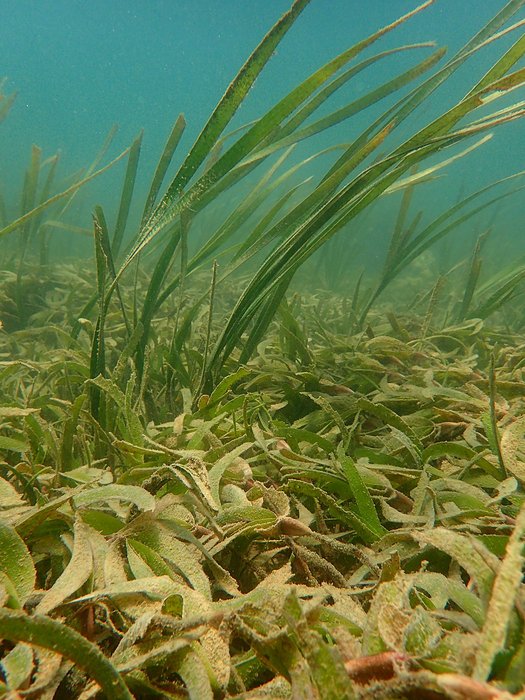
He'd been living on this stretch of coast for about eight years by then, diving for more than thirty — and seagrass had still never really been part of it, until the world shut down and the meadow right outside his own door became the place he finally slowed down enough to look.
When Covid hit, everything shut down — but not the ocean. By then Michel had been living right on this stretch of coast for about eight years, and diving for more than thirty — but seagrass had never really been part of either stretch, not somewhere he'd spent real time with. Then lockdown closed everything else, and the one thing still open was what was right in front of his own house: the seagrass meadow at Teluk Bakau. "I went out every week," he says, "mask, fins and snorkel — a treasure hunt — until camera and computer all died." He kept going long after the gear gave out.
It was a different kind of diving. Sometimes he was in just a few inches of water, face to face with whatever happened to be passing through — a shrimp, a goby, a nudibranch smaller than a fingernail. "I still don't really know the names of the sea grass," he admits, "could have become an expert." Instead he lived with the place itself — the tide coming up and dropping away again, slack water, low, high — and more than once he went back out after dark with a flashlight to see what changed.
New things turned up that whole stretch, at least to his own eye — species he'd never noticed anywhere in three decades underwater, sitting in plain sight the whole time. The same pull sent him and his daughter Moana out collecting fish from the freshwater streams and ponds around the island for a home aquarium not long after — a different story, but the same instinct for whatever water happens to be closest.
"I lived with that ecosystem — upcoming tide, slack, low, high. I went at night with a flashlight."
A seagrass bed doesn't look like much from the surface — a patch of darker water, easy to swim straight over on the way to the reef. Underwater it's one of the busiest nurseries in the ocean. Juvenile fish that will spend their adult lives on a coral reef often spend their first months hidden in a seagrass meadow instead, where the blades break up the water and give small, soft-bodied things somewhere to hide from anything bigger. Seagrass fisheries make up roughly a fifth of the world's largest catches, and meadows like this one underpin food and protein for hundreds of millions of people across the tropics.
They're quietly enormous carbon stores, too — "blue carbon." Seagrass covers a sliver of the seafloor, well under one percent, but its sediment locks away a hugely disproportionate share of the carbon buried in the ocean, some of it for thousands of years, undisturbed as long as the meadow itself is. The leaves filter the water as they grow, straining out pathogens and pollution before it ever reaches the reef further out.
Two of the species documented along this stretch of Bintan's coast are Enhalus acoroides — broad, ribbon-like blades, the largest seagrass in the tropics — and Thalassia hemprichii, true turtle grass, shorter and denser underfoot.
Teluk Bakau's meadow isn't just Michel's own backyard discovery — researchers have surveyed this exact stretch of coast, documenting its seagrass structure and measuring how much carbon and nitrogen its sediment holds. Globally, meadows like it are disappearing at roughly 1–2% a year, making the ones still intact worth paying close attention to.
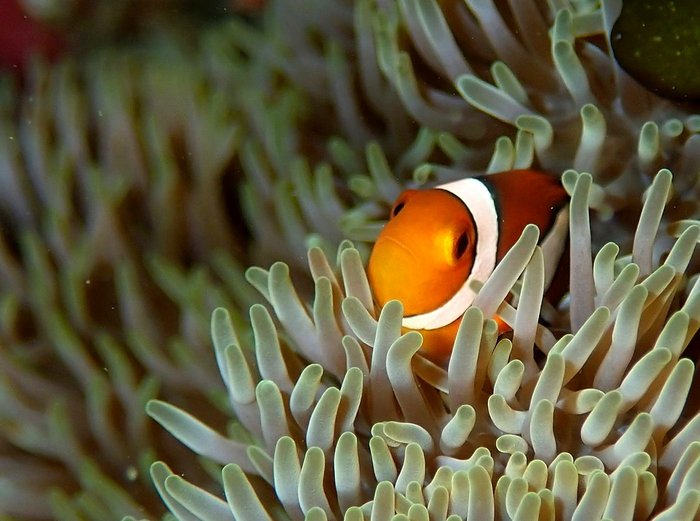
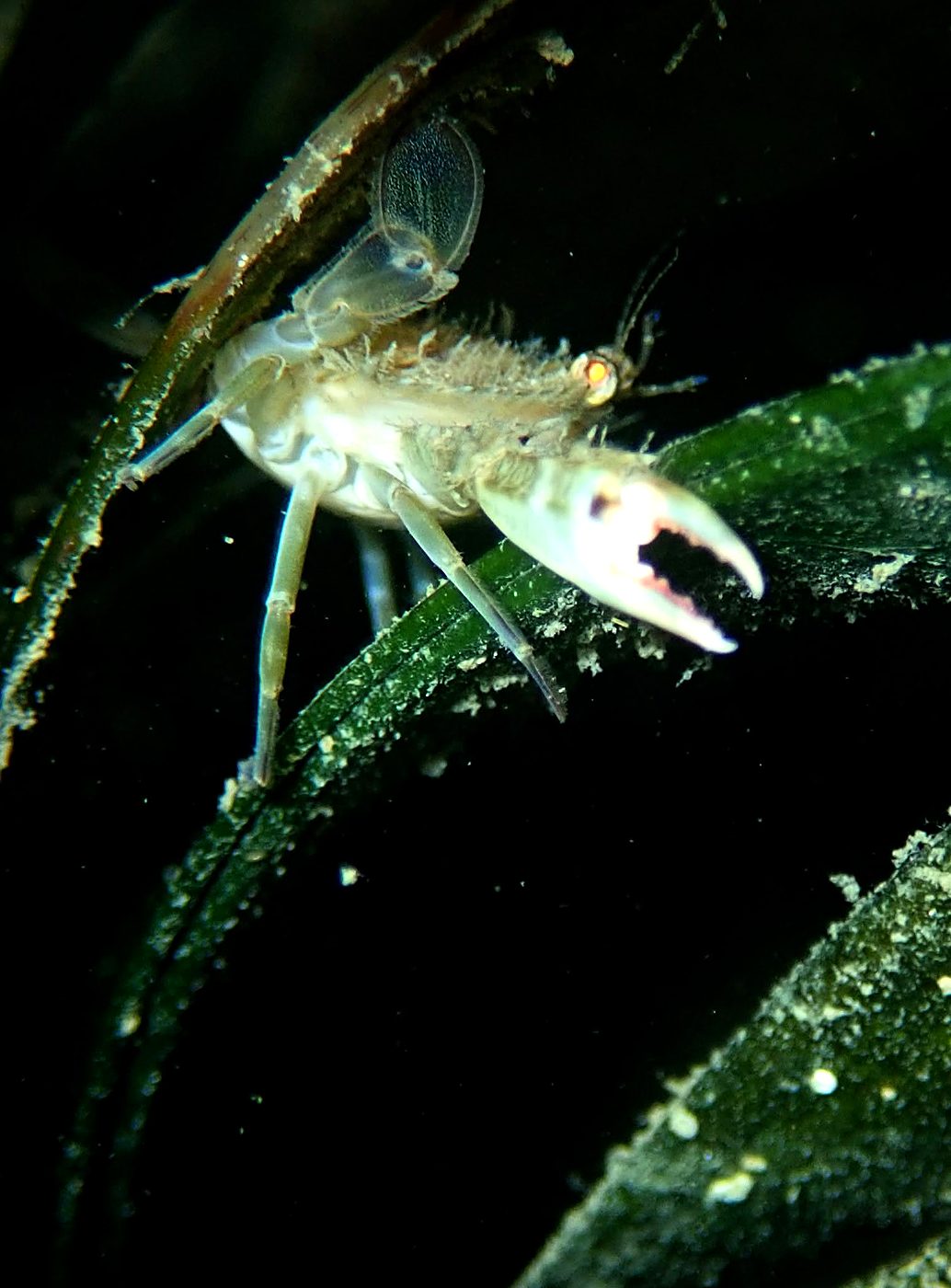
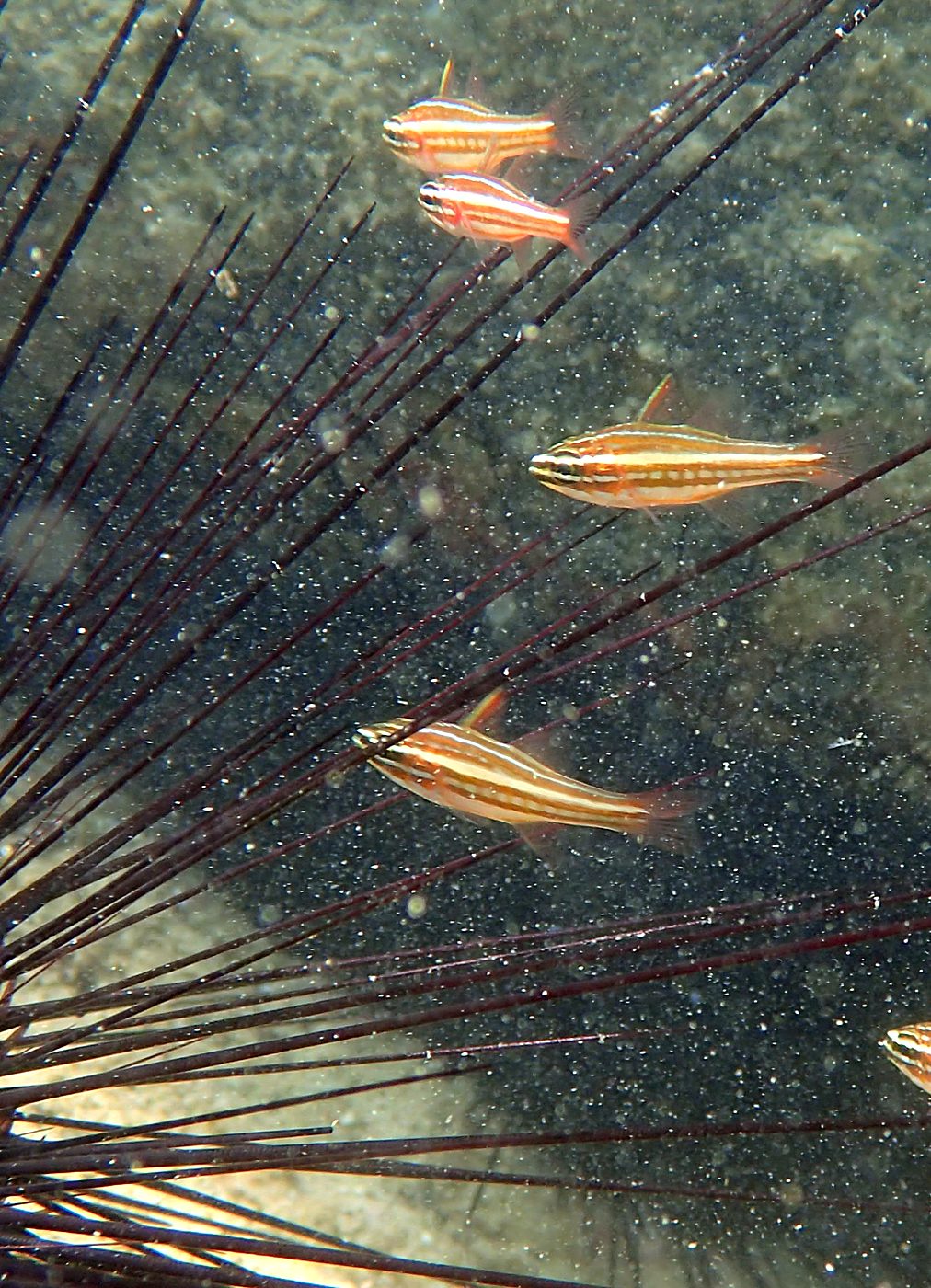
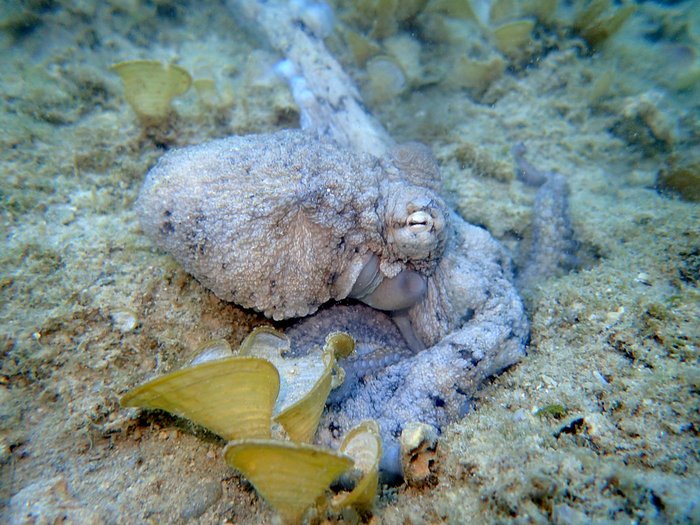
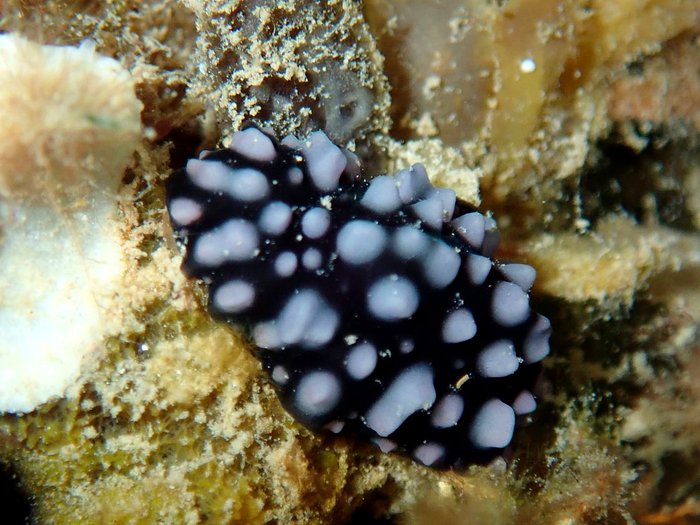
A meadow this shallow turns out to hold an enormous amount, once you slow down enough to look. Gobies and pipefish thread through the blades at eye level. A shrimp works the sand in the open, unbothered. Two different nudibranchs turned up on the same stretch of ground months apart — one deep purple and studded, one blue with a single orange stripe down its back. A cardinalfish school hangs in formation over a bed of long-spined urchins. Small, hard corals and soft coral colonies grow low between the grass, easy to miss if you're swimming a few feet higher. And more than once, something that looked exactly like the sand itself turned out to be an octopus, sitting completely still until it wasn't — the kind of find, he says, that made the whole slow habit worth it.